
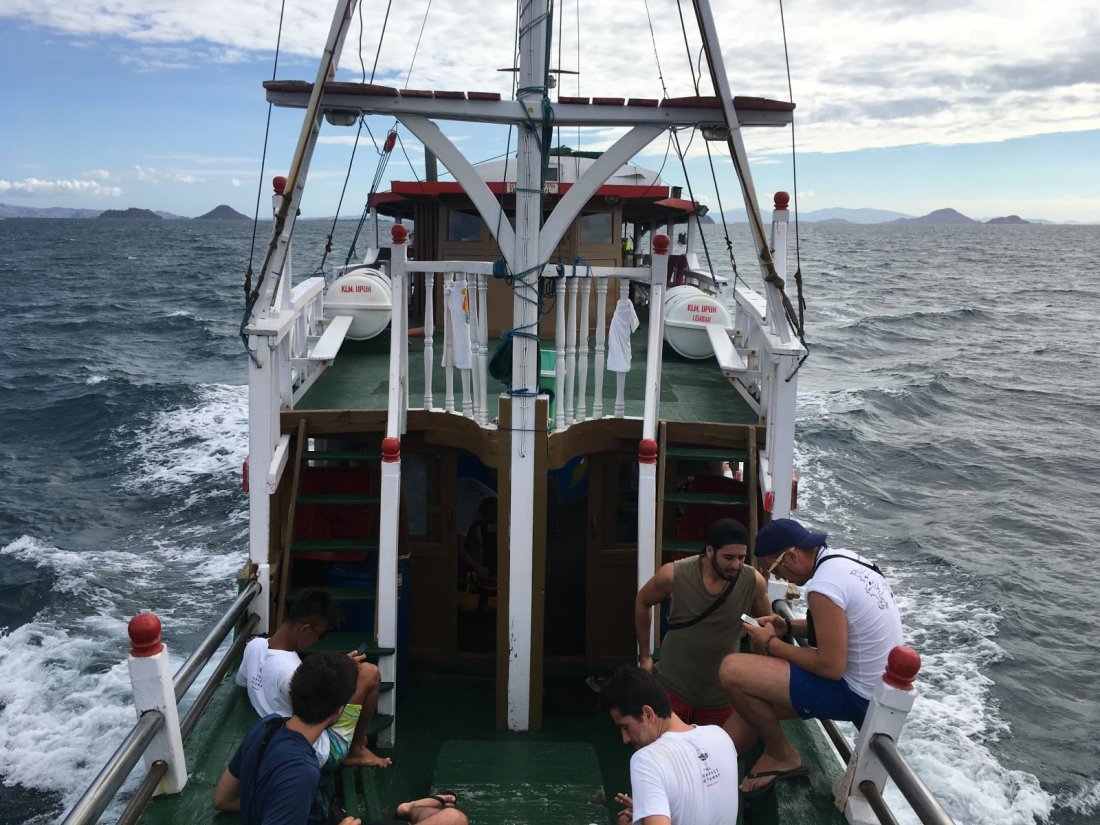
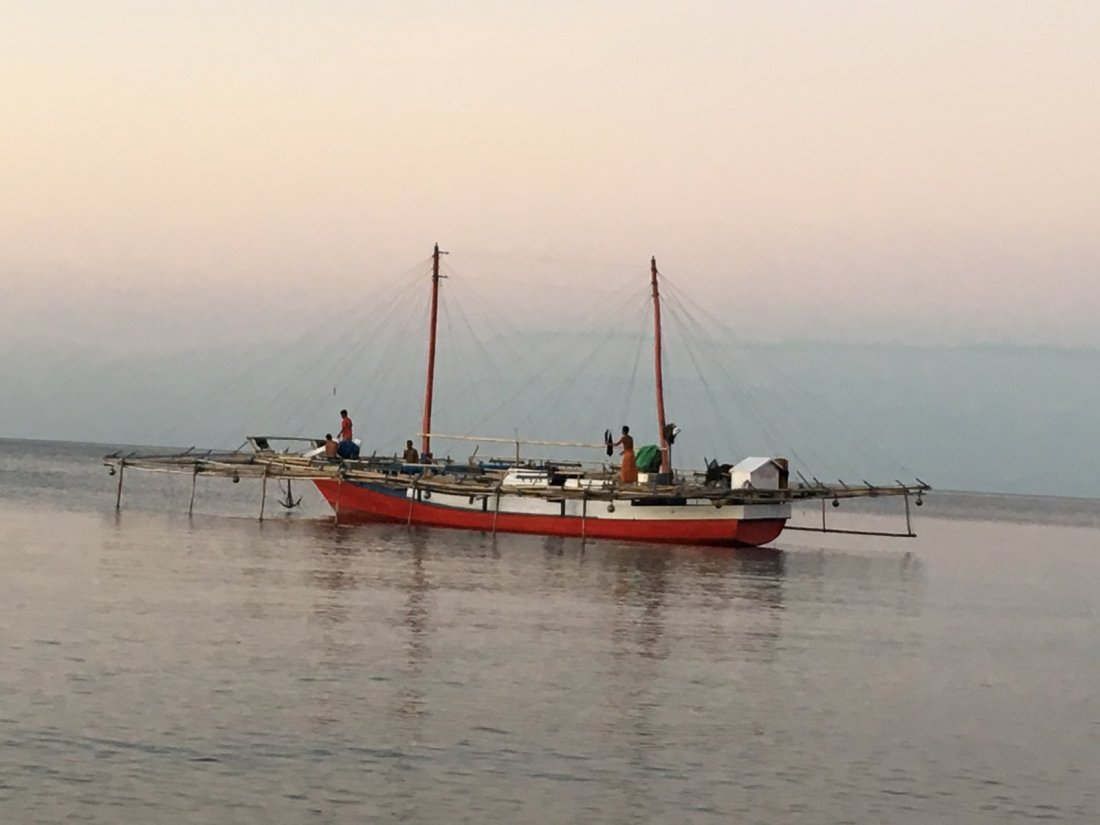
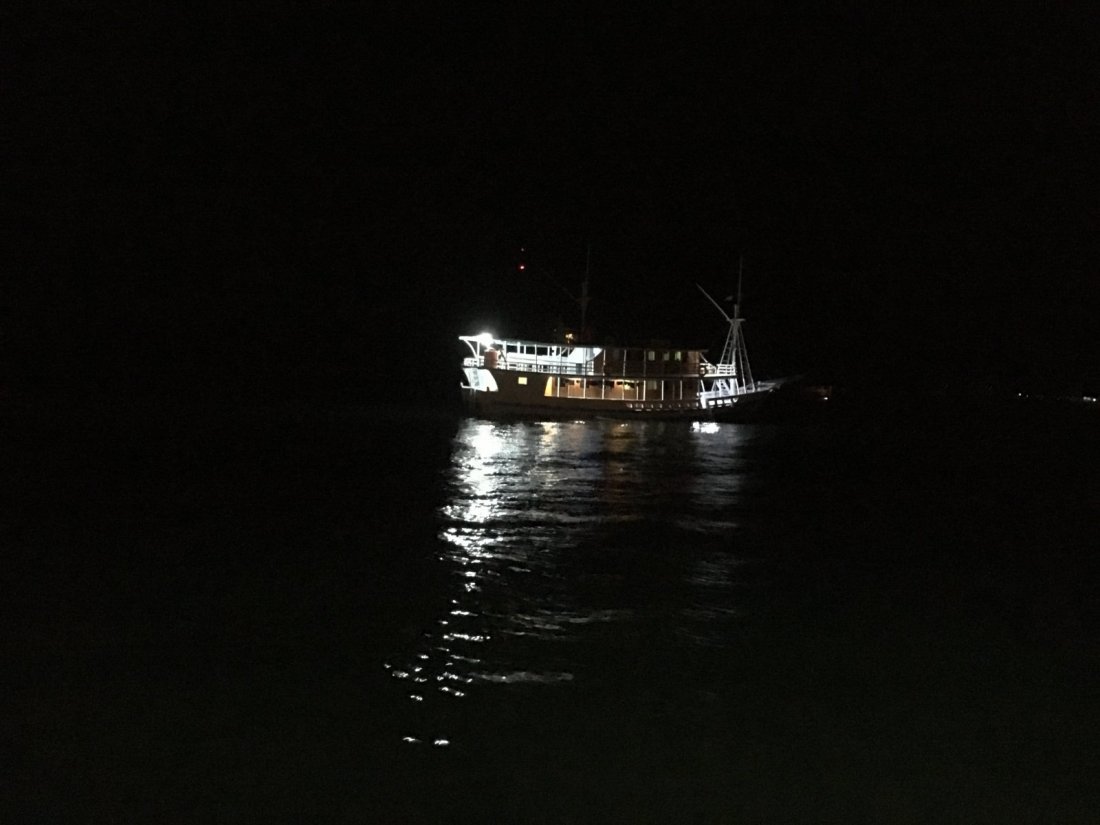
Entering the small boat was a bit like entering Big Brother’s house. Dutch siblings E. and S. were the first to greet me, expressing their sympathy for the great fire of Athens earlier that summer. 30+ passengers and crew will spend the next two days and three nights in a very confined space, some sleeping on the decks and some in the tiny cabins. I slept, together with a group of Danes and Germans, on the floor of the lower deck. This was the place where the sleepless came to smoke cigarettes, which, together with the smell of the engine, the changes in temperature and the rocking of the waves had an adverse effect on our sleep. The Danish couple next to me had to deal also with the invasion of water that fell frequently onto their heads. It was a relief when dawn broke and we found ourselves on the calm waters next to a small island.
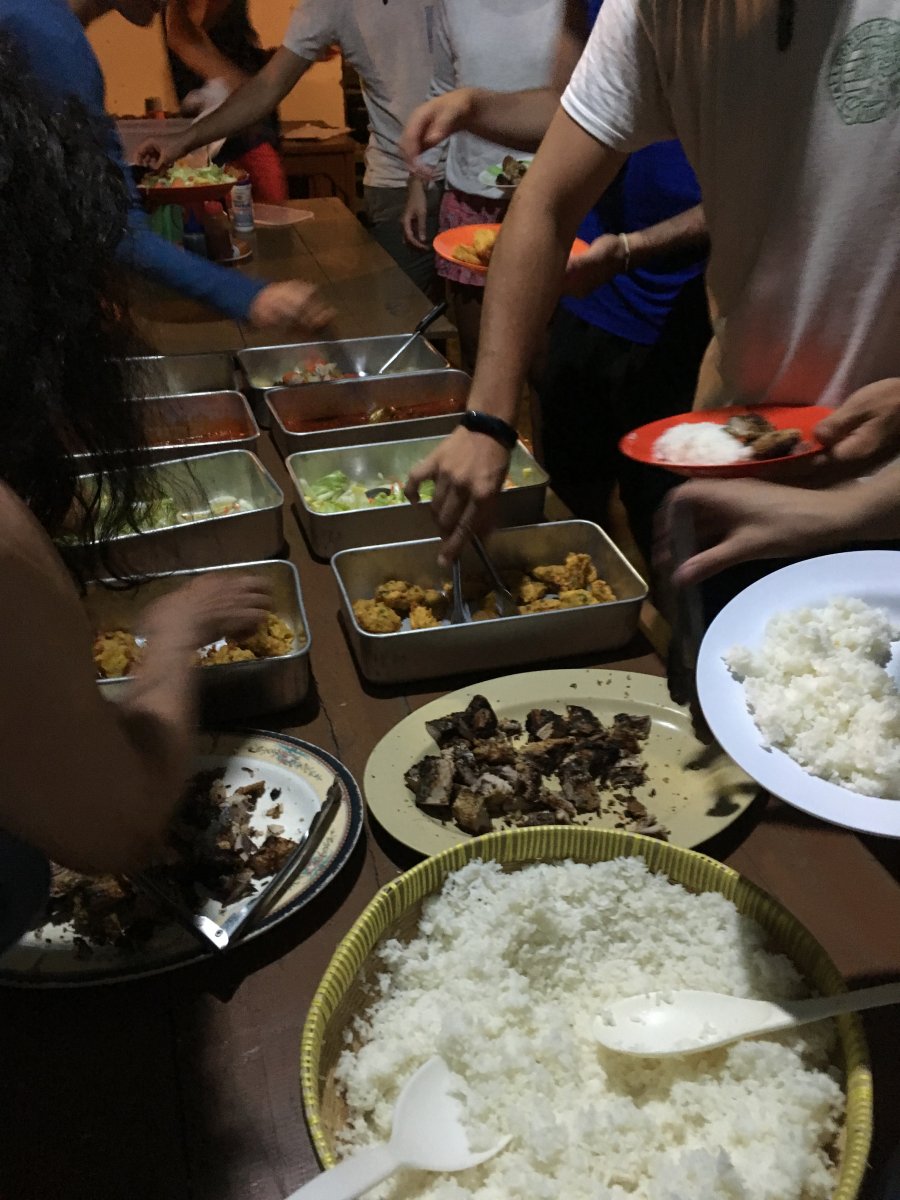
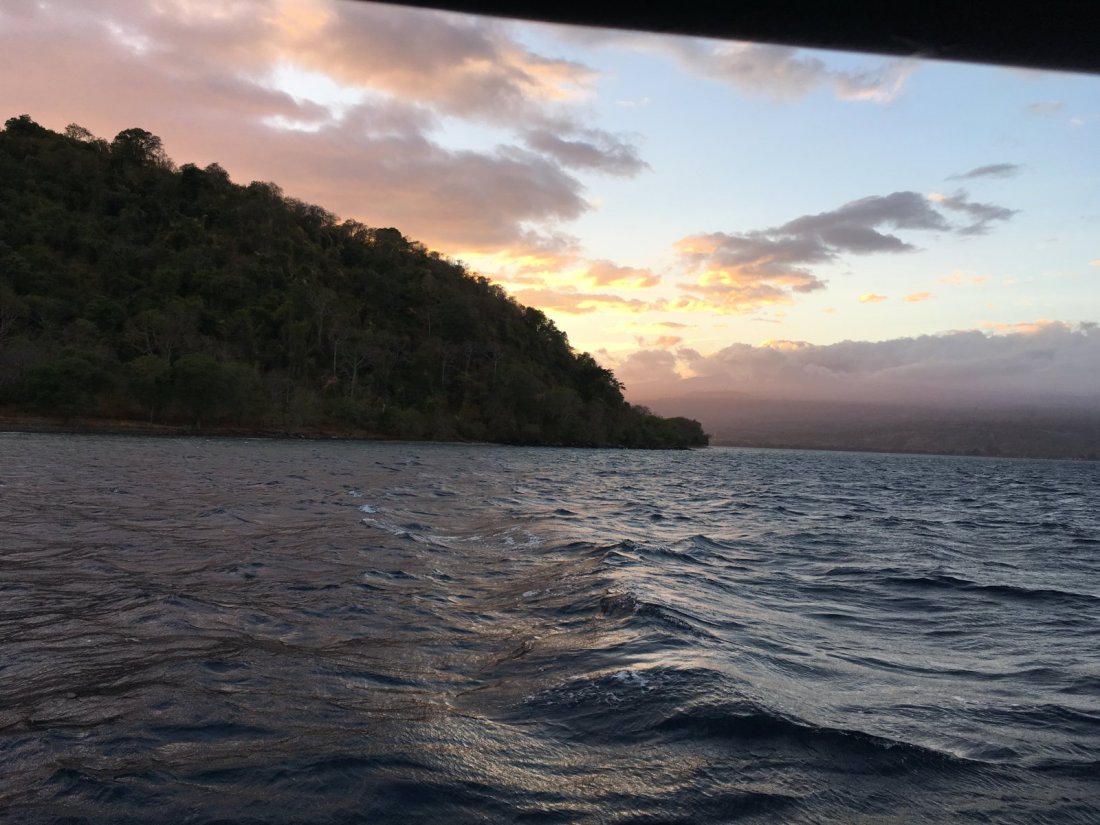
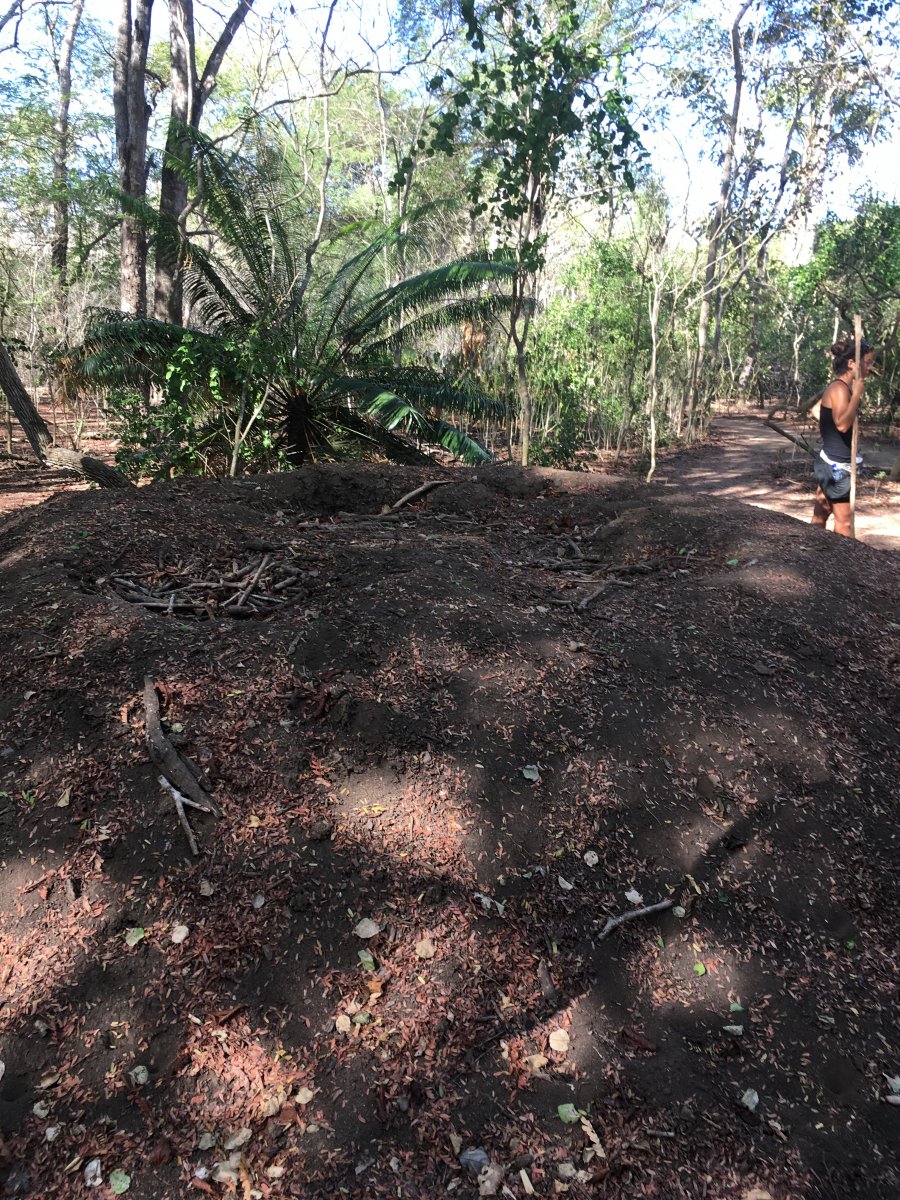
The crew started preparing the food while we climbed the well trodden path up the small hill. At the top the view was breathtaking: the whole interior of the island is a salt lake, surrounded by wooded hills. Among the trees there was a megapode nest, a small mount one meter tall, which unusual birds like chickens with huge legs build gradually from sticks and leaves to bury their eggs. The new family member grows all its adult functions before hatching from the egg, unless first eaten by a Komodo dragon which considers them a delicacy (sweet aren’t they, Komodos?).
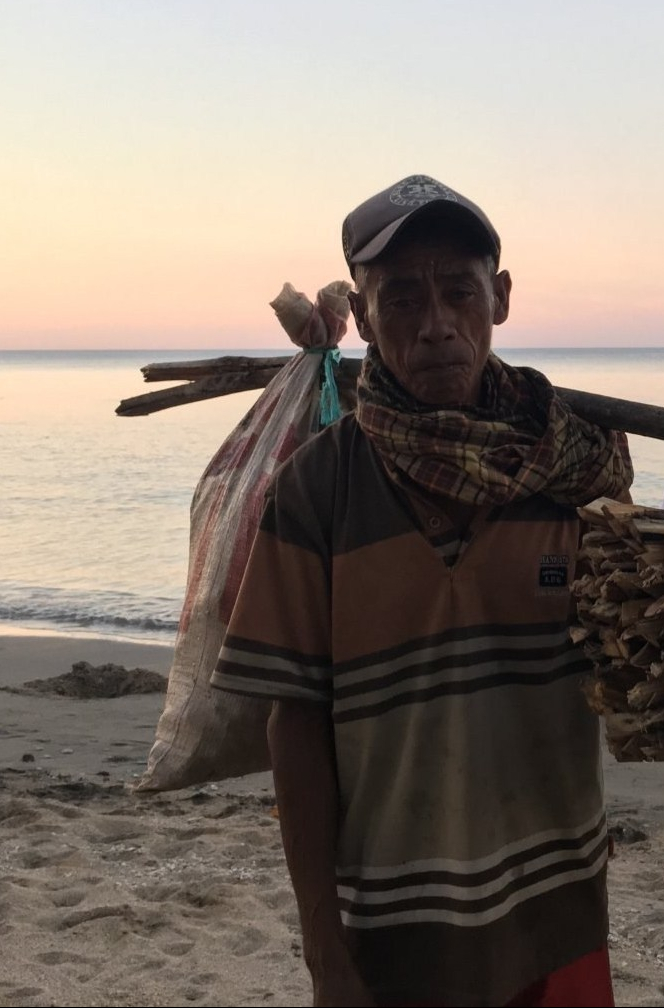
We spent the evening on a beach of Subawa – the big island between Lombok and Komodo – cooking corn on a campfire while observing the local fishermen. One of them, raggedy and scraggy, approached us, and we took a picture together. His sober expression remained the same, his English non-existing, a reminder of how isolated we were. On the way back to our boat …magic: the sea was sparkling. Bioluminescent plankton or fish, who knows what, put on a farewell party, perhaps to make up for the locals’ lack of interest. On the ship, some of us laid on the upper deck staring at the sky. With a complete absence of light sources around, the stars of the Southern Hemisphere and the planets were a feast: Mars, Saturn, Scorpius, Lyra, Sagittarius, the Southern Cross…
The goal of the next day was to spot the infamous ‘dragons’ of Komodo. They only live in these islands and are the largest surviving lizard on the planet. Their ancestors chased Aborigines in Australia and spanned 7 meters. The contemporary ones reach a maximum of 3 meters and 70 kilos and chase deer and tourists who enter without permission, as instructed by the ranger in charge of protecting us as we climb the first hills of Komodo island.


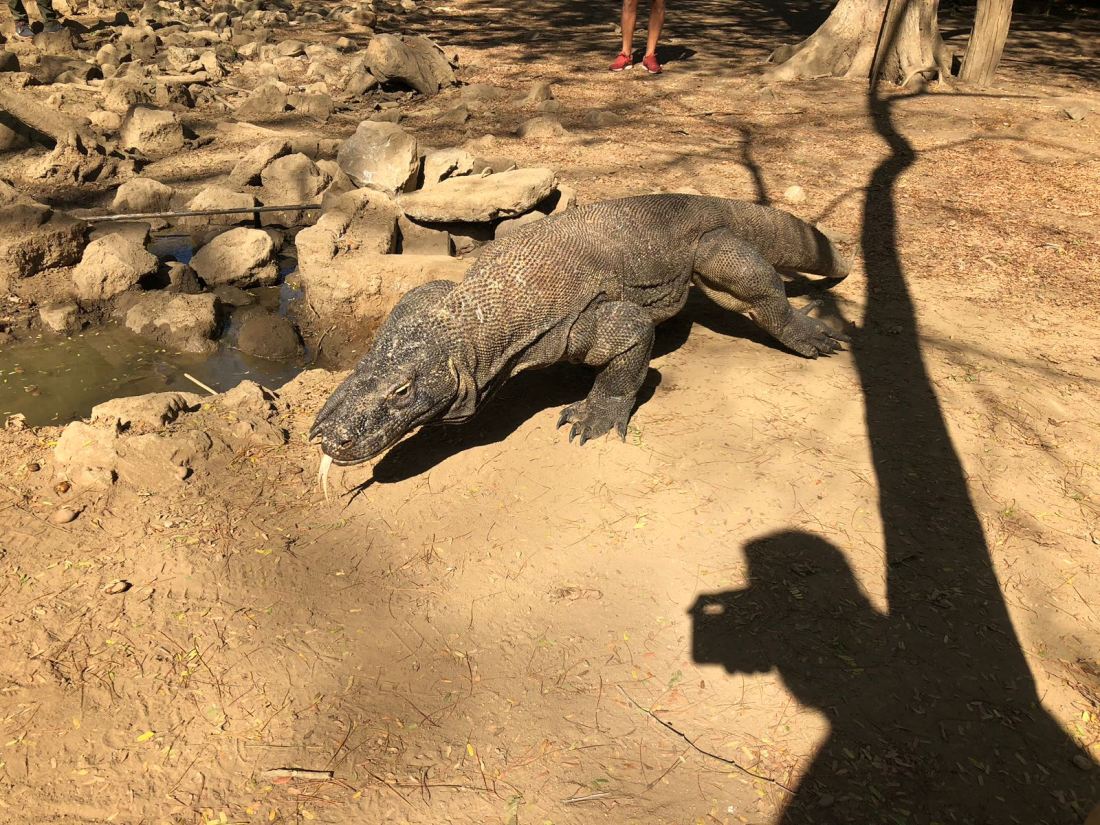
I am walking with a Canadian, K., former hockey player, talking about another type of hunt, that of on-line dating. Naturally, in these occasions, one is looking for just the right adventure photo to put on his Tinder profile. Luck did not seem to be on our side. Every time the ranger or his assistant left to sneak into the spots frequented by Komodos, he returned disappointed. Then, when we have almost reached end of our path, somebody shouts “here’s a small one” and we all start to run towards him. There we meet a group of tourists, who tell us that they just saw the “mum” in a ditch drinking water. We start running towards the adult. The Komodos are not very fast runners and they don’t bother to chase you. But if you approach them within half a meter, you are screwed. With a quick dash, it buries his jaws on your body, injecting in your blood 47 toxic bacteria that will put YOU in threat of extinction. With fear, but for Tinder’s sake, we follow the Komodo taking pictures, freezing every time it turns and stares towards one of us. Job done!
 TK Travels