In Crete – Day 1

A young lady is now at the reception of the hotel. After check out, she advises us on good brunch places and kindly allows us to leave the car at the front parking, where she can keep an eye on it.

We bid farewell to a Venus de Milo replica, standing on a granite pedestal in the hall of the old-fashioned hotel. We exit to the warm and cloudy morning atmosphere. We face last night’s seascape, more detailed under the light of the day, where bathers are enjoying themselves in the water of Nea Chora beach. We stop at a café, where we can appreciate the scenery surrounded by two palm trees.
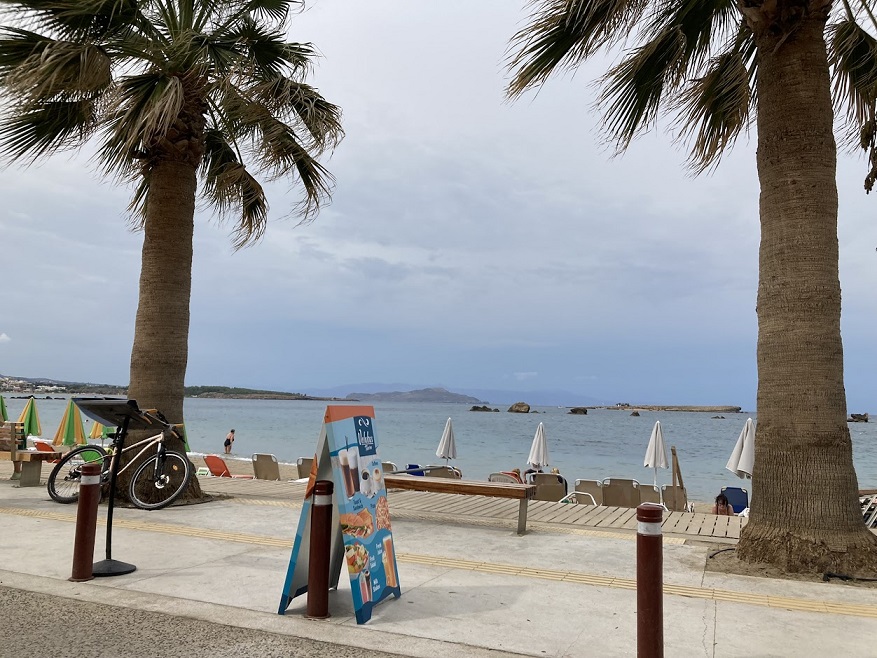
Breakfast tea, deliberations with the English-speaking waitress on how to order scrambled eggs (the closest match is called ‘strapatsada’ and contains tomato) and gradually we transition to a Greek and Cretan menu with home-made tzatziki and ntakos. Ntakos is oregano flavoured crumbled white cheese and tomatoes on soaked dried bread, which J. discovers she likes. At the end, two shots of tsikoudia, an aromatic local tipple, were offered and pleasingly consumed.

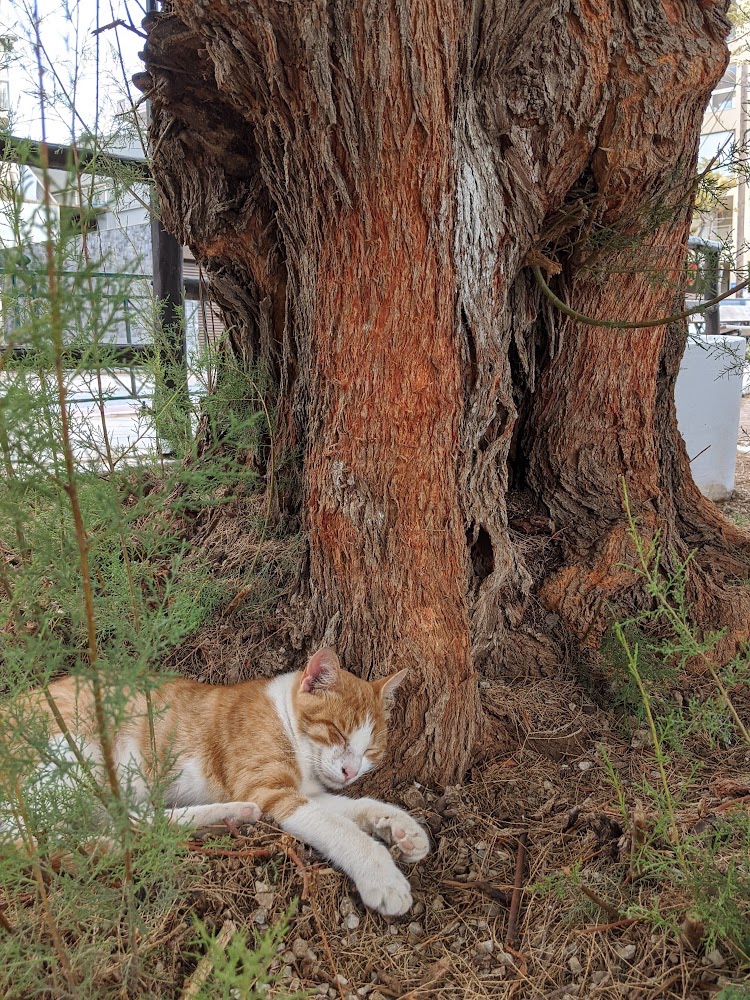
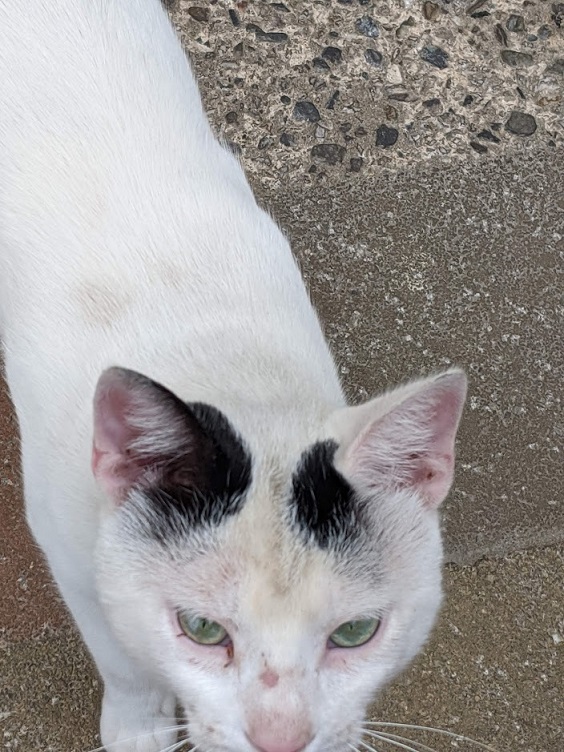
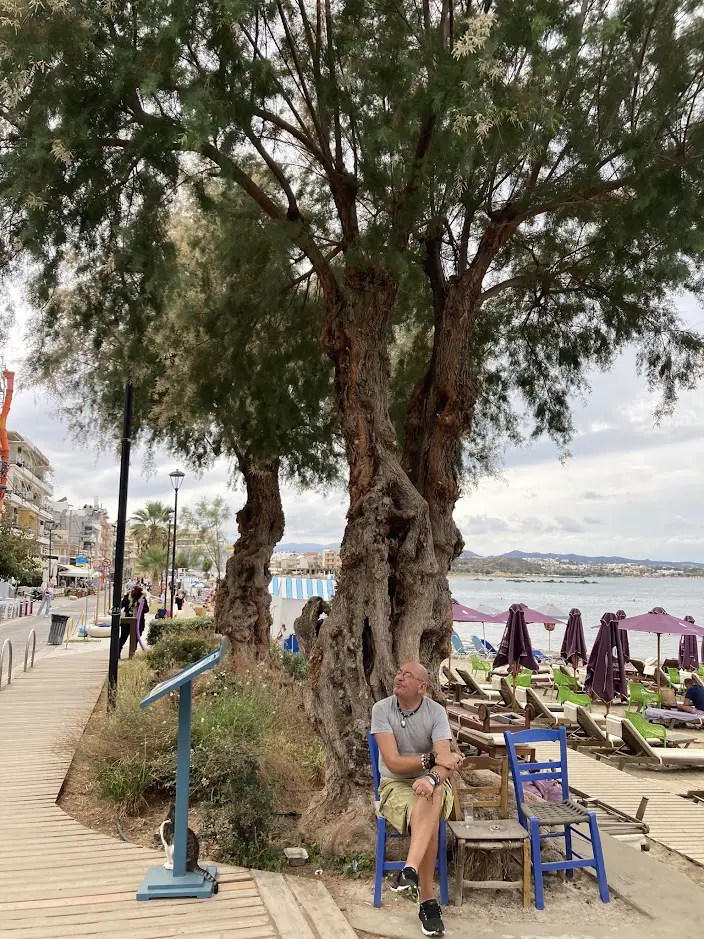
The seafront promenade which we resume our walk along, has a magical peaceful vibe. There are many cats, basking in front of the tamarisk trees, sitting on wooden chairs or keeping watch behind the corners. We joke, ‘a Cretan surveillance network!’. They are beautiful, and appear as if they amplify this calmness and stillness of the air. We sit at the edge of a park, with legs dangling over rocks in front of the Cretan sea. We climb on the leaning tamarisks, we absorb as much as we can.
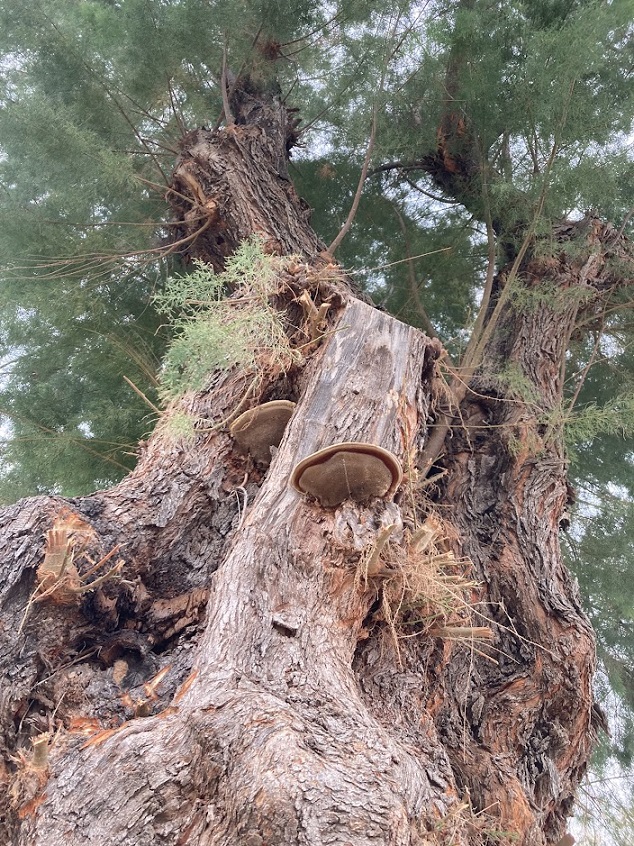
Bracket fungi
Off-duty surveillance kitty
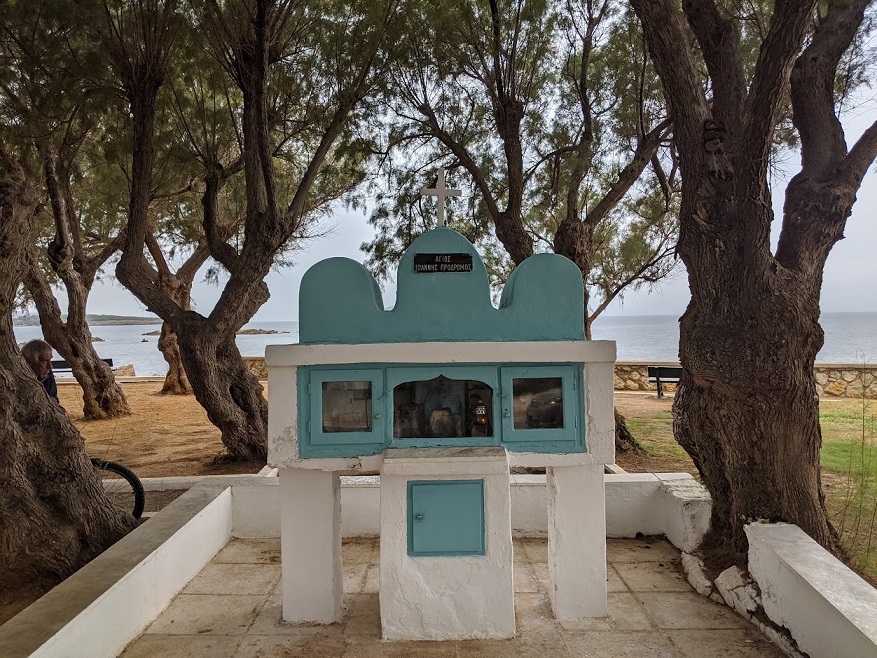
Community shrine under the tamarisk trees
Overlooking the Cretan sea

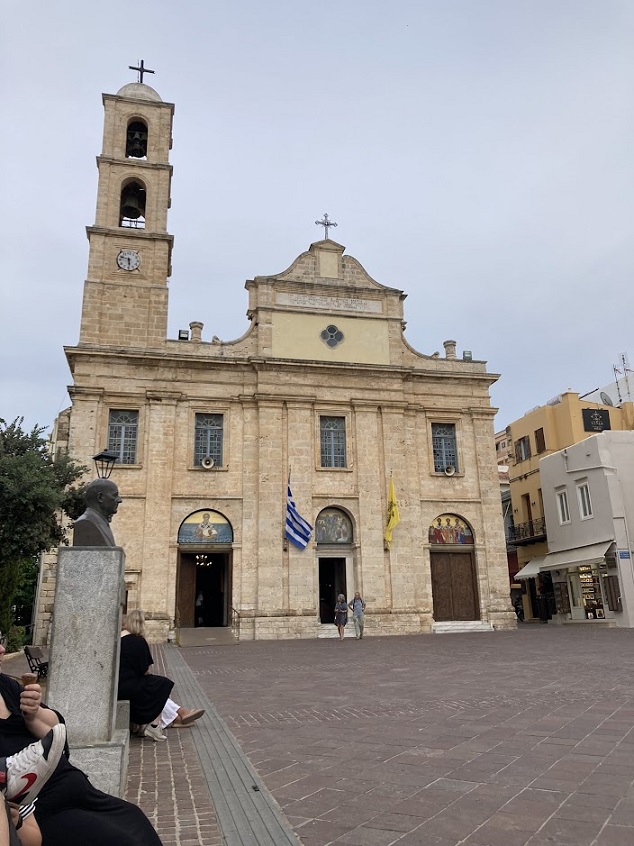
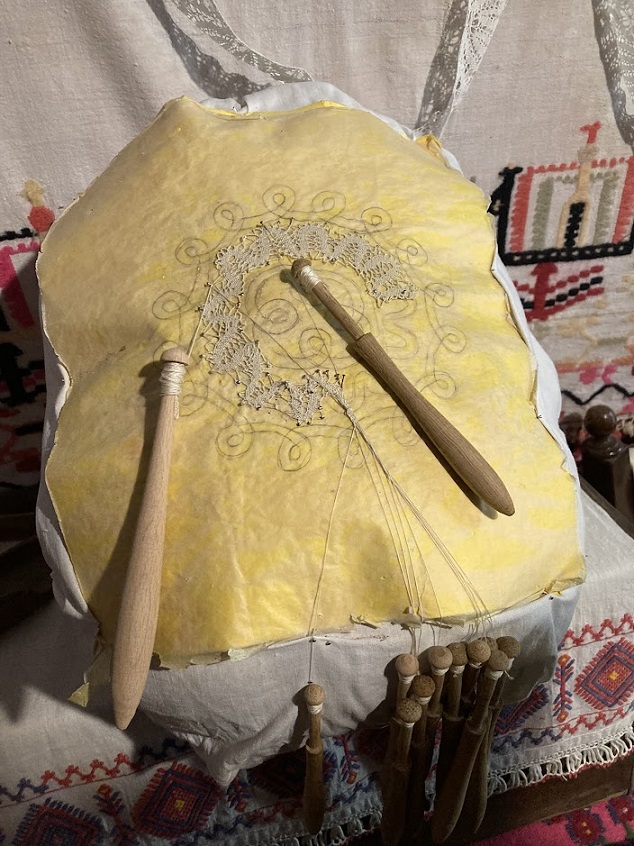
A shower forces us to shelter under a bus stop. Having passed the Venetian walls and being within the Chania Old Town, we decide that after a short stop and first introduction to the Venetian port, we’ll visit the Folklore Museum (‘Laografiko mouseio’). The museum is interesting and quirky. We love the laces display – the artist herself is intricately weaving the white cotton threads within the premises – and the Cretan poems on the walls. We also visit two churches, one Catholic and one Greek Orthodox – J.’s first ever visit to a Greek Orthodox church.
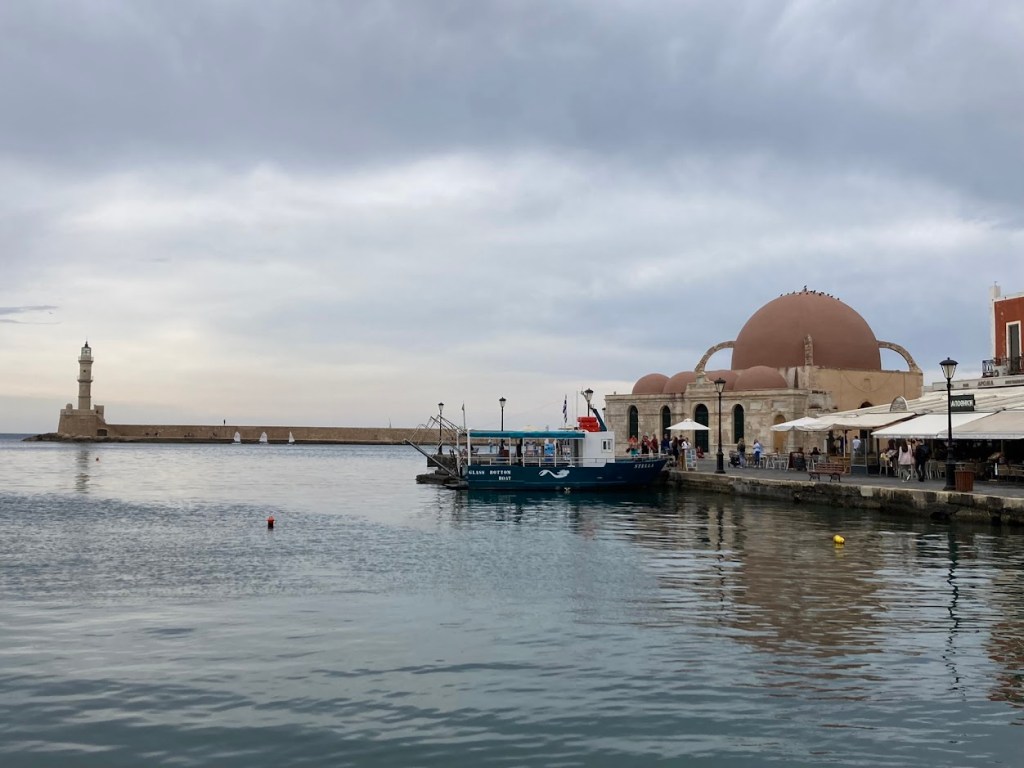
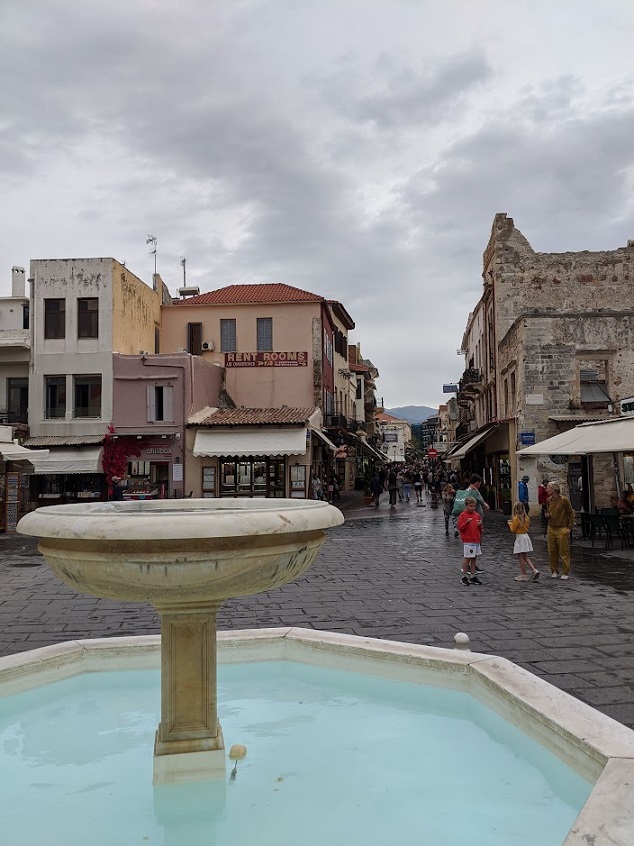
Chania’s Venetian port
Greek Orthodox church
Cretan answer to Thai pants
Lace

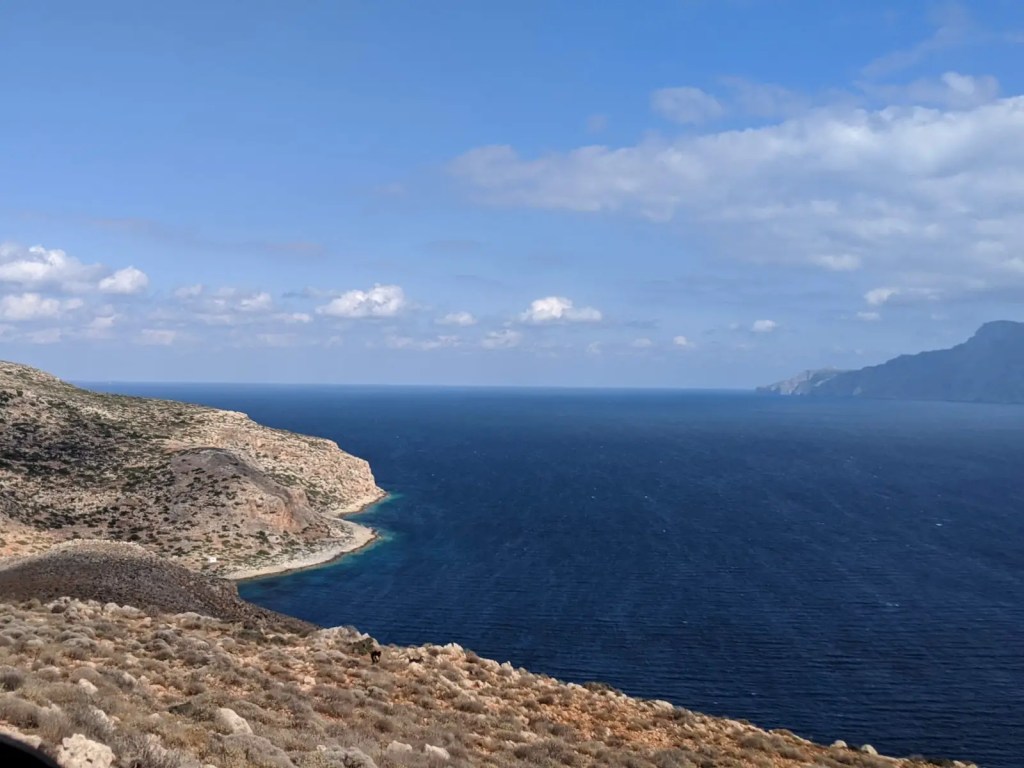
A supermarket visit and an evening drive on the slightly precarious Cretan roads lead us to the village on a slope above Kissamos, where we are staying for the rest of the holiday. Our hosts, an elderly couple, Y. and T., are eagerly waiting us at the front yard under the grapevine. “Yassas”, “ti kanete”, smiles, awkward silence – it is clear that I have to do some interpretation in the following days, which I don’t mind. After settling in the spacious villa, I drop off to a peaceful sleep, dreaming of cats, when outside there are claps of thunder.
In Crete – Day 0

October 2022,

“There’s a smell in the air”, says J. exiting the door of the plane.

I don’t have a strong sense of smell and currently trying to avoid negative thoughts about bin worker’s strikes. “The air is aromatic, but I cannot tell from what!”, she says.

After half an hour wait at the passport queue, we exit into the warm Chania night – time is almost midnight. “What are those bushes?”, she points forward. “Ah, oregano. That’s it! Your country smells of oregano and thyme, brilliant.”

The car hire guy is waiting patiently outside his booth and showing us how to bypass the fence – we accidentally arrived from the back side. He makes a good impression to J. “Polite and smiling. My first encounter with a Greek in Greece.” While handing over the car keys he warns us: “It is prohibited to use the car off-road. I will notice it, if you do.” We nod we understand and start.

The drive to Nea Chora suburb of Chania is easy, through bushy slopes. The young hotel receptionist instructs us where to park and wearily hands us the key to the room. The air in the room is a bit stagnant. J. states her interest to see the beach before she sleeps. So, even though it’s 2am, we decide to walk to the coast which is only three blocks away.

“Where are we?”. A few hours before we were watching from the train the cool undulating landscape and orderly cottages of Surrey, on the way to Gatwick. Now, we observe a vast sea, which begins at the edge of soft sand we squeeze under our feet, is disrupted by a row of rocks that jut out like teeth and reaches the faint outlines of peninsulas, indiscernible in number. The Mediterranean. Greece! A cluster of cats, munching outside a closed fish-tavern, provides extra confirmation. J. strokes a cat – we adore cats.
After many years, I return to Greece for tourism and not to see my family. 15 years since my last visit to Crete and J.’s first time in Greece. A special trip.

We aim for some autumn sun, and get to know the Cretan people and their island. What Crete had in store, we didn’t know. Some of it we couldn’t imagine either.
Diving Greece’s first underwater museum

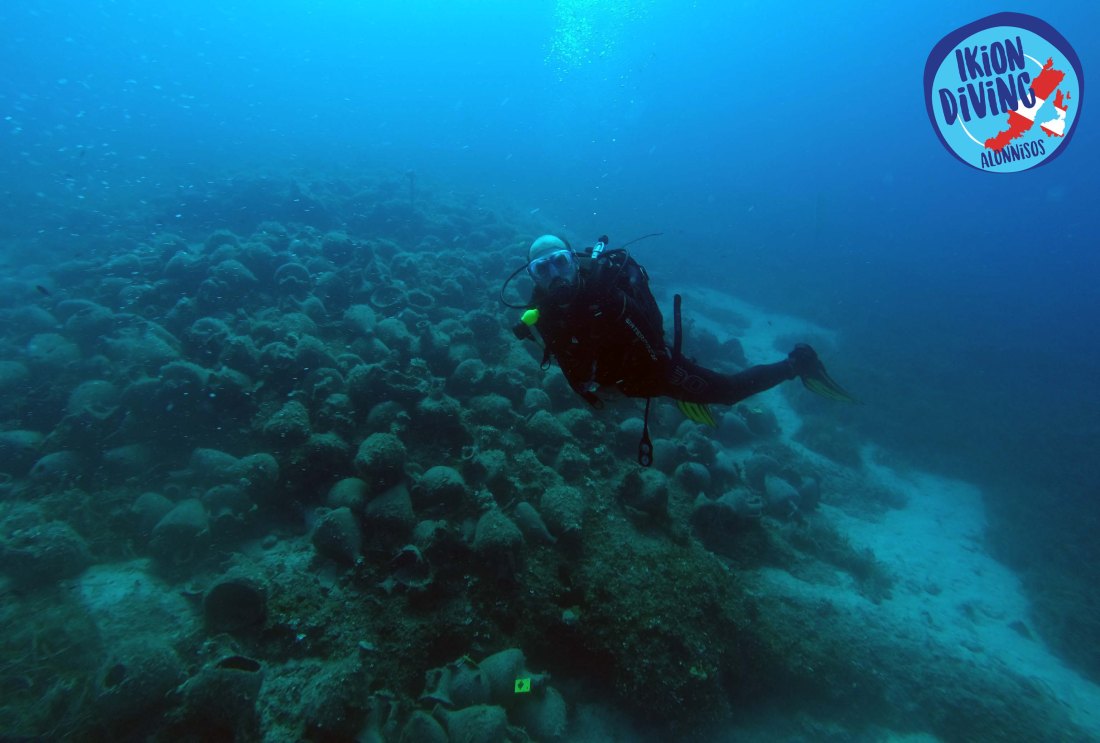
410 BCE. The Athenian merchant ship, 30 m. in length, sailed off the port of Ikos island (modern Alonnisos). The hold was full of wine, from Chalkidiki peninsula and Sporades islands, along with drinking vessels and other paraphernalia. The wine of these regions was in demand everywhere in the Mediterranean and the Black Sea. However, the economic crisis, brought about by the Peloponnesian war between Athens and Sparta, forced the owner to load more cargo than usual. It was a stormy night. Disaster was inevitable.
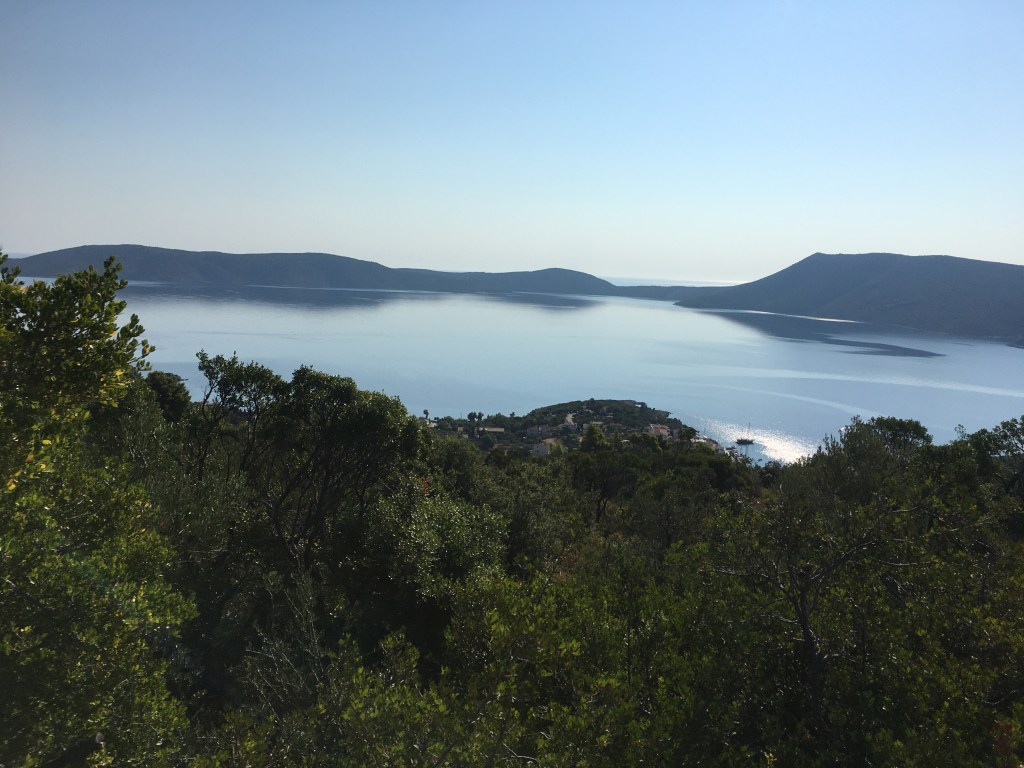
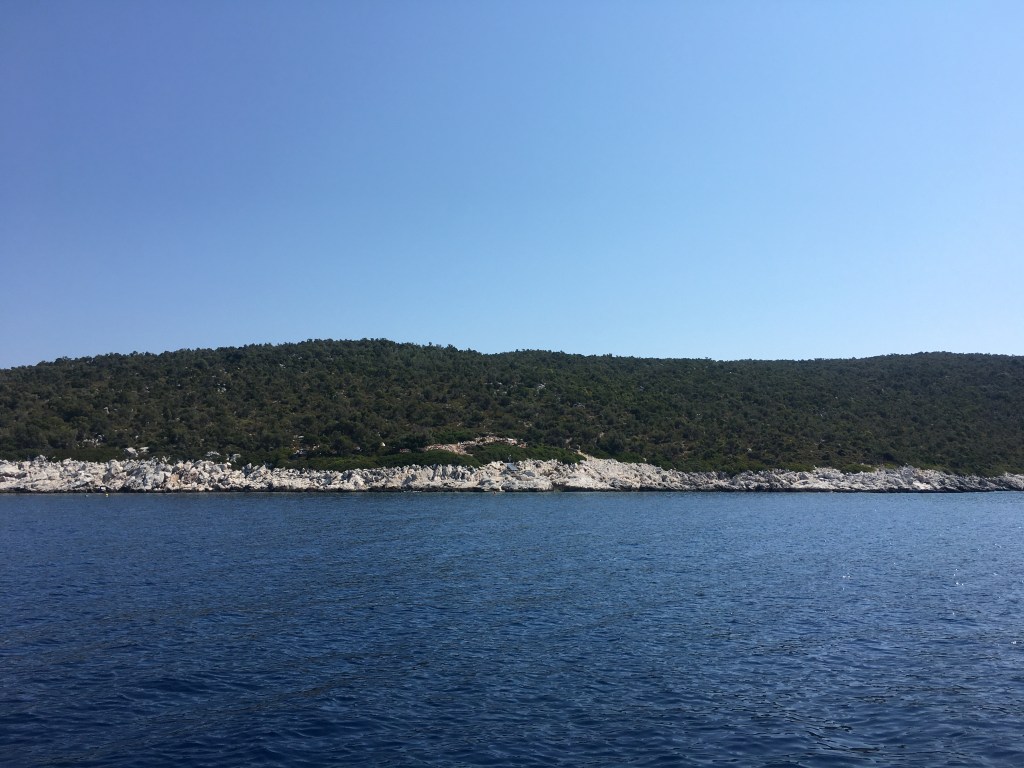
The straight between Alonnisos and nearby islet Peristera

Modern day. Training started a few days before. Together with G. from Athens we needed to upgrade our diving licence from maximum depth of 18 meters to 30 meters, since the shipwreck was lying in -28 meters. Training was organised by South African lady M., the manager of the local diving centre, and contained a ‘search and recovery’ dive. The instructor K. from Thessaloniki, who now lives locally, chose a special task for us: To retrieve the pots of a British artist, placed in the water a year earlier to test the effect of the sea on them.

Location of the shipwreck

A few Roman amphorae lying on the see floor, surrounded by seashells opening and closing, gave to K. the location of the hiding place. Inside the crevices of the reef we spotted a basket containing the artist’s vessels. K. tied a balloon to the wire basket and blew inside a small quantity of air from his mouthpiece. Just enough to control it the way back to the surface and the boat, a task that fell upon me and G.

G. is an old diver, but having a break in recent years and keeping in touch only through his job. He is a ship inspector, supervising the divers fixing and carrying things underwater. This time it was his turn. The basket with the pots changed hands, as we had to monitor our depth and oxygen levels and also for rocks appearing on the bottom while keeping our buoyancy. The pots where in a fragile balance of breaking and bitterly disappointing the artist. K. was also aware of the water police, who he had confronted last time and had to reassure them that the vessels where only 1 year old. All went good this time.

Lady’s amphorae retrieved

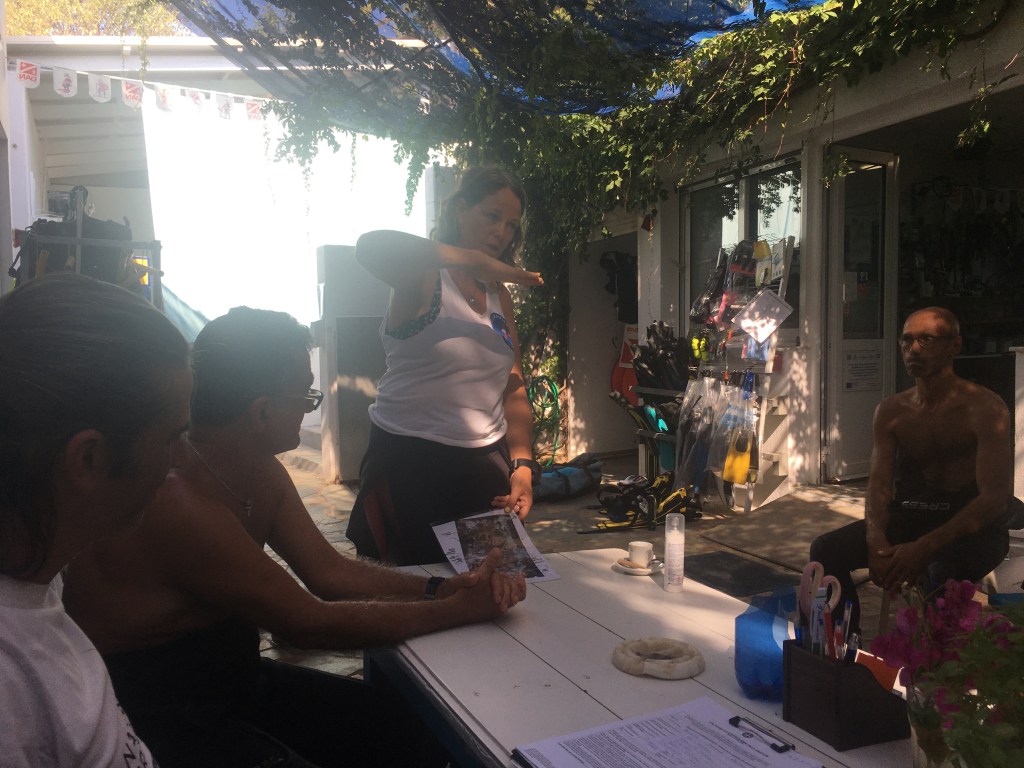
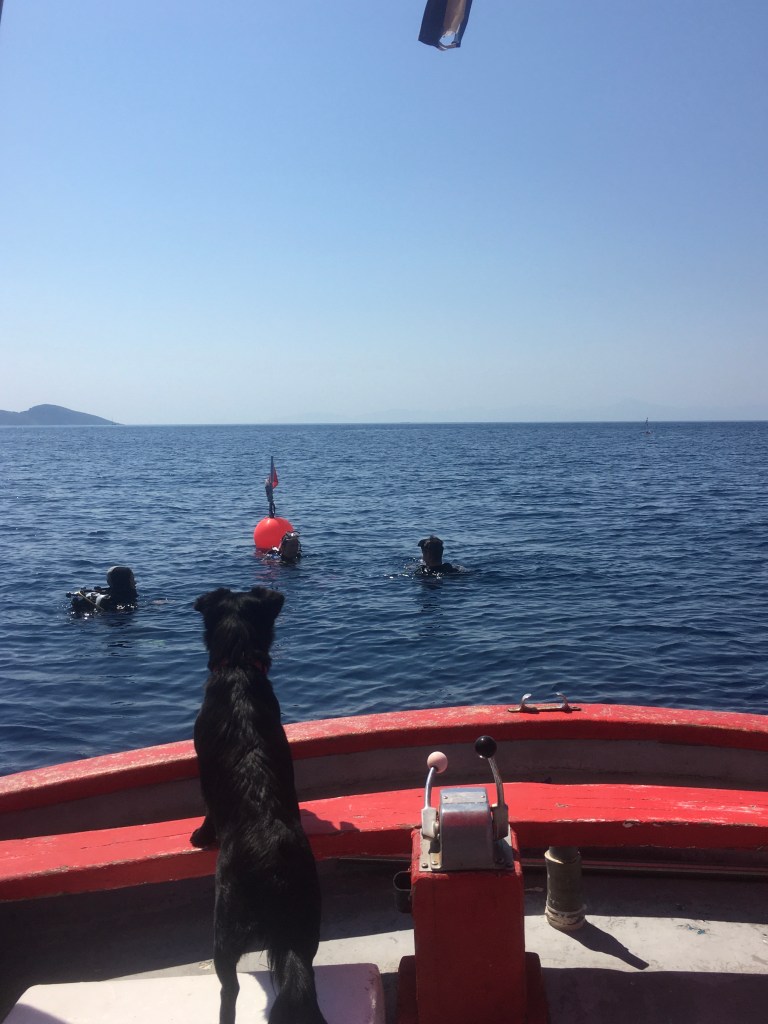
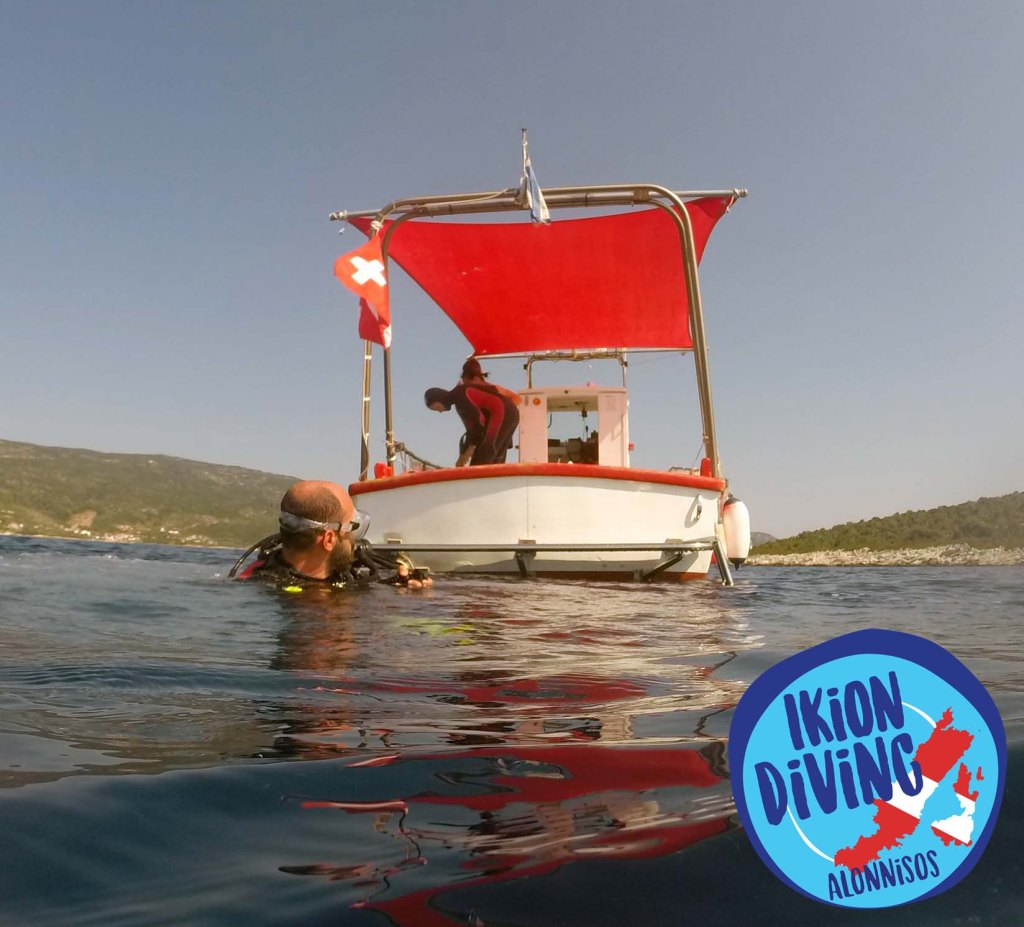
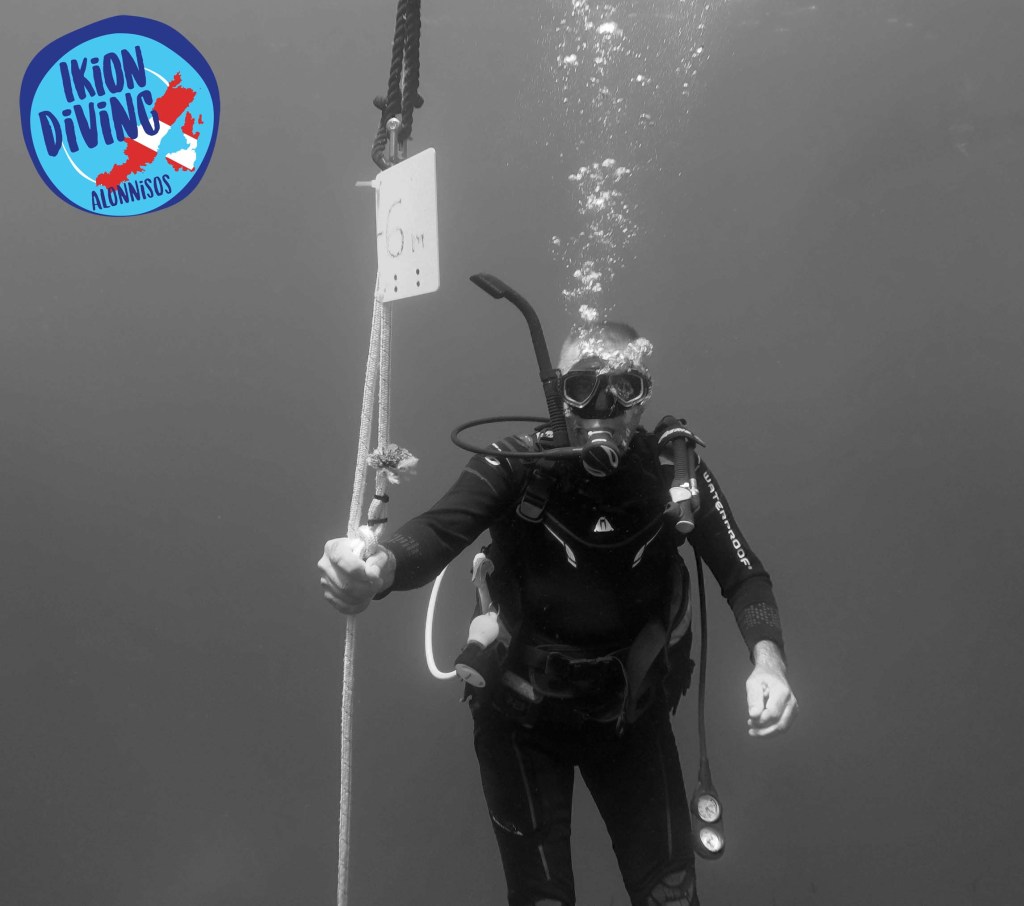
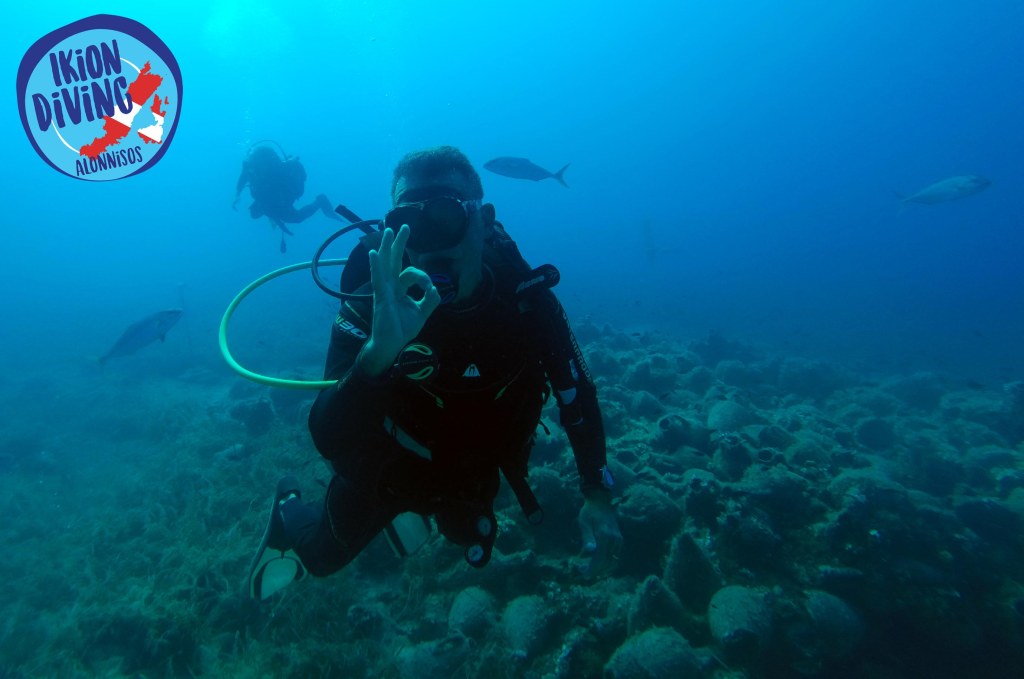
Day of the dive. A. an underwater archaeologist briefed us at the diving centre. Consequently, the speed boat headed to the islet of Peristera, where the remains of the ancient ship were found. The remains today are the amphorae that carried the wine and the ballast of the ship. We spit in two groups and entered the water under the gaze of the ship dog. My group included K., G. and G. an Italian with a family history on the island – Italians have a multi-decade love affair with the island and diving. First, was the vertical dive to minus 18 meters following the buoy rope. Following, two turns around the wreck stopping at information points.

Pre-dive briefing.
First group in the water

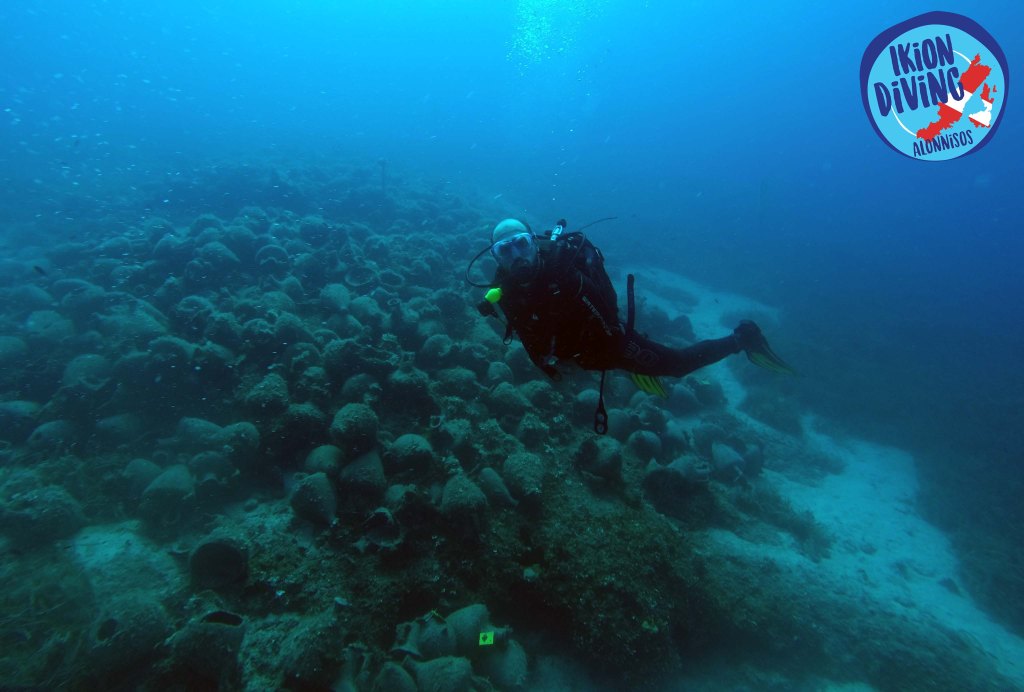
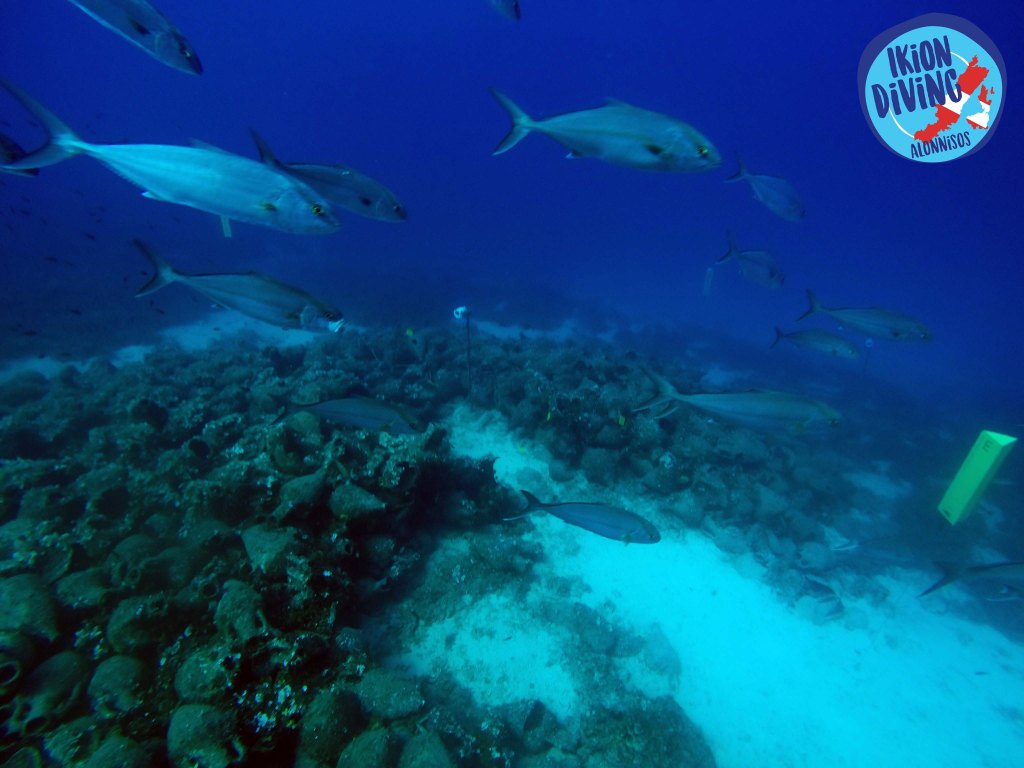
The amphorae were of two types, depending on their origin, and in three different layers. Some of them clustered together in small islands, with signs of the excavation trenches and random rocks from the ship’s ballast in the middle. These leftovers from the past had new residents. Curious groupers were stopping between the islands. A moray eel was manoeuvring inside the cracks, while an inky black head popped out of an amphora claiming without doubt that ‘this is my home’ – it was another eel. The second time around we stopped to see the profile of the wreck: protruding vessels created a ‘lost Atlantis’ picture. We subsequently went up a level to stare from above. A school of larger fish, amberjacks – or ‘manalia’ as the locals call them – started circling around us. ‘They are curious with people’ said K. after the dive. The second group of divers reported the sighting of a large ray. Diving was over and it was a blast.

Amberjacks

The underwater archaeological site of Peristera is open to the public starting summer 2020. A diving licence that covers 28 meters depth is necessary and the archaeologists are strict about this. You book a diving slot that lasts for about 2 hours, including the briefing and getting to the diving spot. For more info contact local diving centre:  http://www.ikiondiving.gr/.

Finally, in this website: https://nous.com.gr there is live picture from the site from an underwater camera. Sometimes you can see the divers.

Images with Ikion logo courtesy of Ikion diving.

A long weekend in Slovenia: The capital

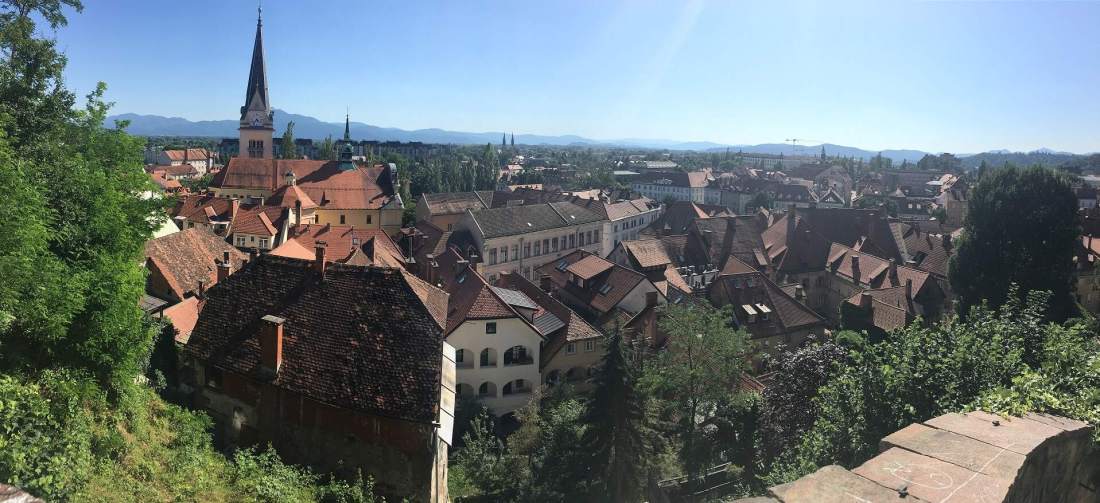
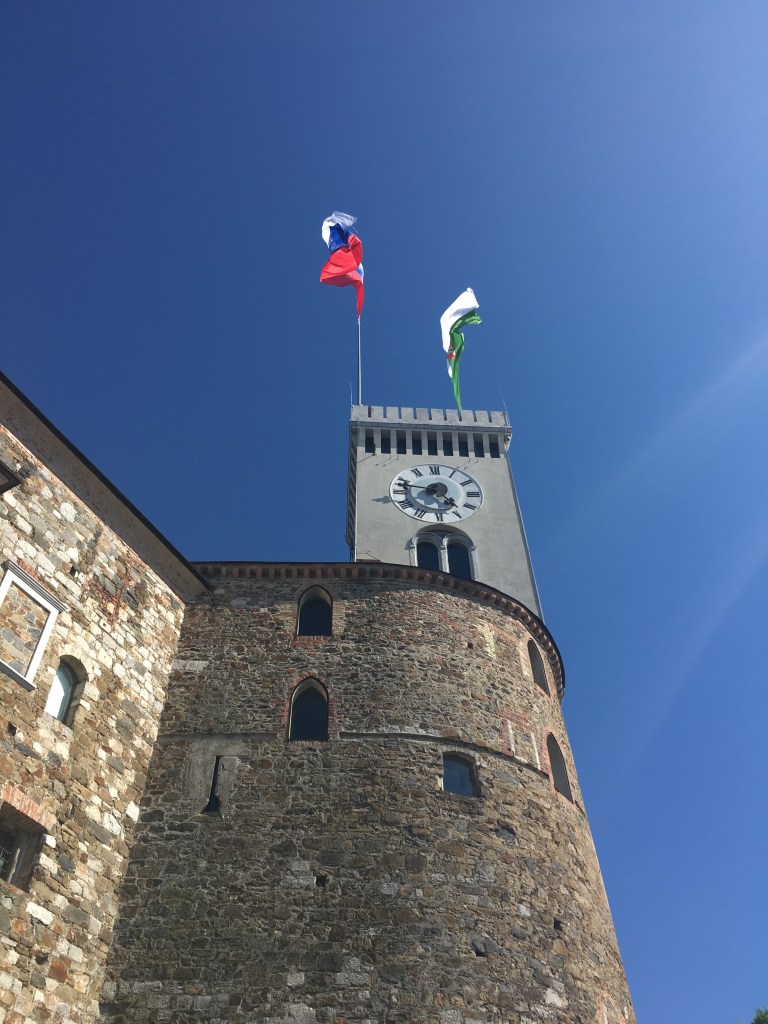
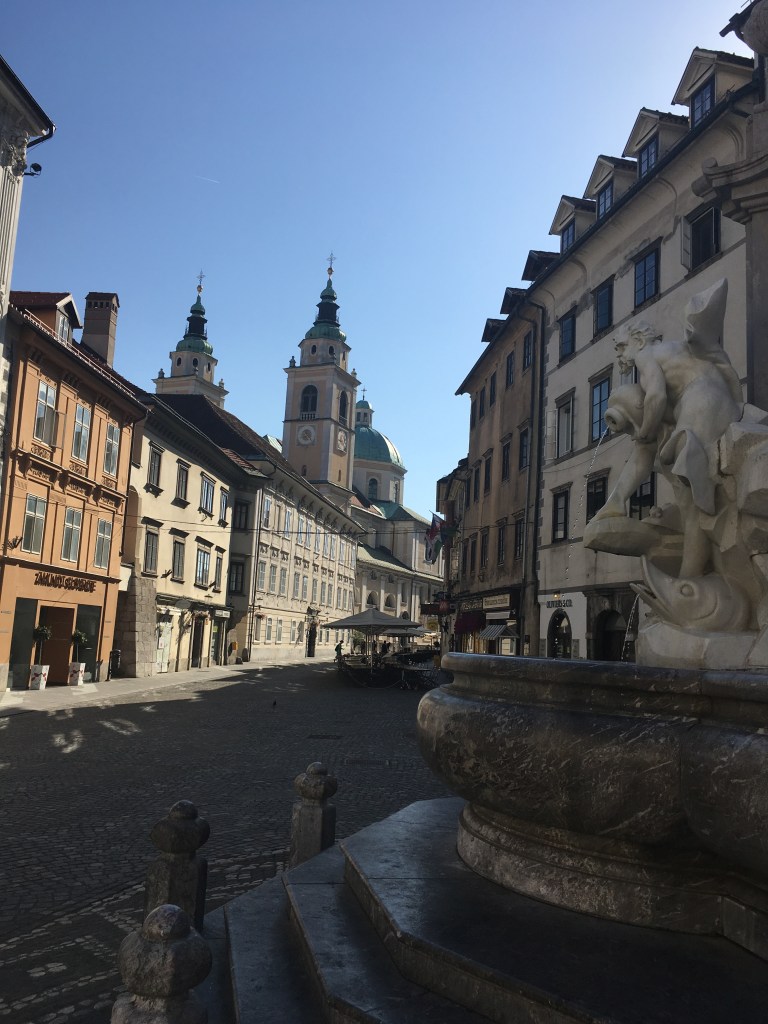
That evening we climbed Castle Hill in central Ljubljana. Below, the steep pitch of the roofs and the amount of trees between the buildings indicated that rainfall is very common. From the battlements we could see the wooded hills around the capital, including Rožnik hill, opposite, with its hiking paths offering a welcome break from the touristy centre. The castle itself has a long history, starting as an Illyrian fortification. Nowadays, it features a medieval stronghold with the flag of Ljubljana on top, which features the castle itself and a dragon.

IMG_6947

On Sunday morning, I walked to the city centre to take some pictures in my own time. It was early enough to beat most of the other tourists, while locals seemed to have taken time away, leaving their capital literally empty. Also, temperature hadn’t yet reached the high 30’s that one gets at midday. Perfect.

IMG_6990

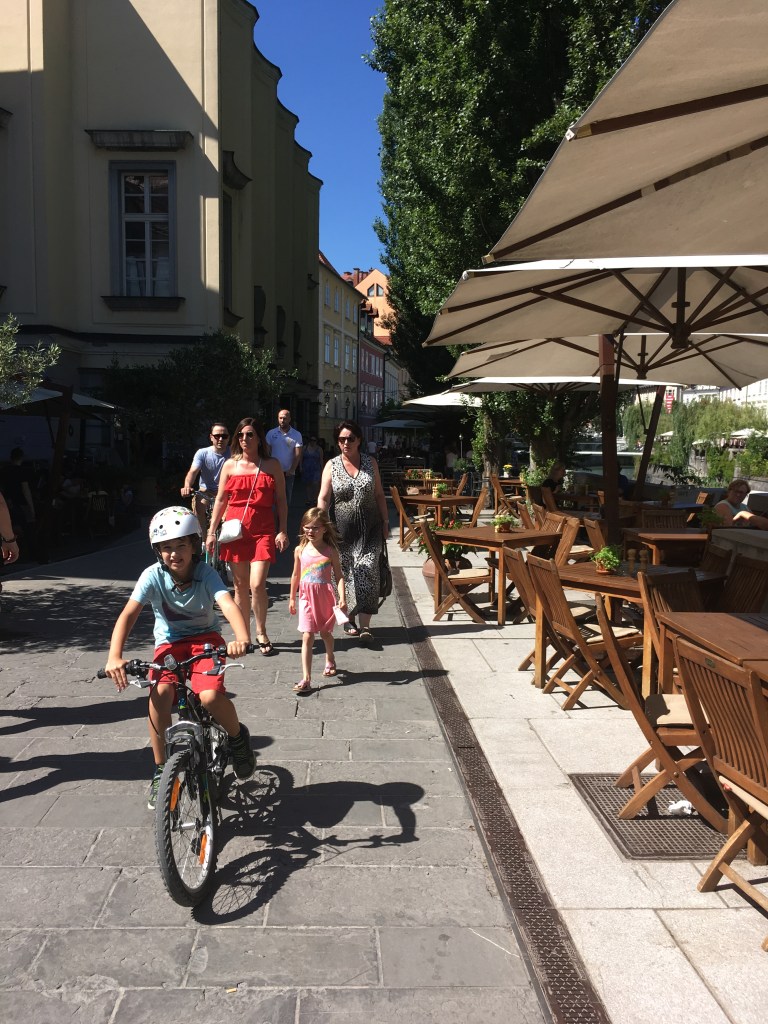
At some point between 8:30 and 9 am large groups of tourists were starting to spill out of their hotels. Cafeteria personnel were welcoming them and soon the centre became too busy.

IMG_7006
IMG_7016

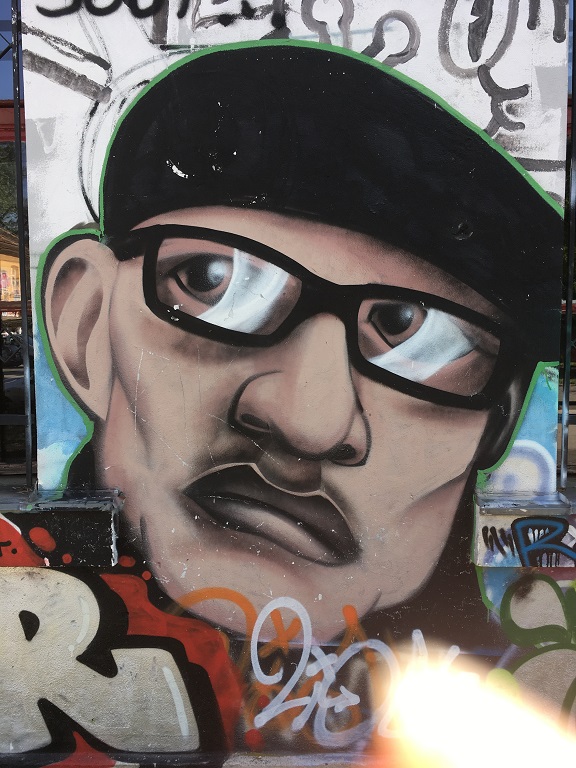
It was time to move out towards the ‘alternative’ Metelkova neighbourhood. There, I encountered a museum complex and people in reclining chairs on the grass, drinking coffee or eating breakfast, waiting for it to open. I strolled around the area which looks like a big squat. Colourful characters were quietly sitting in front of the colourful building fronts and nosy passers-by like me, often on roller blades or scooters, were photographing the rich graffiti art.

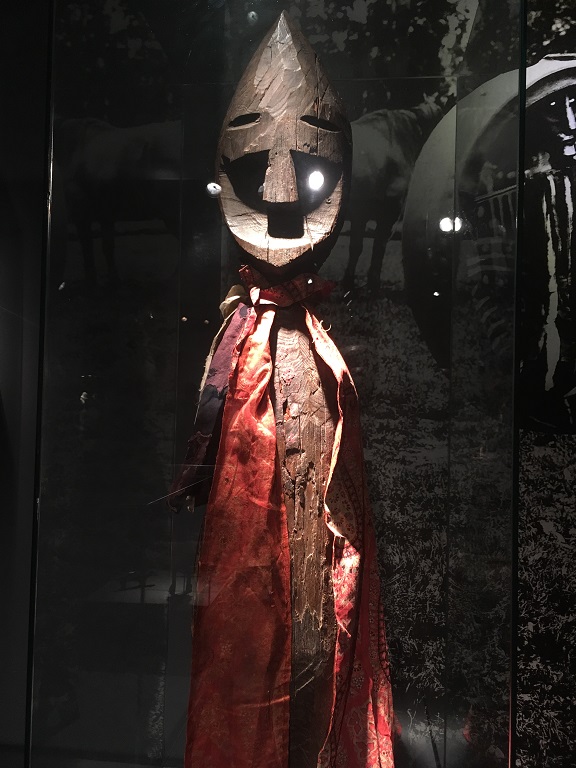
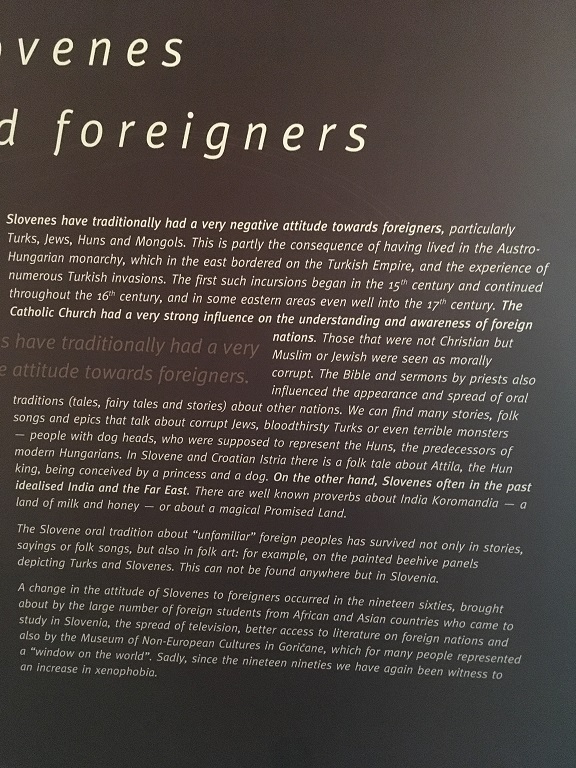
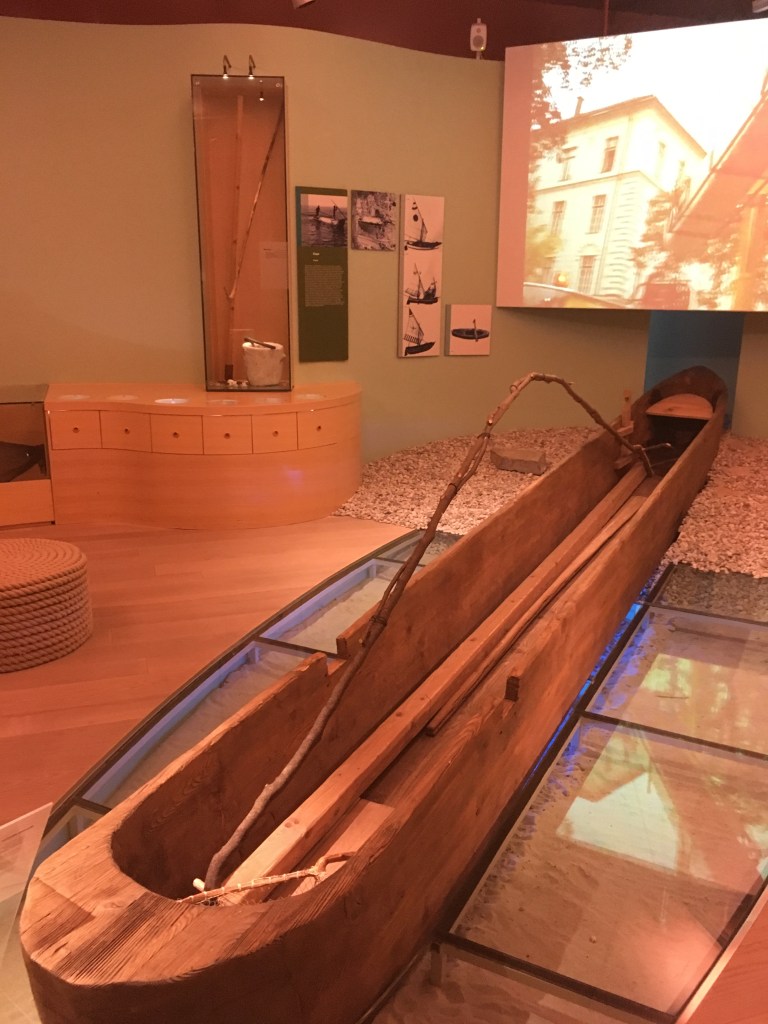
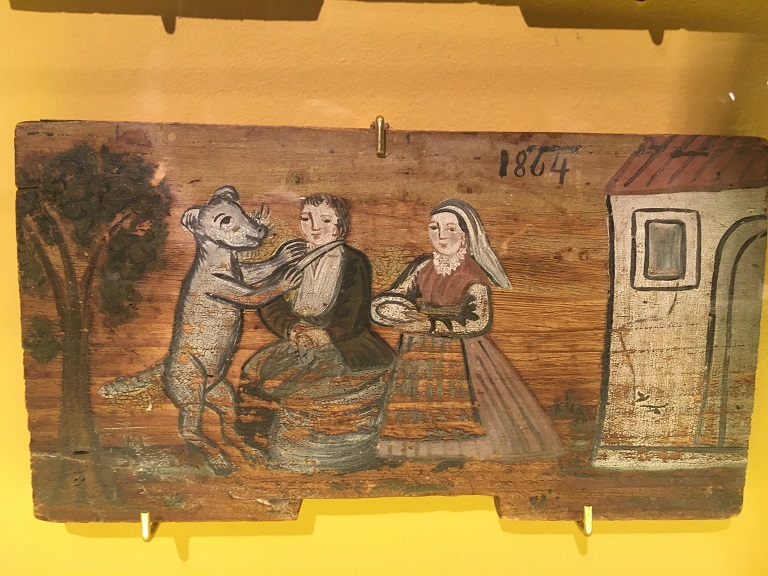
It was time to enter a museum, which I chose to be the Slovenian Ethnographic Museum. The ground floor hosted a very interesting temporary exhibition of Siberian shamanism. There was also a floor on the history of Slovenia, especially in relation to the rest of the world. I found a panel on the history of their xenophobia (below) disarmingly honest. There was also the story of the Čupas, the now extinct wooden boats, that Slovene fishermen dragged from the mainland to the rocky Adriatic coast, where no suitable places to build ports existed. The top floor was dedicated to the traditional arts of honey and ginger bread making. Very atmospheric, with ambient sounds and an exhibition of the beekeepers quirky folk art.

IMG_7098

The museum made me realise that Slovenes are not merely an Alpine or a Mediterranean nation, but a unique mixture of both.

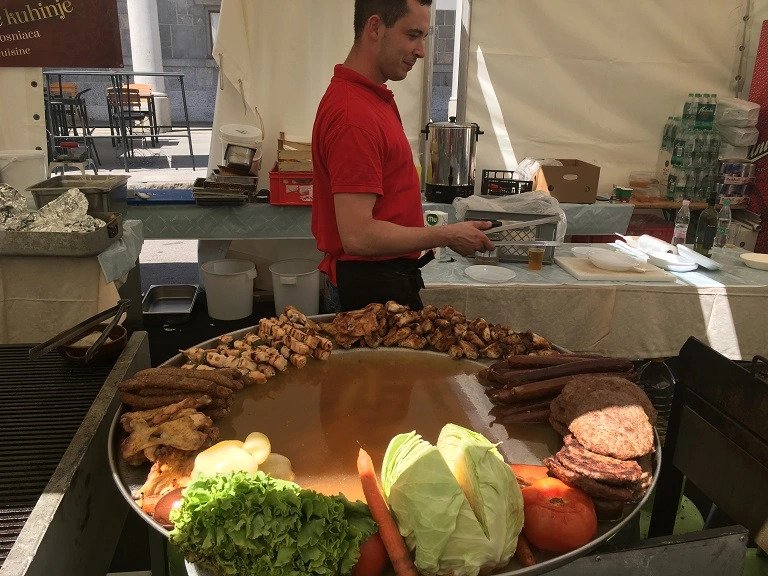
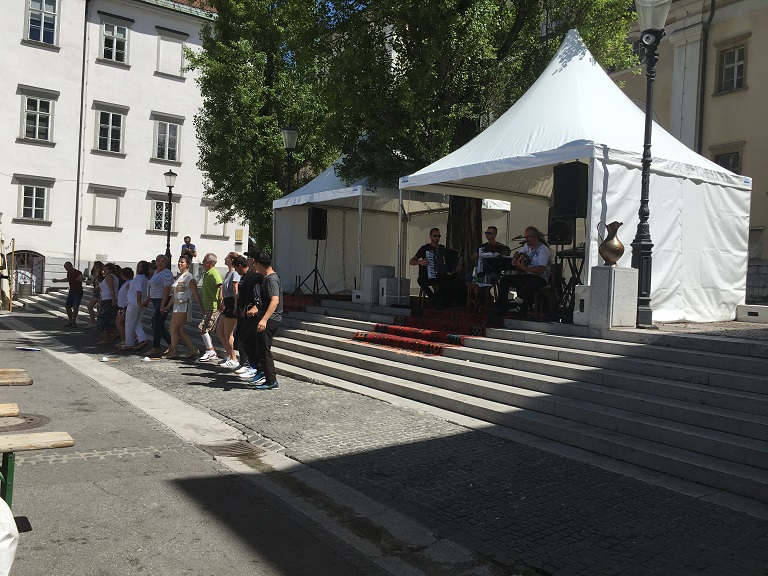
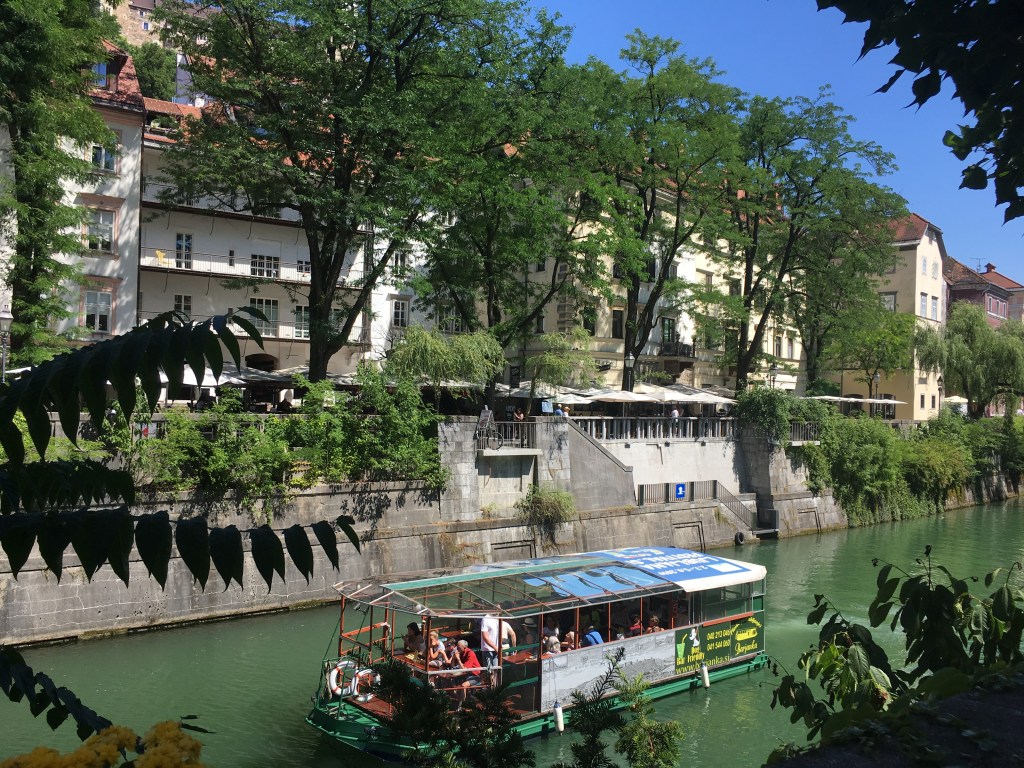
Outside, the town squares and markets of Ljubljana were transforming into a Balkan festival. Folk bands, dances, lots of meat, gelato and many fountains to hydrate under the relentless sun. All happening next to the main river, Ljubljanica.

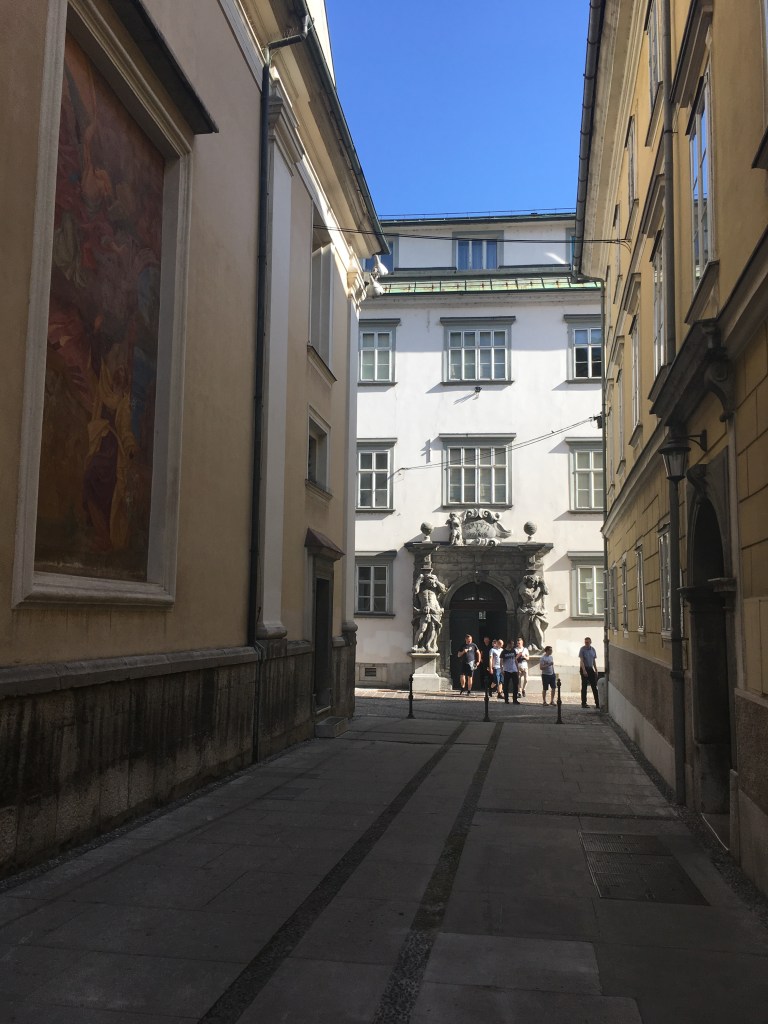
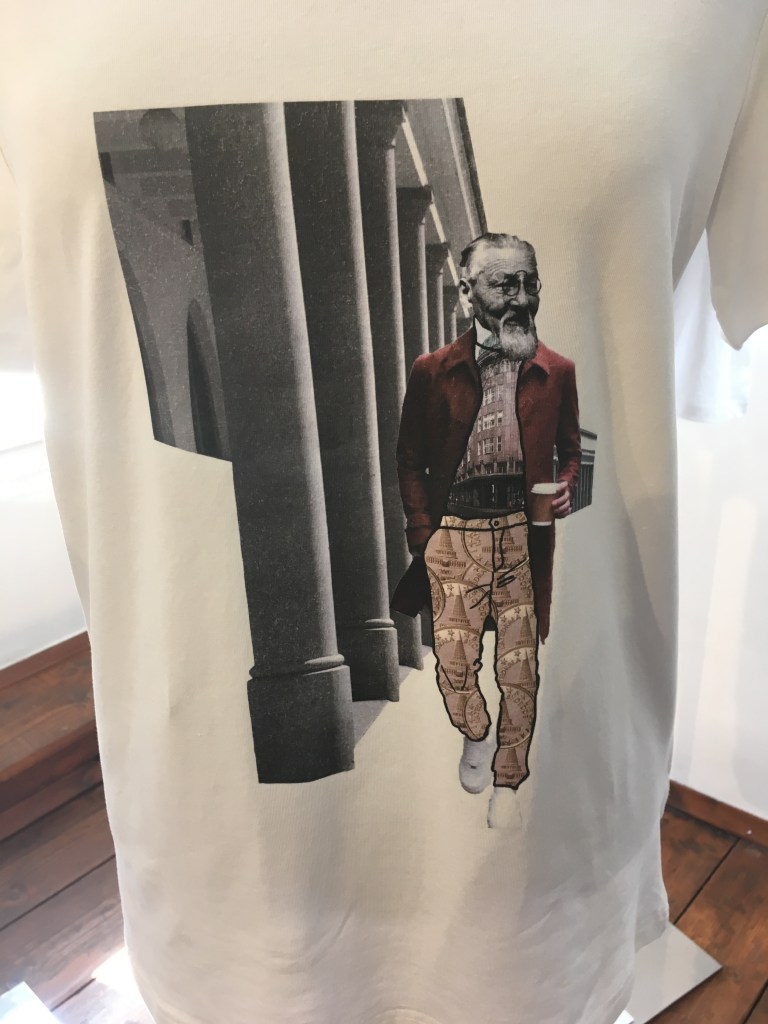
The last hours in Ljubljana we spent admiring the rich architecture. From neoclassical to Art Nouveau, there is something for everyone. There are even Roman ruins for the archaeology geeks among us. One cannot fail to notice the frequent use of classical columns. The perpetrator is a certain Jože Plečnik, Ljubljana’s beloved architect, who can be found even printed on T-shirts. To be honest, I am not sure what to make of all these columns. But the most important is the locals like them, as they seem at least to do.

IMG_7184
IMG_7200
IMG_7217

It was time to depart. I was glad I was introduced to this scenic country with a very unique culture, combining North and South European elements. Also glad that, from now on, I will never confuse Slovenia with Slovakia! The best way to learn the geography of a place is to go there.

IMG_7180

A long weekend in Slovenia: The countryside

I visited Slovenia last June, after the invitation of a friend who lives and works in the capital, Ljubljana. The plan was to combine cycling, trekking and sightseeing and do as much as possible in three days.

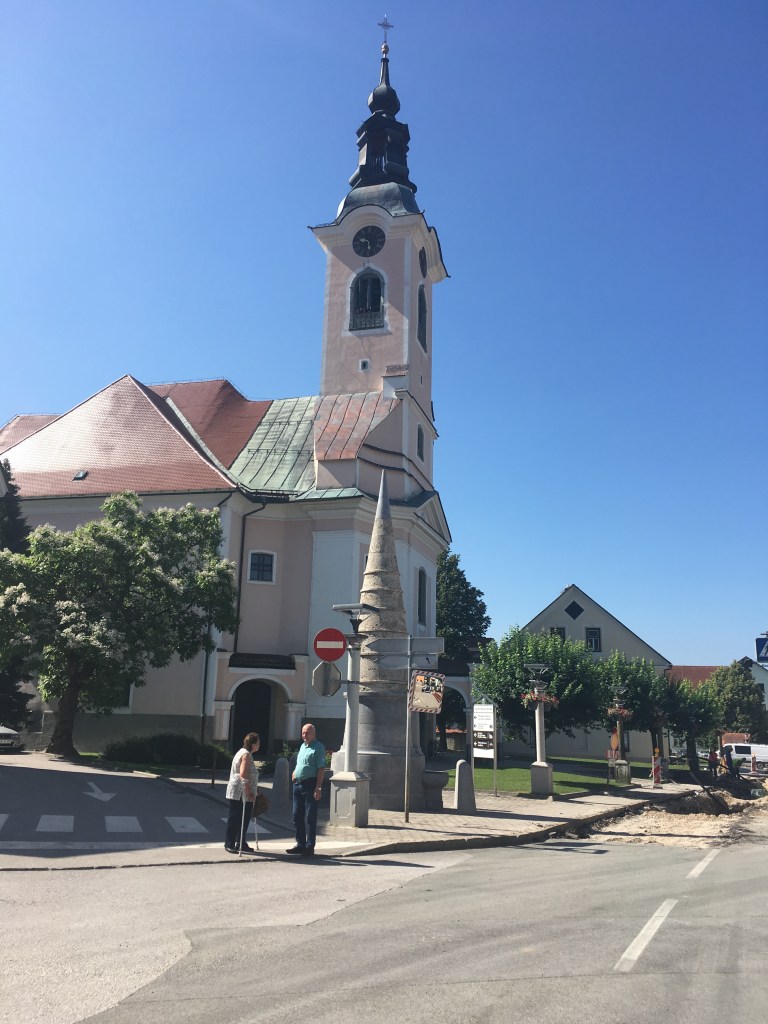
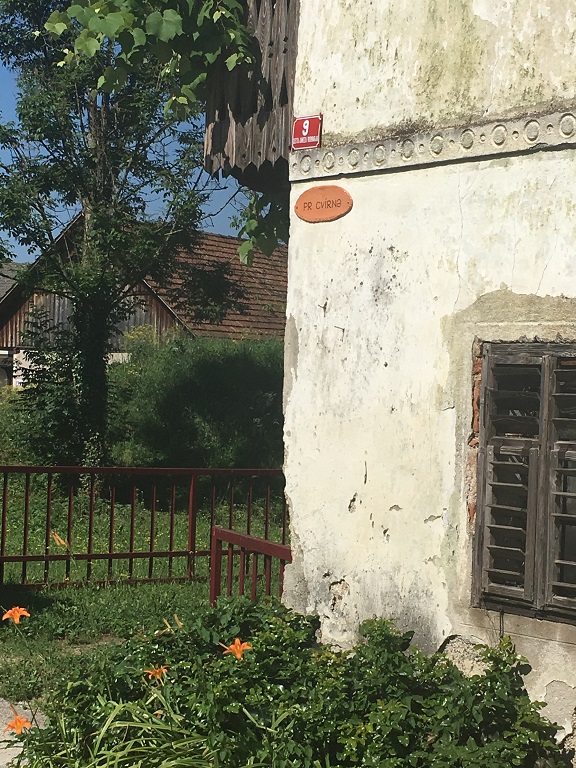
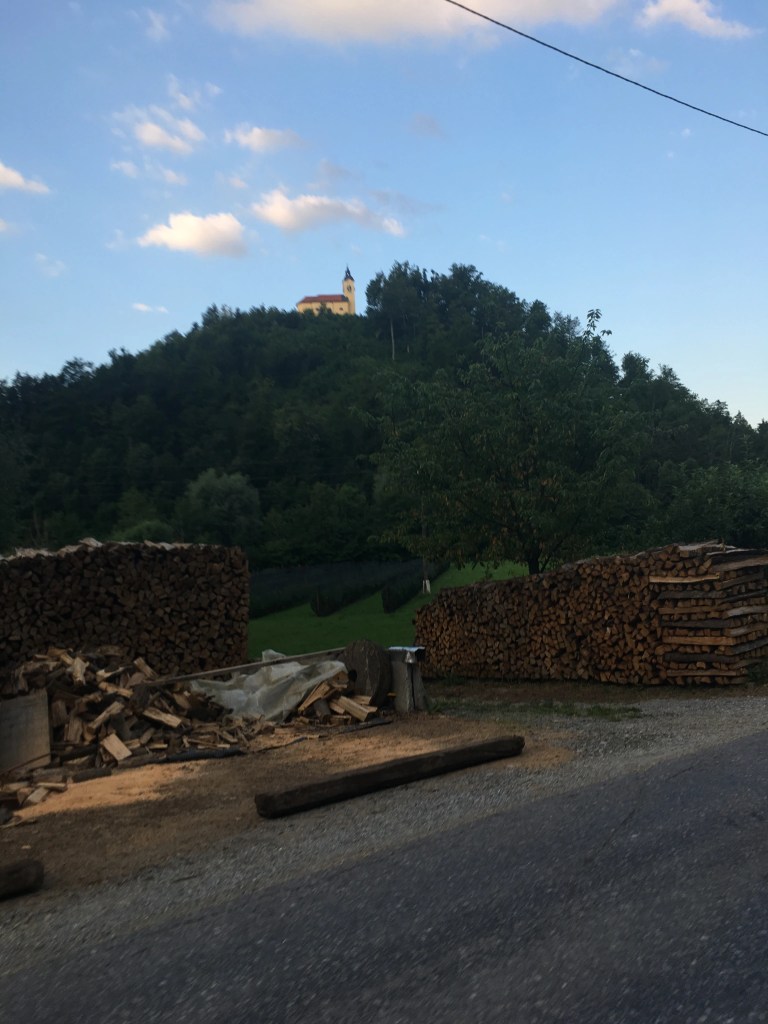
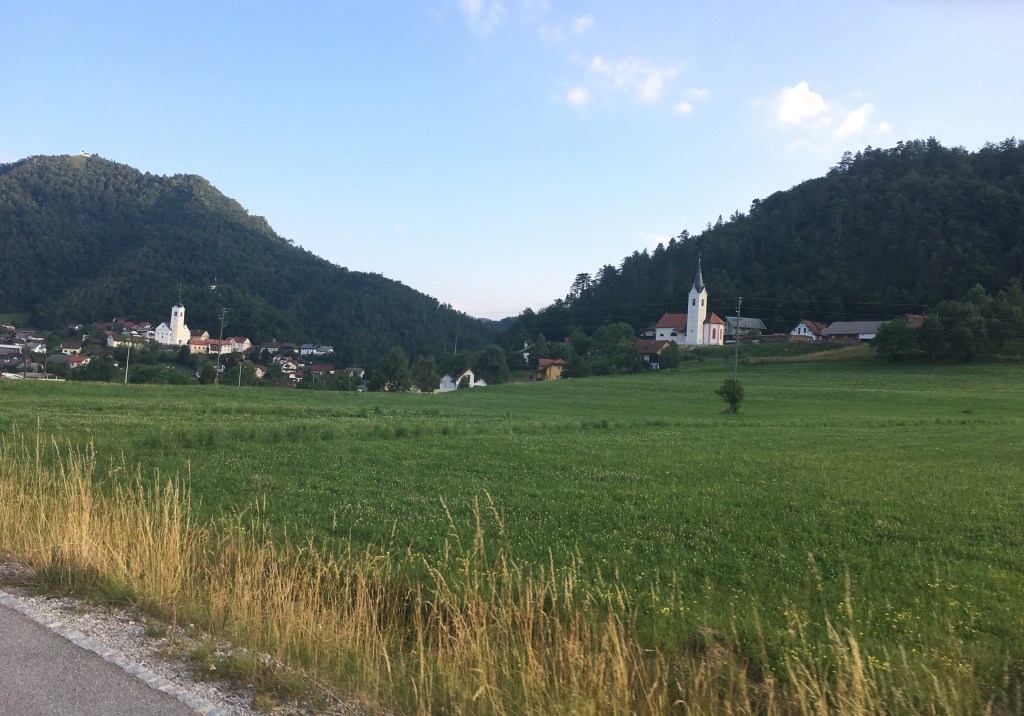
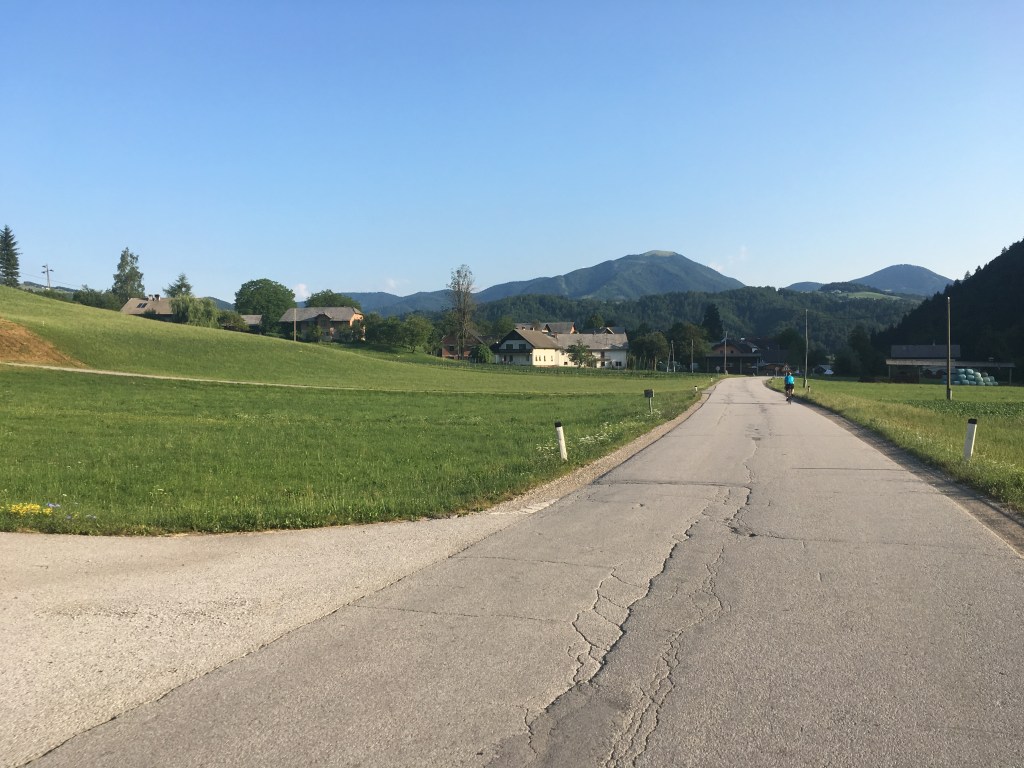
We both took it seriously – some of us more than others – and woke up at 5:00 am on Friday. The roads were empty and the air clean and fresh. The sleepy neighbourhoods and weathered roads of North Ljubljana were not a serious obstacle and soon we were climbing the first hills. Beige church towers with grey pointy roofs overlook dark green and golden summer fields, big piles of wood and small villages. The smell of animals lingered. All was wonderfully rustic.

After passing places with difficult names, like Hrastenice or Polhov Gradec, we heard the bells ringing as we pushed through a steep uphill.

The asphalt became gravel, then asphalt again and we went uphill and downhill all the way to the small river Poljanščica, where we turned right.

Our midway milestone was the medieval town of Škofja Loka. Surrounded by hills and forest, it sits on both sides of the river. At the edges of the town we could see a church towering a hillock, manor houses with red roofs and a castle dominating all. We rode through the very narrow old streets. It was almost mid morning and people were out doing their business.

The rest of the route was passing through dense small villages and fields. At some point we needed to be creative and do a diversion, since the road heading back south to Ljubljana was blocked by road works. An opportunity to catch a glimpse and photograph some small corners.

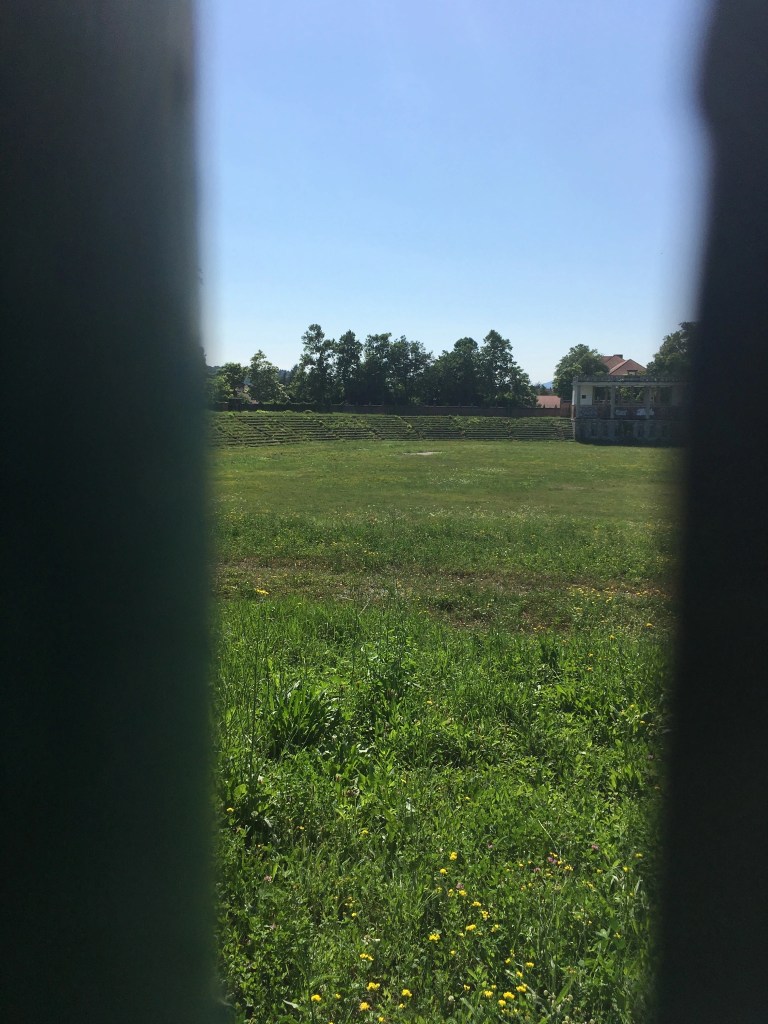
Next morning, we walked to Ljubjiana main coach station. On our way, we passed through the old Olimpija Ljubljana stadium. Nowadays, it is full of weeds. My friend told me half-jokingly, half-seriously it’s safer to wear green clothes around here. And certainly not the purple colours of Maribor FC, their mortal enemies. Well, that’s the Balkans. Don’t be deceived by the clean wide pavements.

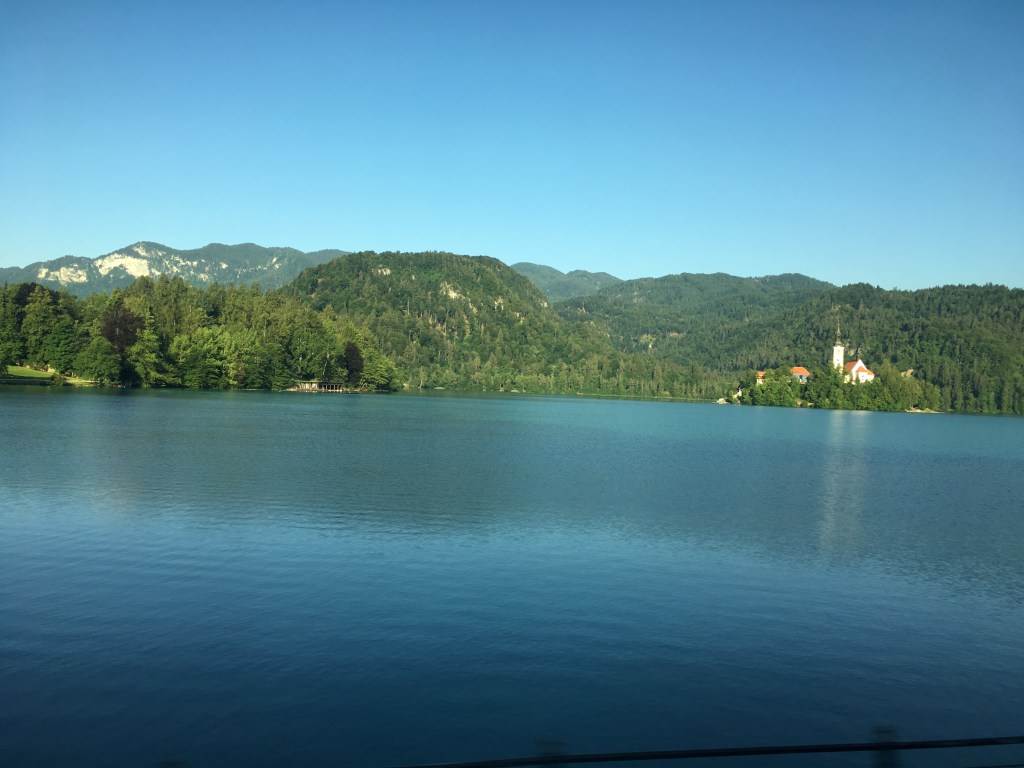
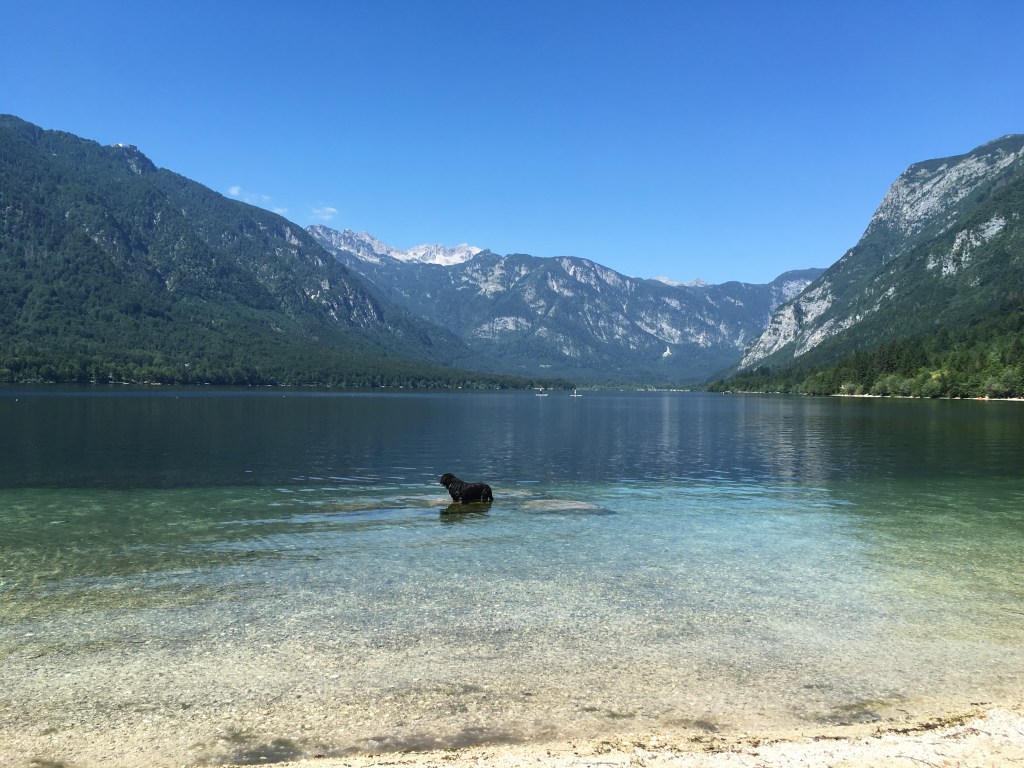
We caught a coach to Lake Bohinj. On the way, we passed by the famous Lake Bled, with its trademark small island and church on it.

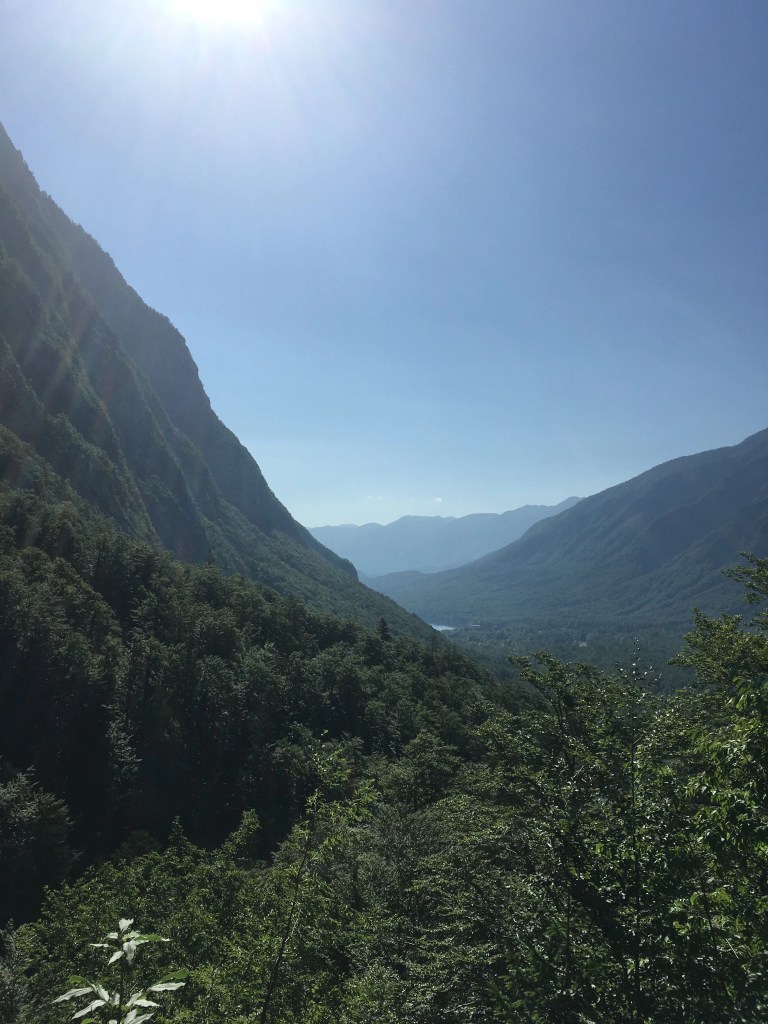
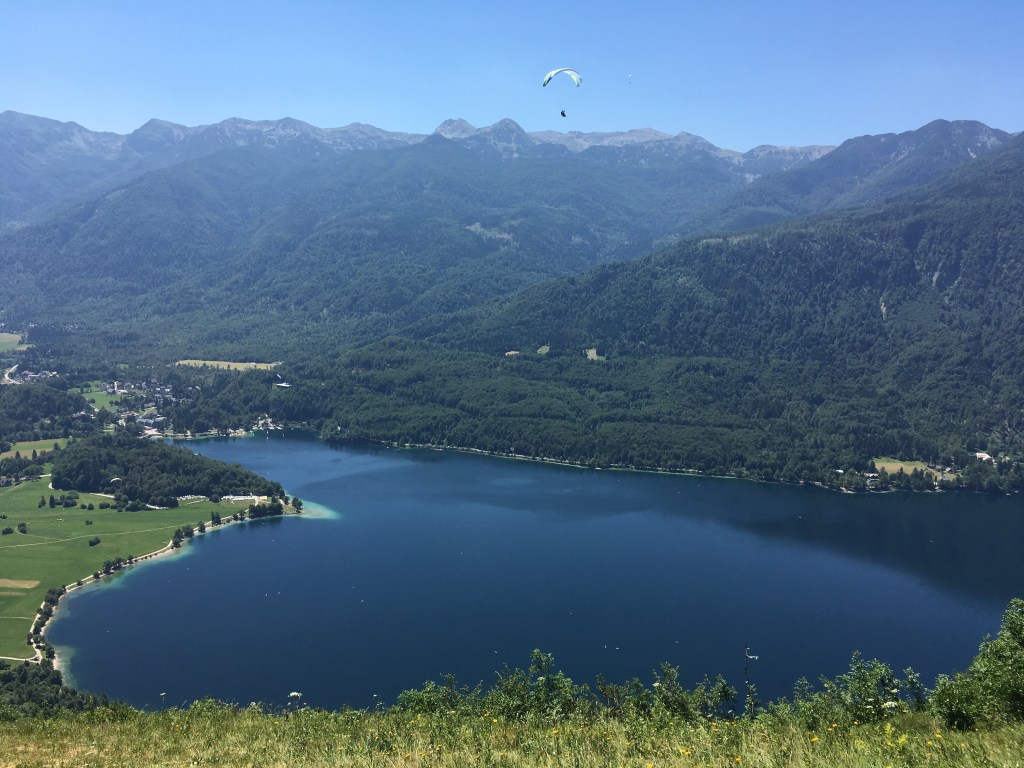
When in Bohinj we began our ambitious trek, starting from the west end of the lake. We were about to climb the mountain that commands the north side and descend from the east side. Not too far from the start, though, we had to turn back. “Path closed”. My friend found on-line that there was recently an accident, a Dutch tourist falling over the edge and losing his life. We walked to the Savica waterfall instead, where the man selling tickets complained that many tourists take the trek lightly, wearing flat shoes. I looked at my shoes. Perhaps it was better it was closed!

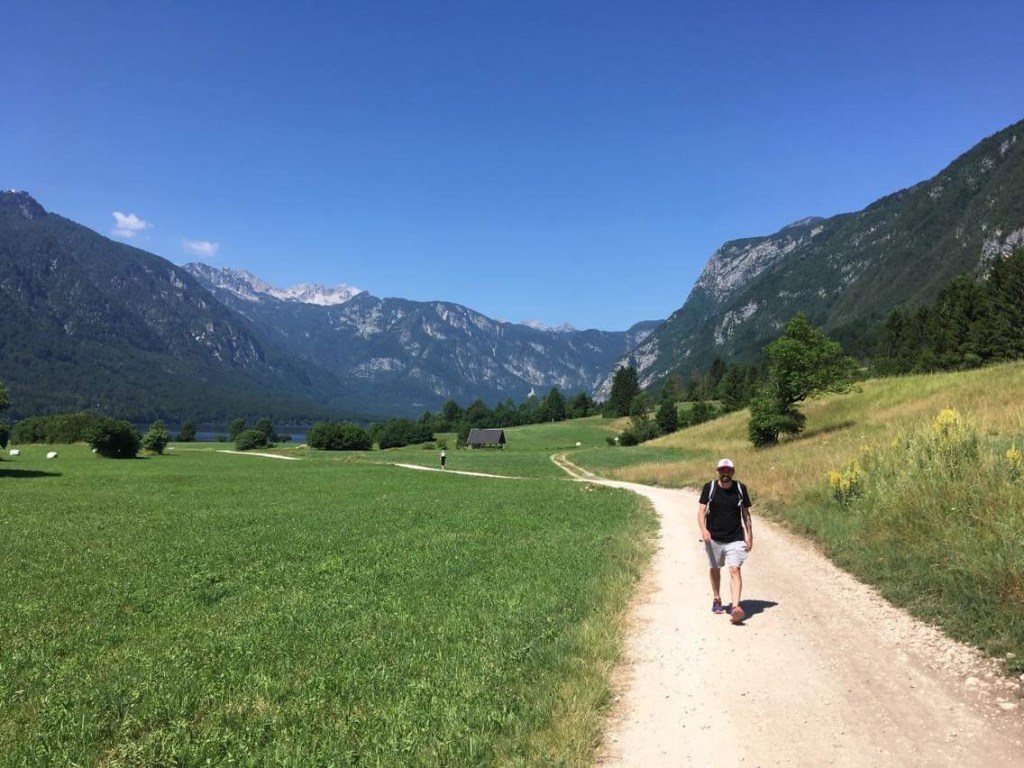
We walked parallel to the north side of the lake. Many people had dropped their bicycles and had dipped into the water. Slovenian people seem to make the most of their outdoors. From the east end, we climbed the mountain until we reached a high point. There we sat and ate our sandwiches taking a good view of the wild Slovenian country.