Diving Greece’s first underwater museum

410 BCE. The Athenian merchant ship, 30 m. in length, sailed off the port of Ikos island (modern Alonnisos). The hold was full of wine, from Chalkidiki peninsula and Sporades islands, along with drinking vessels and other paraphernalia. The wine of these regions was in demand everywhere in the Mediterranean and the Black Sea. However, the economic crisis, brought about by the Peloponnesian war between Athens and Sparta, forced the owner to load more cargo than usual. It was a stormy night. Disaster was inevitable.
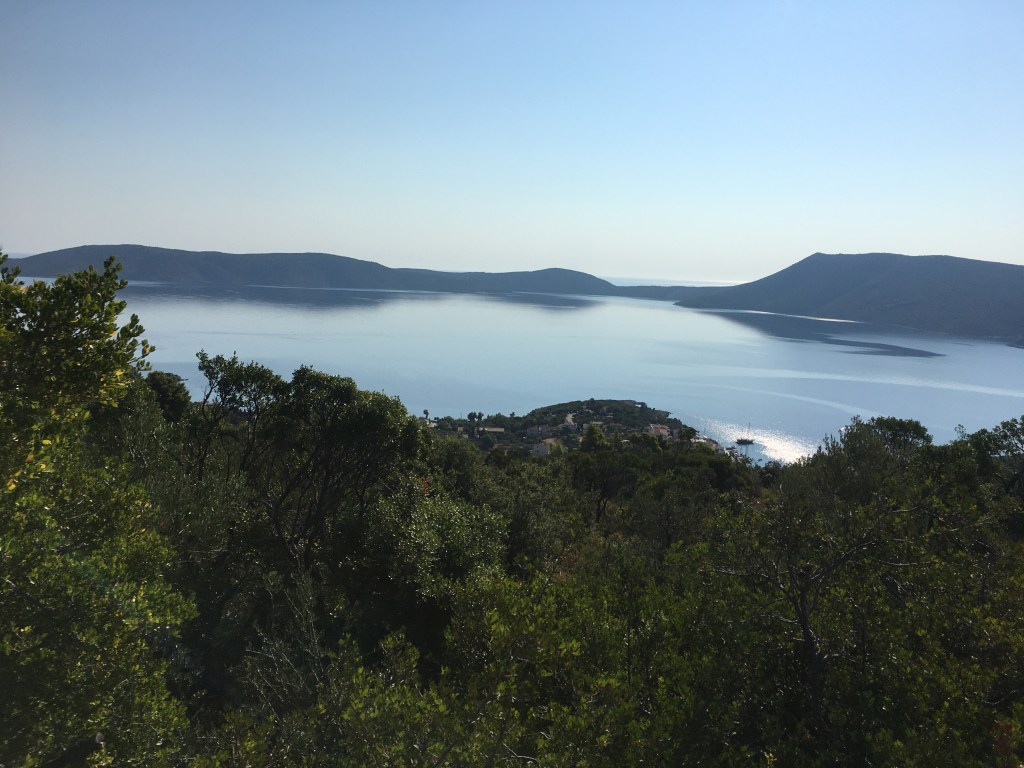
The straight between Alonnisos and nearby islet Peristera

Modern day. Training started a few days before. Together with G. from Athens we needed to upgrade our diving licence from maximum depth of 18 meters to 30 meters, since the shipwreck was lying in -28 meters. Training was organised by South African lady M., the manager of the local diving centre, and contained a ‘search and recovery’ dive. The instructor K. from Thessaloniki, who now lives locally, chose a special task for us: To retrieve the pots of a British artist, placed in the water a year earlier to test the effect of the sea on them.
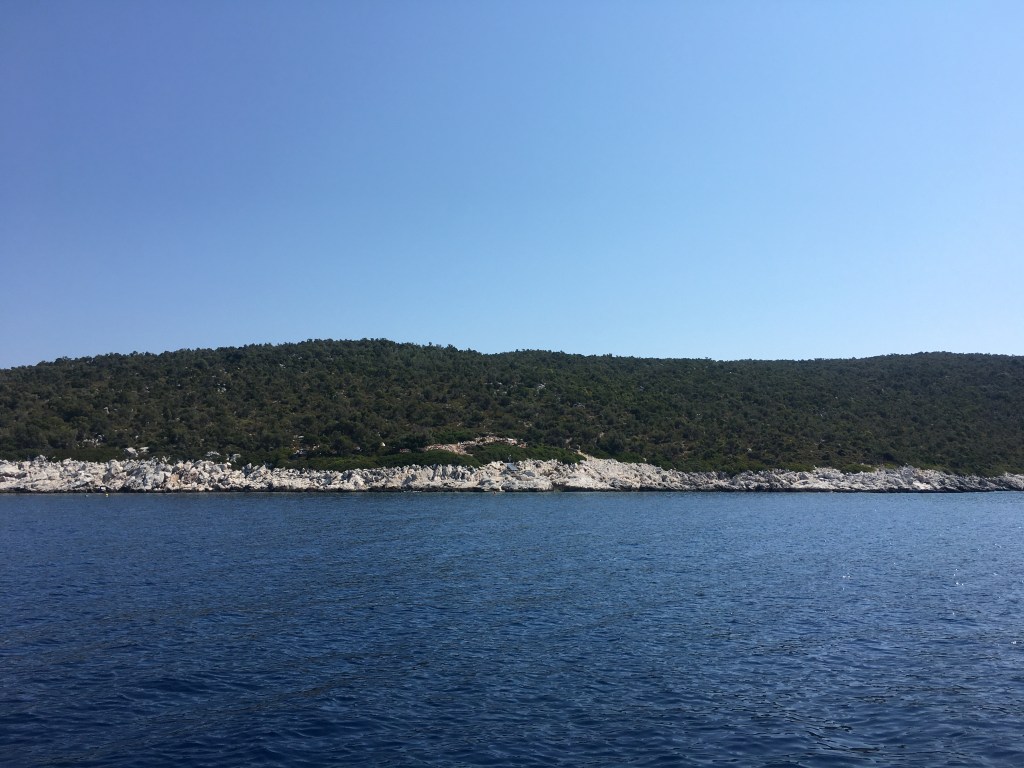
Location of the shipwreck

A few Roman amphorae lying on the see floor, surrounded by seashells opening and closing, gave to K. the location of the hiding place. Inside the crevices of the reef we spotted a basket containing the artist’s vessels. K. tied a balloon to the wire basket and blew inside a small quantity of air from his mouthpiece. Just enough to control it the way back to the surface and the boat, a task that fell upon me and G.

G. is an old diver, but having a break in recent years and keeping in touch only through his job. He is a ship inspector, supervising the divers fixing and carrying things underwater. This time it was his turn. The basket with the pots changed hands, as we had to monitor our depth and oxygen levels and also for rocks appearing on the bottom while keeping our buoyancy. The pots where in a fragile balance of breaking and bitterly disappointing the artist. K. was also aware of the water police, who he had confronted last time and had to reassure them that the vessels where only 1 year old. All went good this time.

Lady’s amphorae retrieved

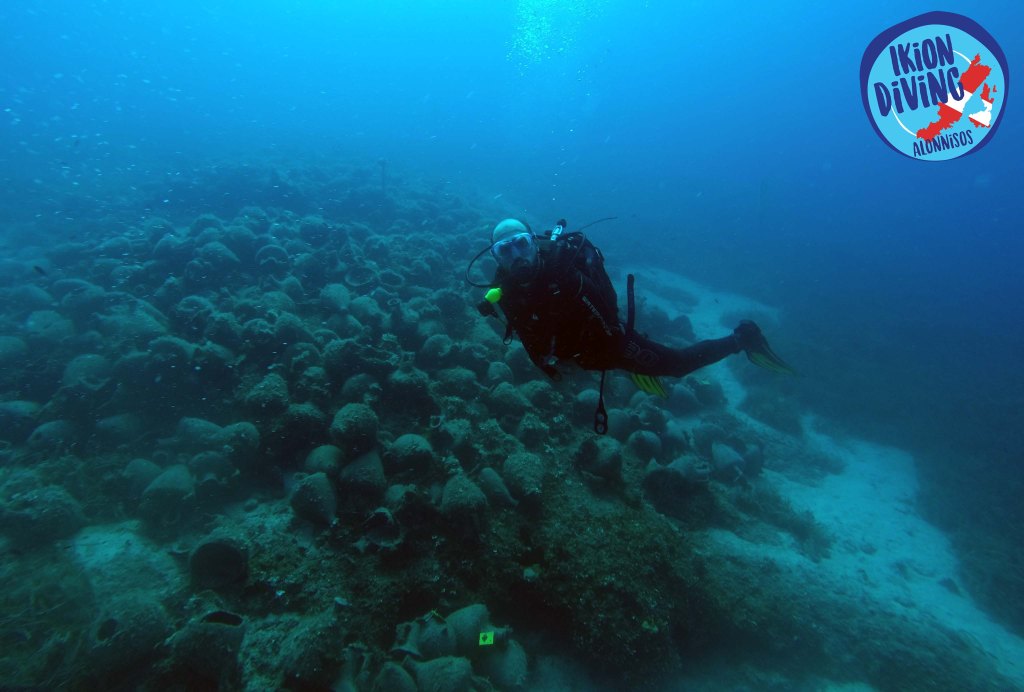
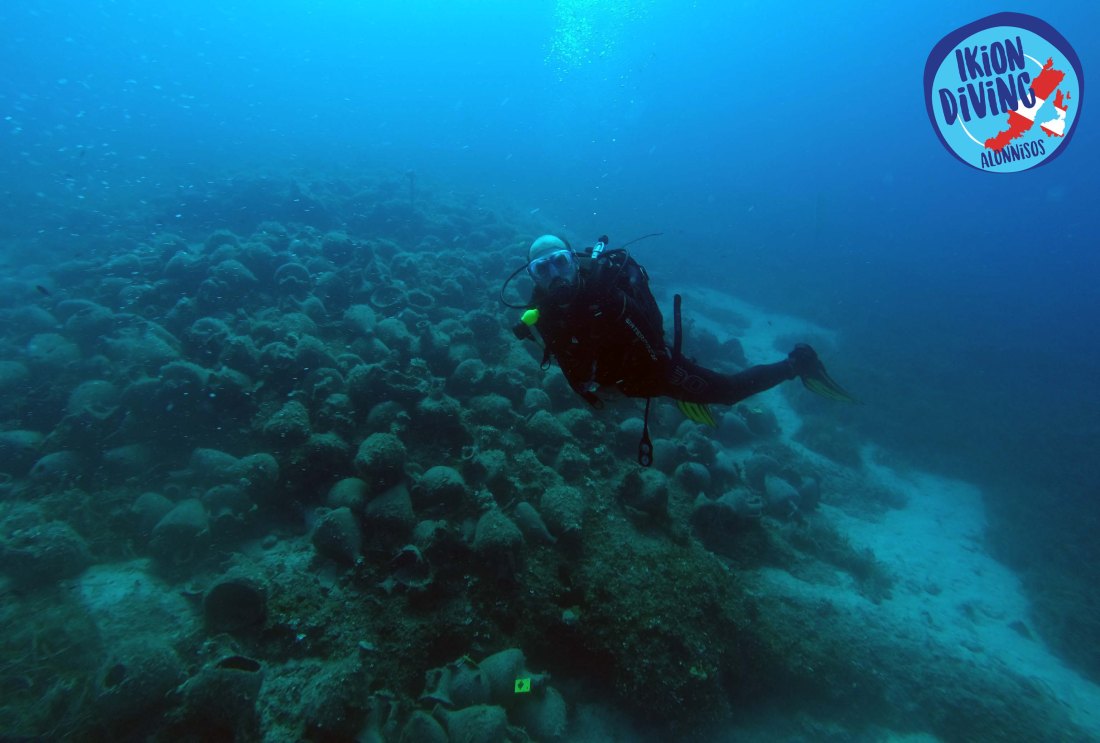
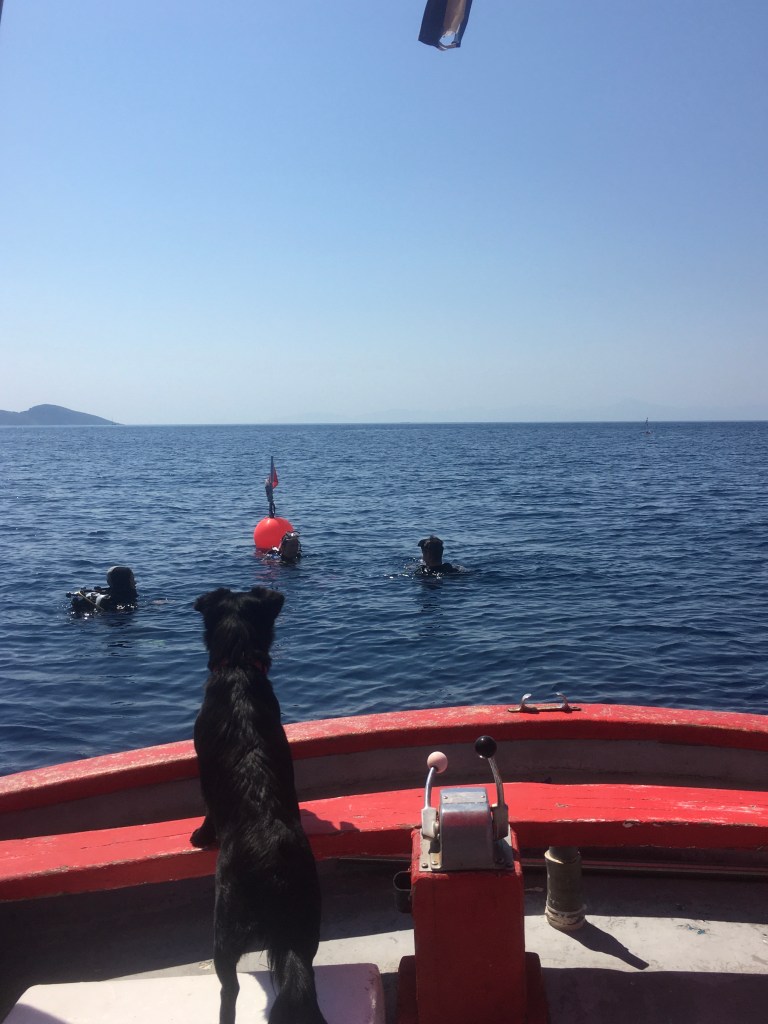
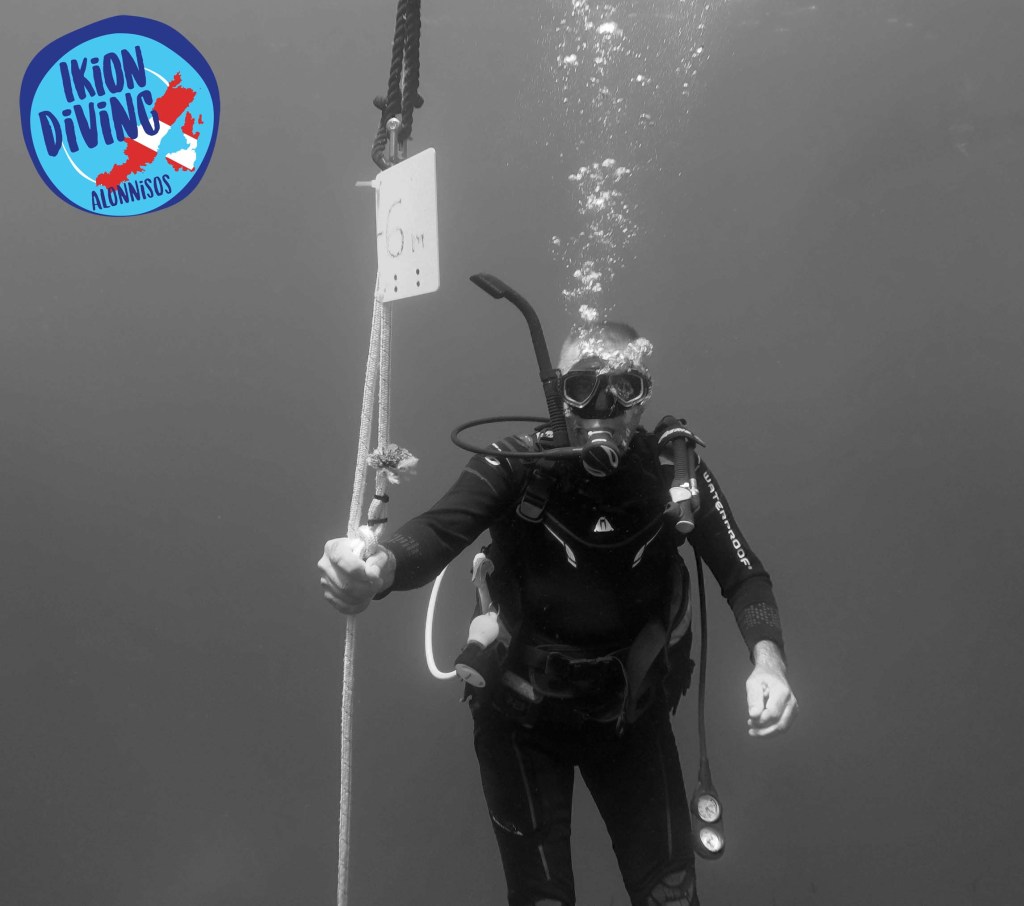
Day of the dive. A. an underwater archaeologist briefed us at the diving centre. Consequently, the speed boat headed to the islet of Peristera, where the remains of the ancient ship were found. The remains today are the amphorae that carried the wine and the ballast of the ship. We spit in two groups and entered the water under the gaze of the ship dog. My group included K., G. and G. an Italian with a family history on the island – Italians have a multi-decade love affair with the island and diving. First, was the vertical dive to minus 18 meters following the buoy rope. Following, two turns around the wreck stopping at information points.
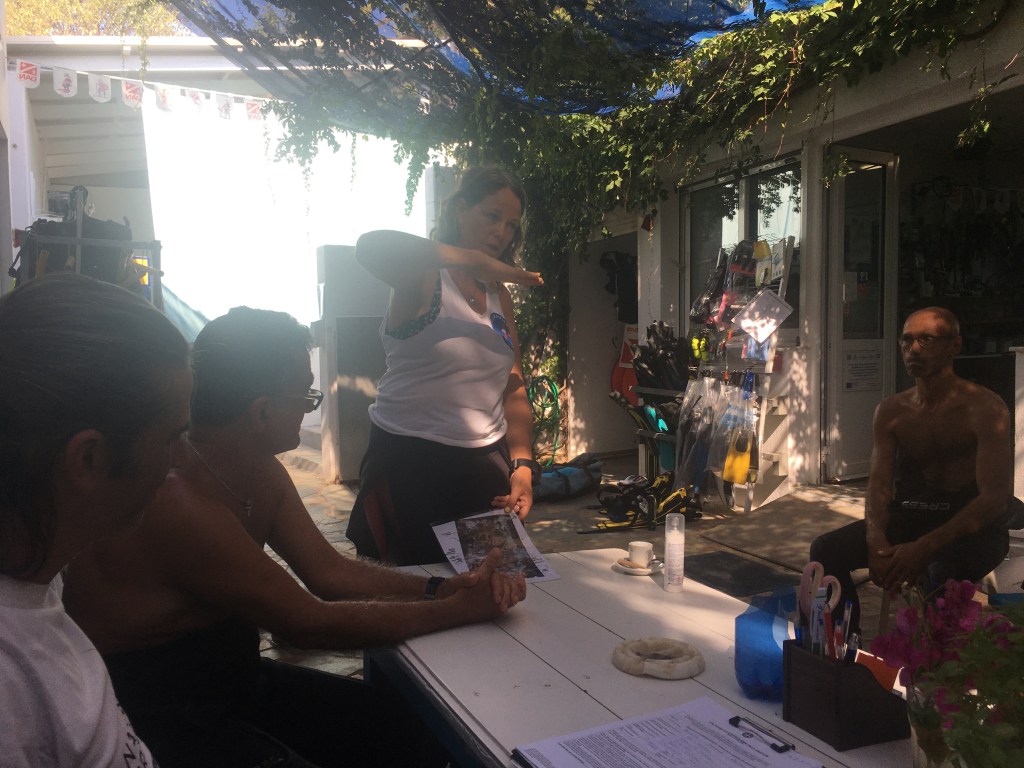
Pre-dive briefing.
First group in the water

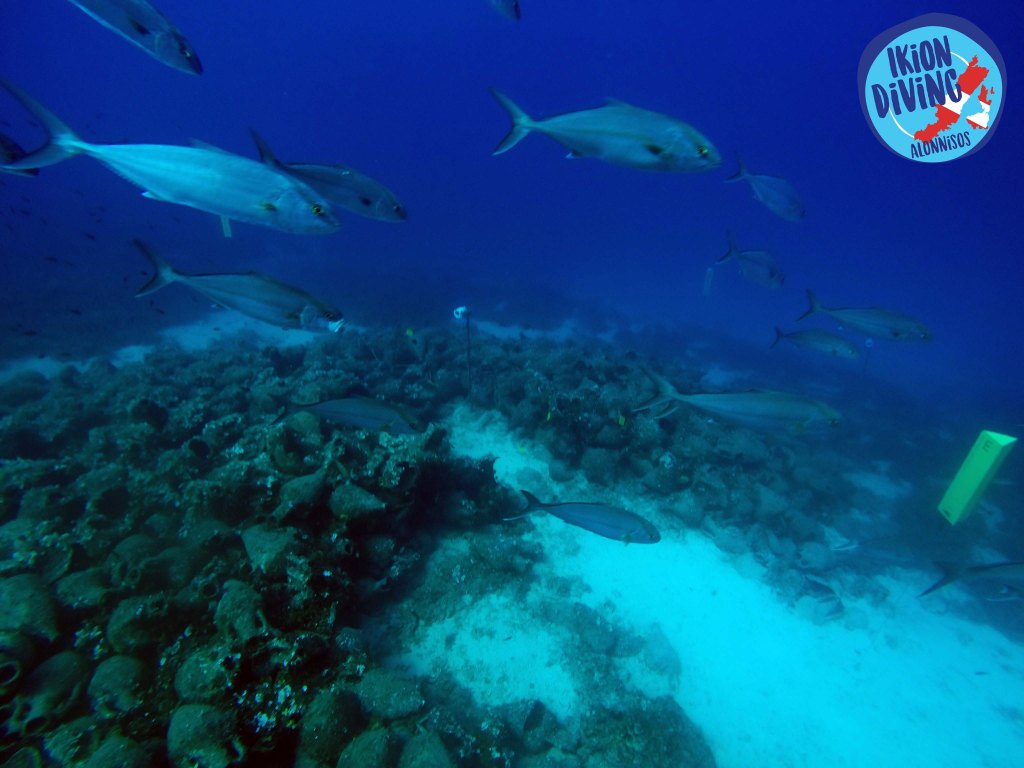
The amphorae were of two types, depending on their origin, and in three different layers. Some of them clustered together in small islands, with signs of the excavation trenches and random rocks from the ship’s ballast in the middle. These leftovers from the past had new residents. Curious groupers were stopping between the islands. A moray eel was manoeuvring inside the cracks, while an inky black head popped out of an amphora claiming without doubt that ‘this is my home’ – it was another eel. The second time around we stopped to see the profile of the wreck: protruding vessels created a ‘lost Atlantis’ picture. We subsequently went up a level to stare from above. A school of larger fish, amberjacks – or ‘manalia’ as the locals call them – started circling around us. ‘They are curious with people’ said K. after the dive. The second group of divers reported the sighting of a large ray. Diving was over and it was a blast.
Amberjacks

The underwater archaeological site of Peristera is open to the public starting summer 2020. A diving licence that covers 28 meters depth is necessary and the archaeologists are strict about this. You book a diving slot that lasts for about 2 hours, including the briefing and getting to the diving spot. For more info contact local diving centre:  http://www.ikiondiving.gr/.

Finally, in this website: https://nous.com.gr there is live picture from the site from an underwater camera. Sometimes you can see the divers.
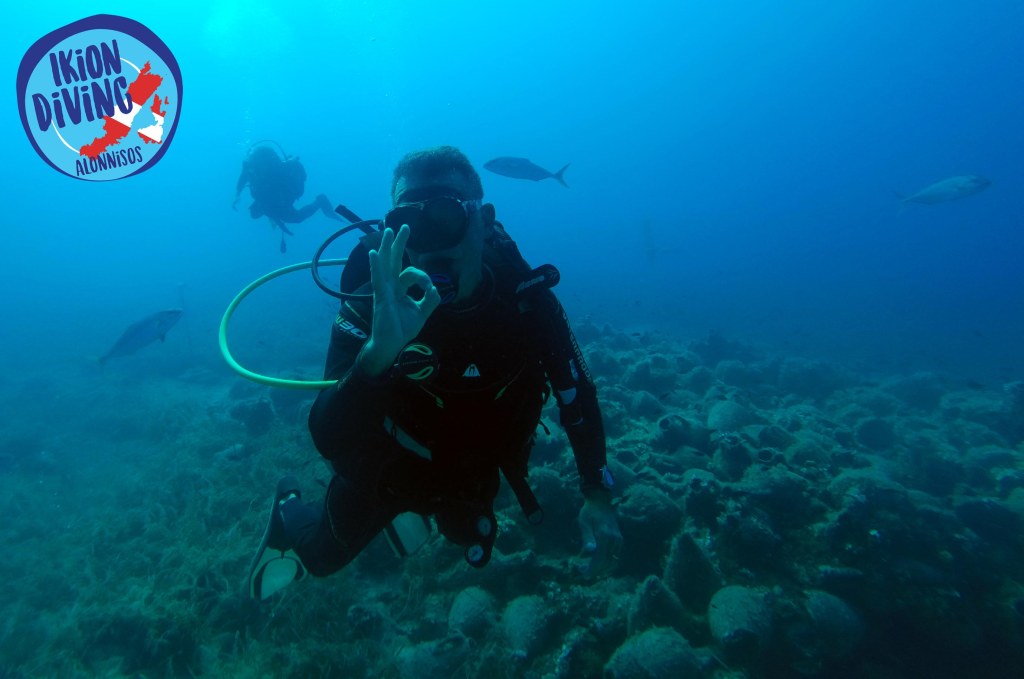
Images with Ikion logo courtesy of Ikion diving.
Featured

Freediving with the Bajau

355338_724a299a8f57be288e63fdd7e019024f

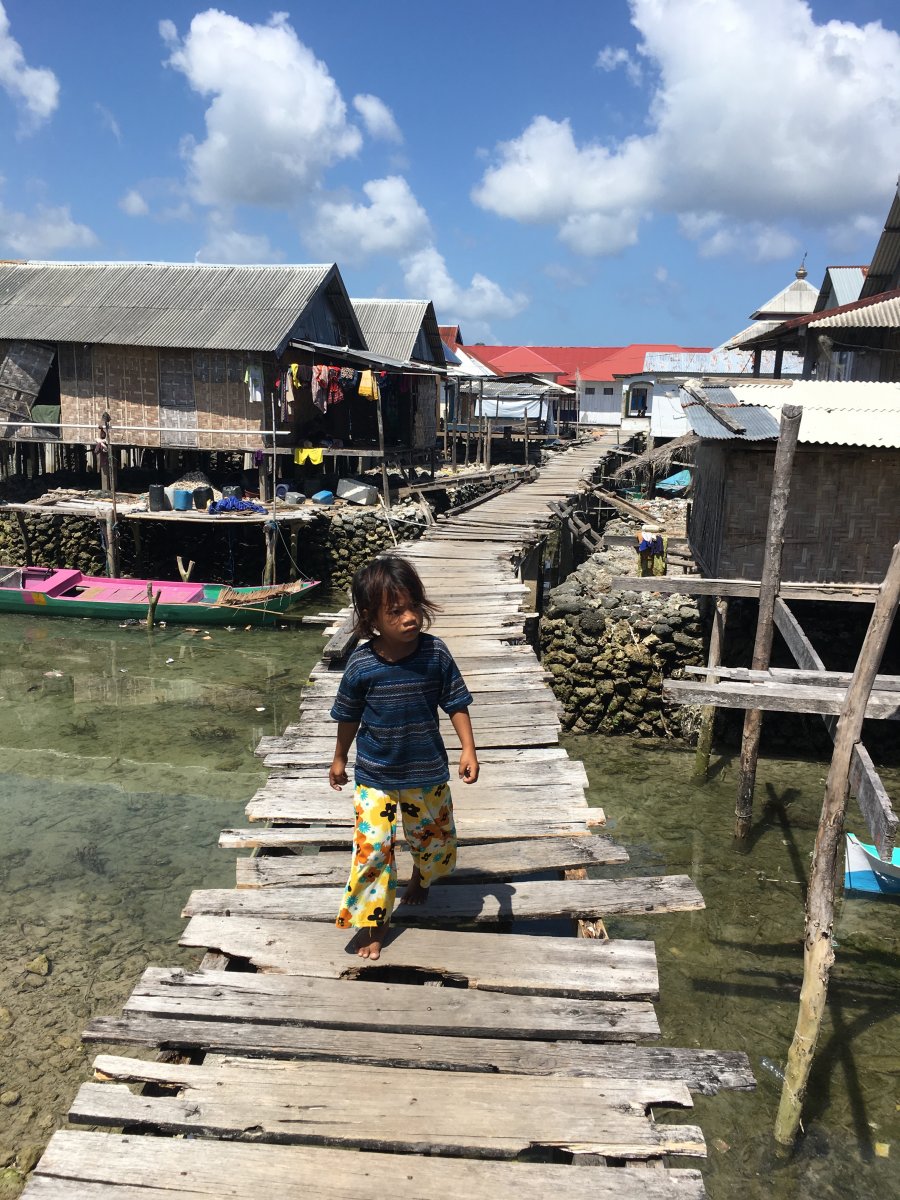
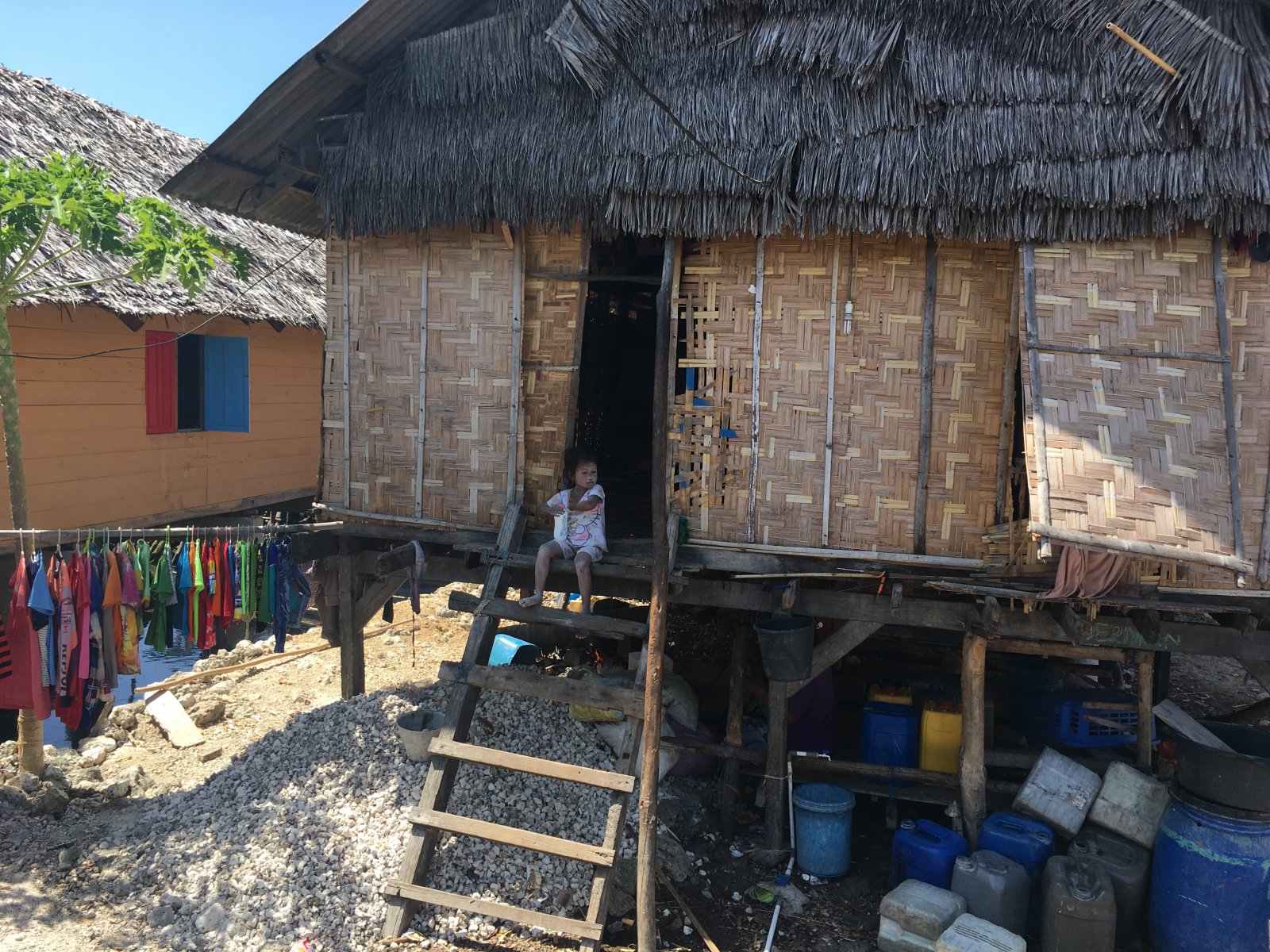
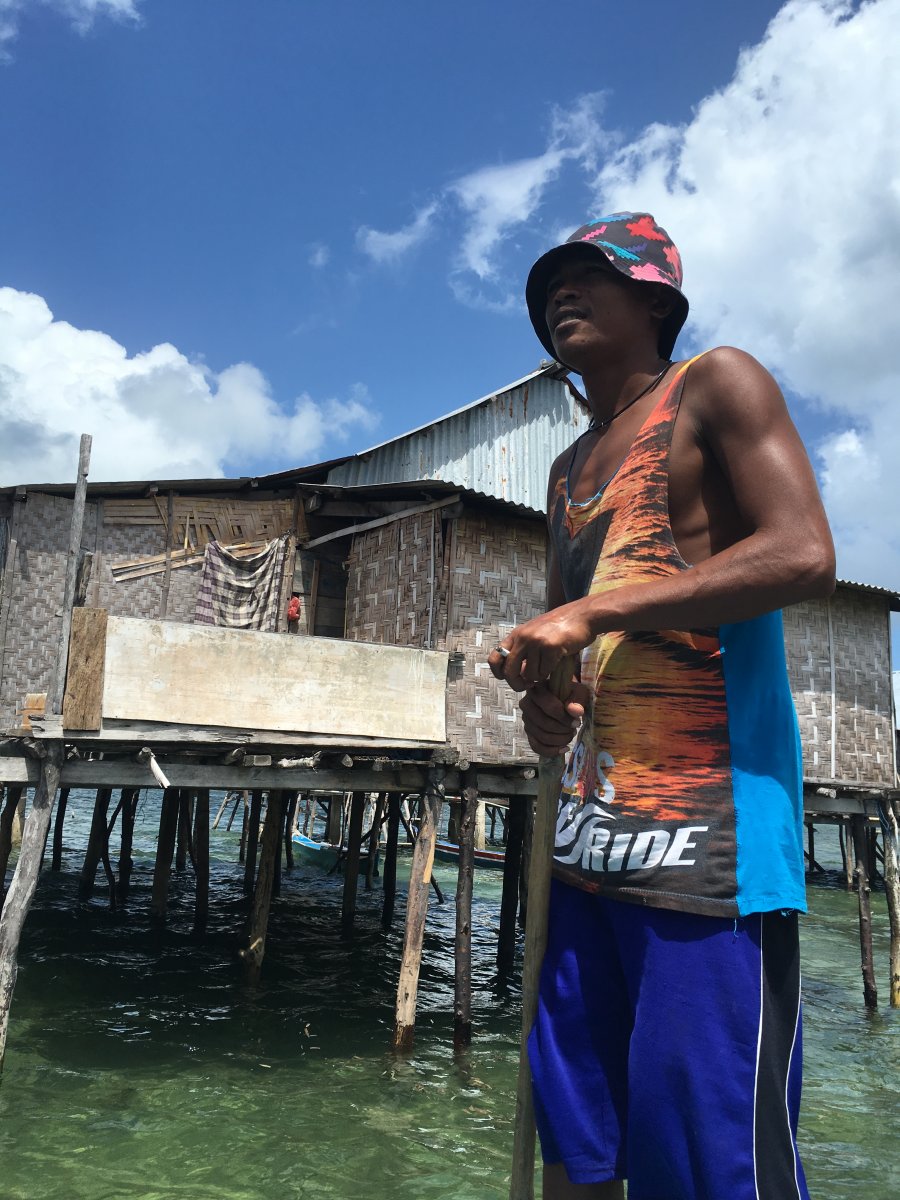
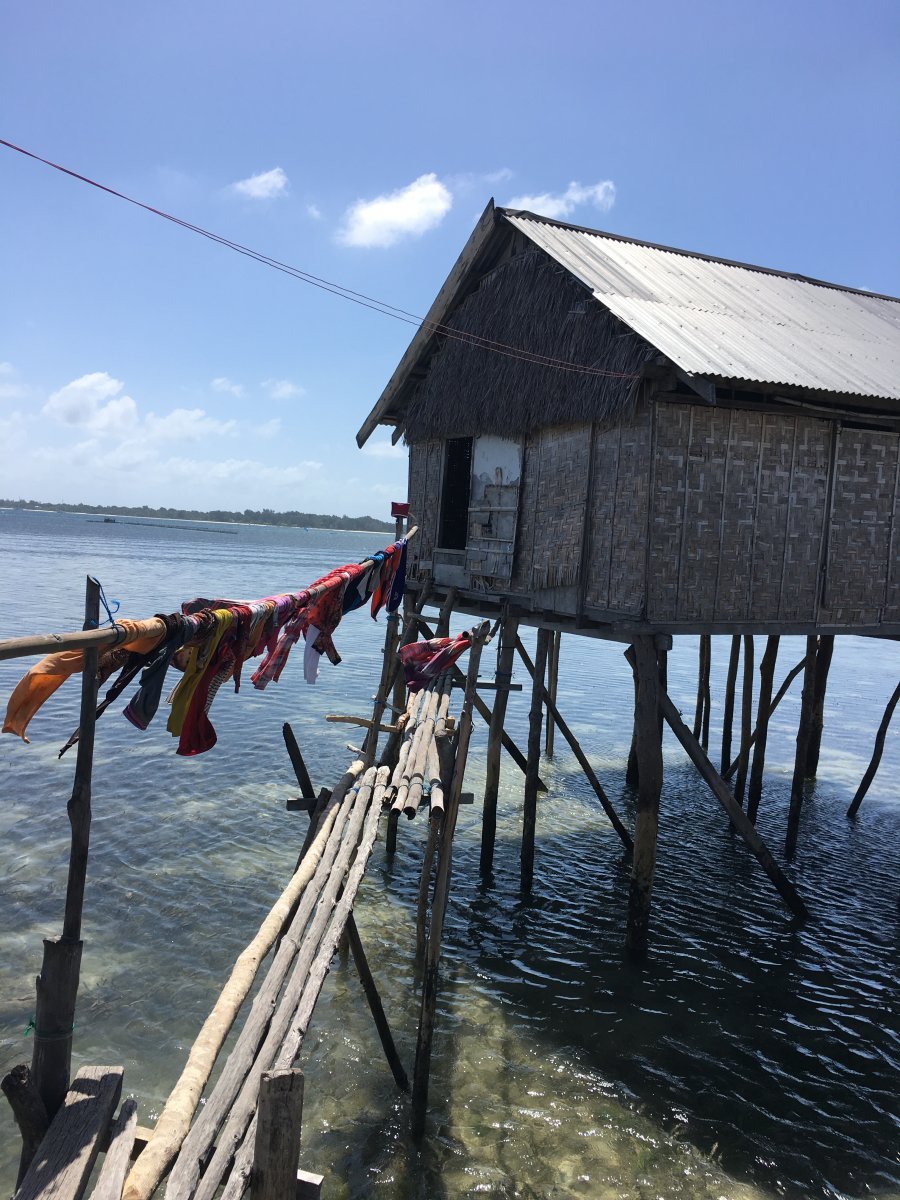
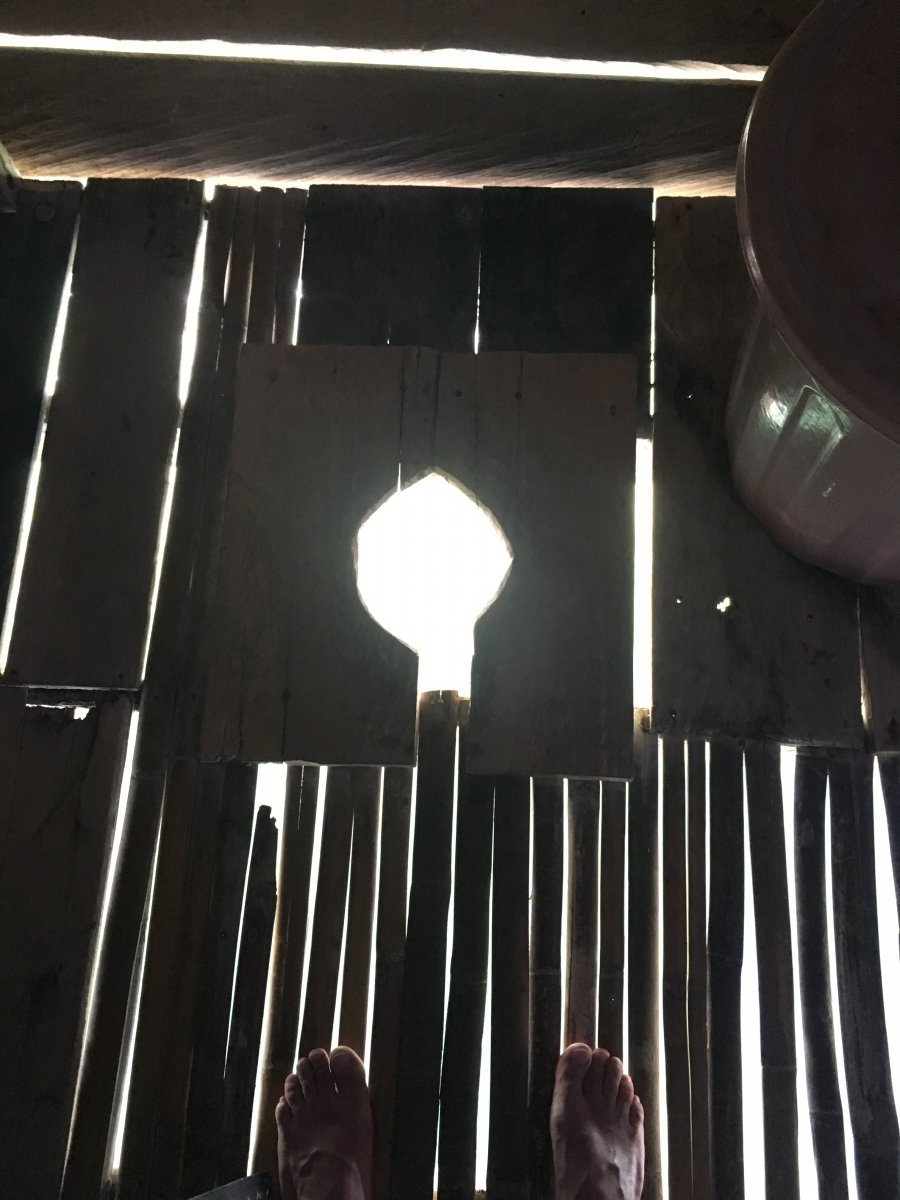
After a turbulent boat ride, I found myself climbing on the planks on stilts based on the coral reef. These were the streets of Sampela, the village where the sea nomads have settled. P., my host, smiled and immediately showed me the hut I would live in: two rooms, one mattress and one lamp, and a toilet that had direct connection to the sea. If you step heavily on the thin planks you can also find yourself in the sea. P. runs this business since he is one of the few who can speak English.

“Do you want beers?” He says, “My wife and child are going to the shore to bring water.”I nod yes. I explore my hut.

355343_829628fbd95e2d48d2b65e8caf3efe90

“How big is your village P.?”
trying to start a conversation. “about 500 people… There are two other Bajau villages nearby” (Bajau population is currently estimated at 800,000, most of which now live permanently in villages).

“All the villages are over the sea?”

“Of course,” he says, “You know, Bajau don’t like mosquitoes.”

“And there are no mosquitoes here?” “For mosquitoes to come there must be plants. You cannot find plants over the sea!”

“Do you live all year in the village?” “My father goes for months at a time on large fishing boats, but I think it’s not worth it.” “Have you travelled to anywhere, for example to Java?” “Yes,” he says, “I’ve been to Germany. A German TV channel made the expenses! A guy came to shoot a documentary in Sampela. And then, he invited us to Munich, me as an expert swimmer and a veteran Bajau as an expert freediver. “” How did you find Germany? ” “Cold,” he tells me. P. does not waste his words.

I started a reconnaissance walk. “Step at the centre of each board, which has support, otherwise it may be rotten and you fall.”

355340_dc679c1bbff3616ca14d97af0f3ff82a

355496_922d777c1e1010acfaa9a27fde8a4865
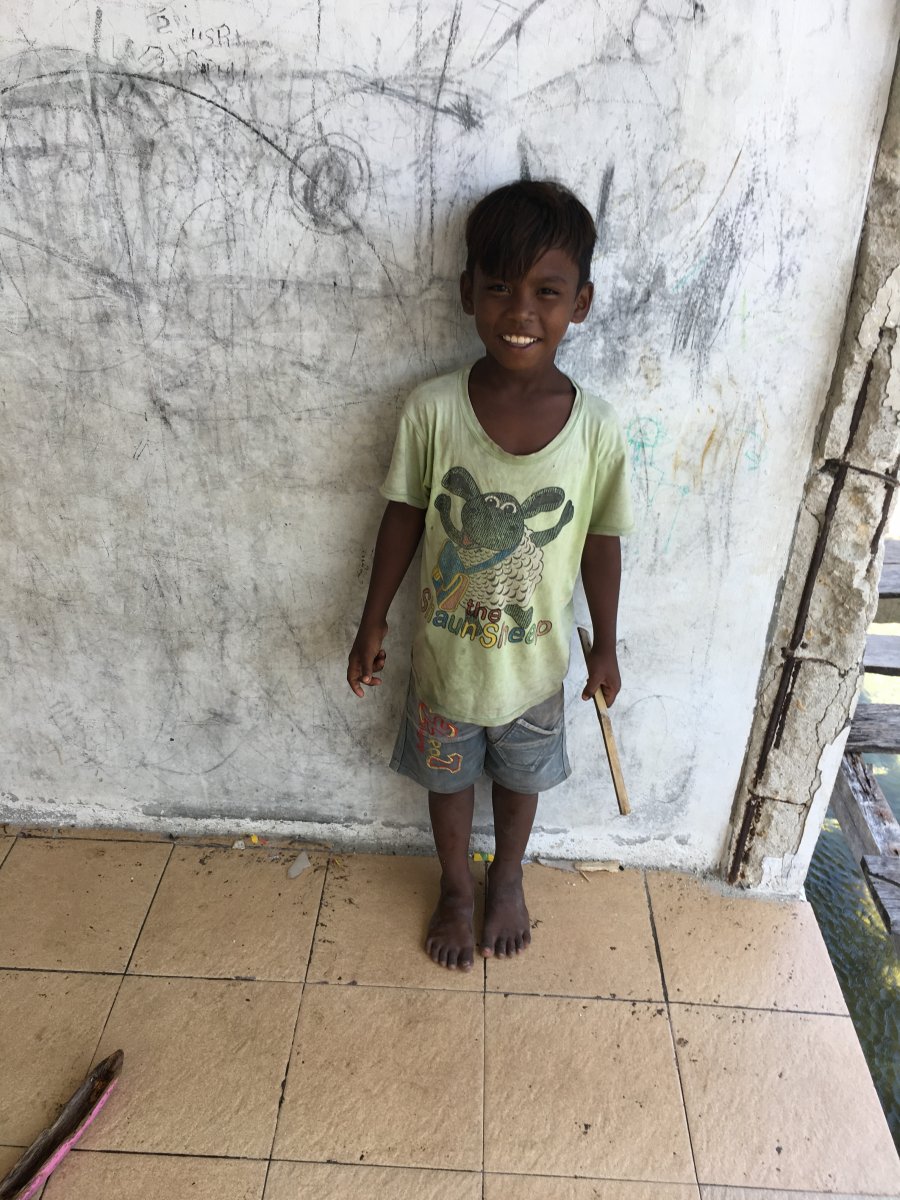
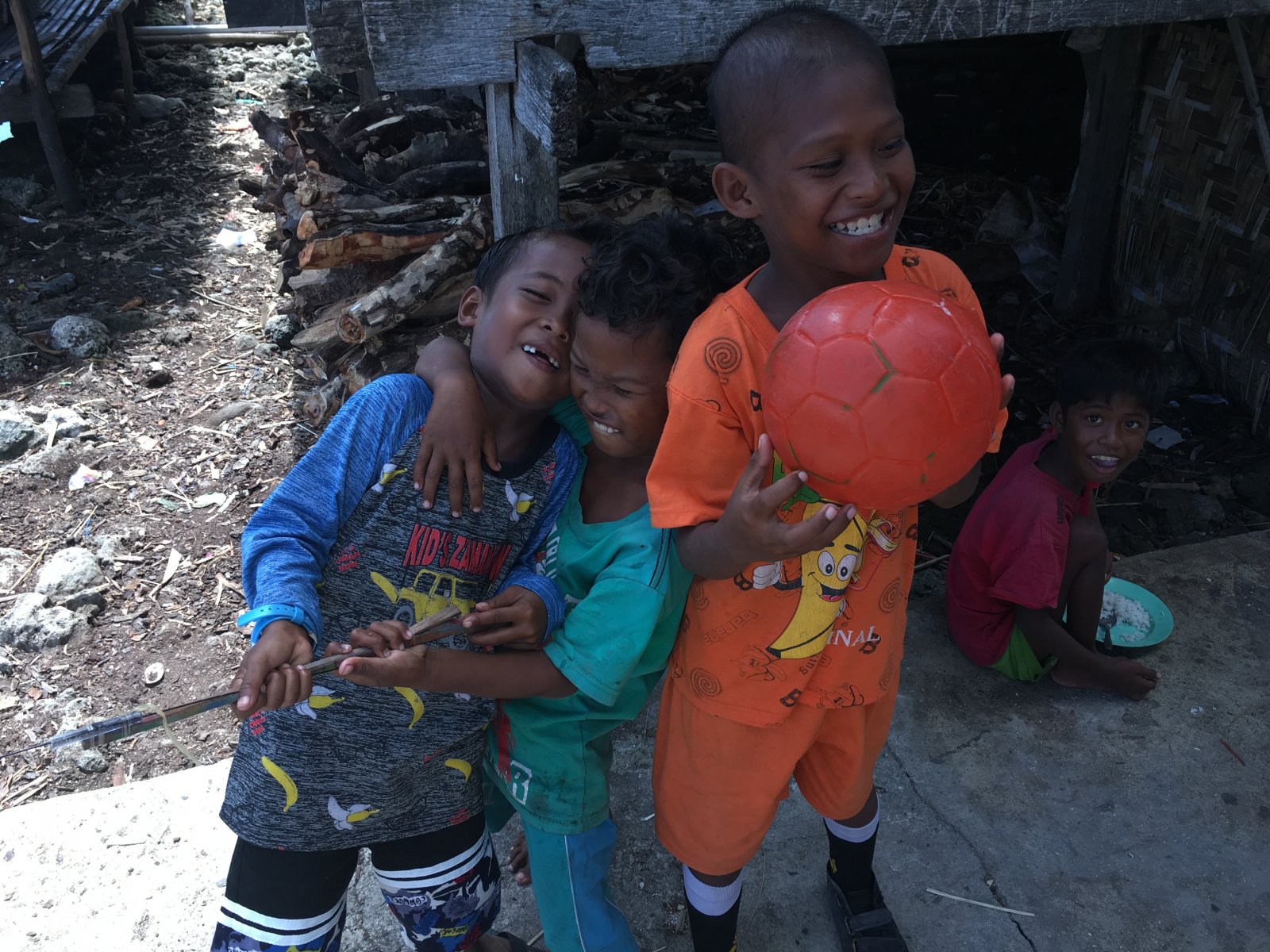
Bajau children were amongst the happiest you’ll meet

355339_90c8c52abe109946a35c7a21a6eb21f9
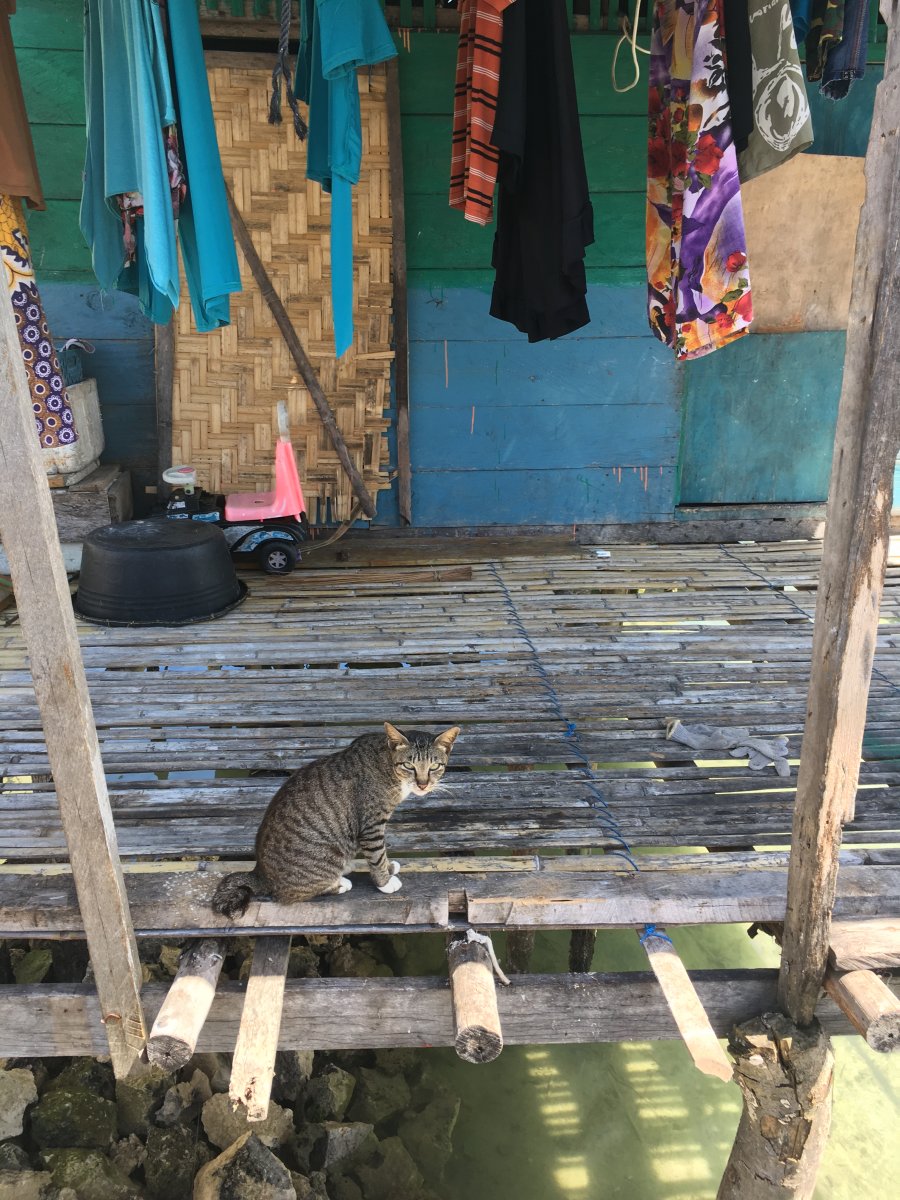
Where there’s people, there’s cats

355345_9477c6e3d28e9e1695e074ab8e90c483

355346_dc24a2d8ad2b4037bb9ca81e674875d4
Village is expanding fast

355494_4422bab288787ac4c6ae45c40ef82800

355504_80ef0f8c52ad7b9d1e1af4ef6250f47b
Some Bajau, mostly women, put a rice cream on their faces for sun protection

With a bunch of kids following me, we reach the courtyard of the mosque where small kids kick a ball. Yes, there is even mosque on the reef! P. told me they are all Muslims, but not too passionate, I realised from the context.

P. arrives and shows me around: “Here’s the school.” “Oh, yes, I’ve heard about it. The children of Hoga come here with the boat.” He lowers his head, “Do you see these beers in the school yard? You get the idea… “. We arrive at the football pitch the Dutch lady H. built in the most central point of the village. The court is small and they play footvolley, picking up occasionally the ball from the sea. P. proudly recommends to his teammates the Greek, who however proved to be a poor representative of the football of his country.

355484_fef7a7db8b08b45577a1160aa6734fb2

355485_4da31c797a120219141c3df9e256035b
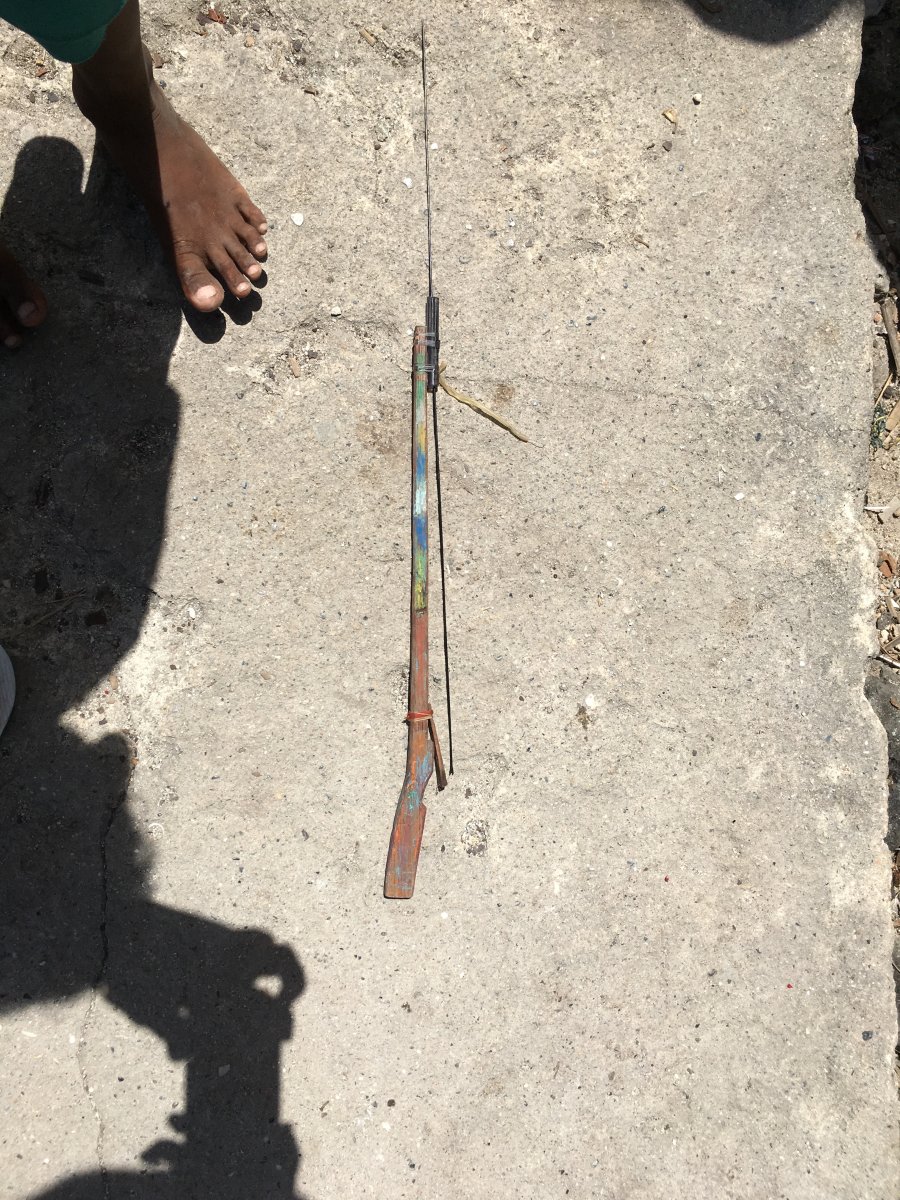
Education of the kids is focused more on fishing, using baby spear guns

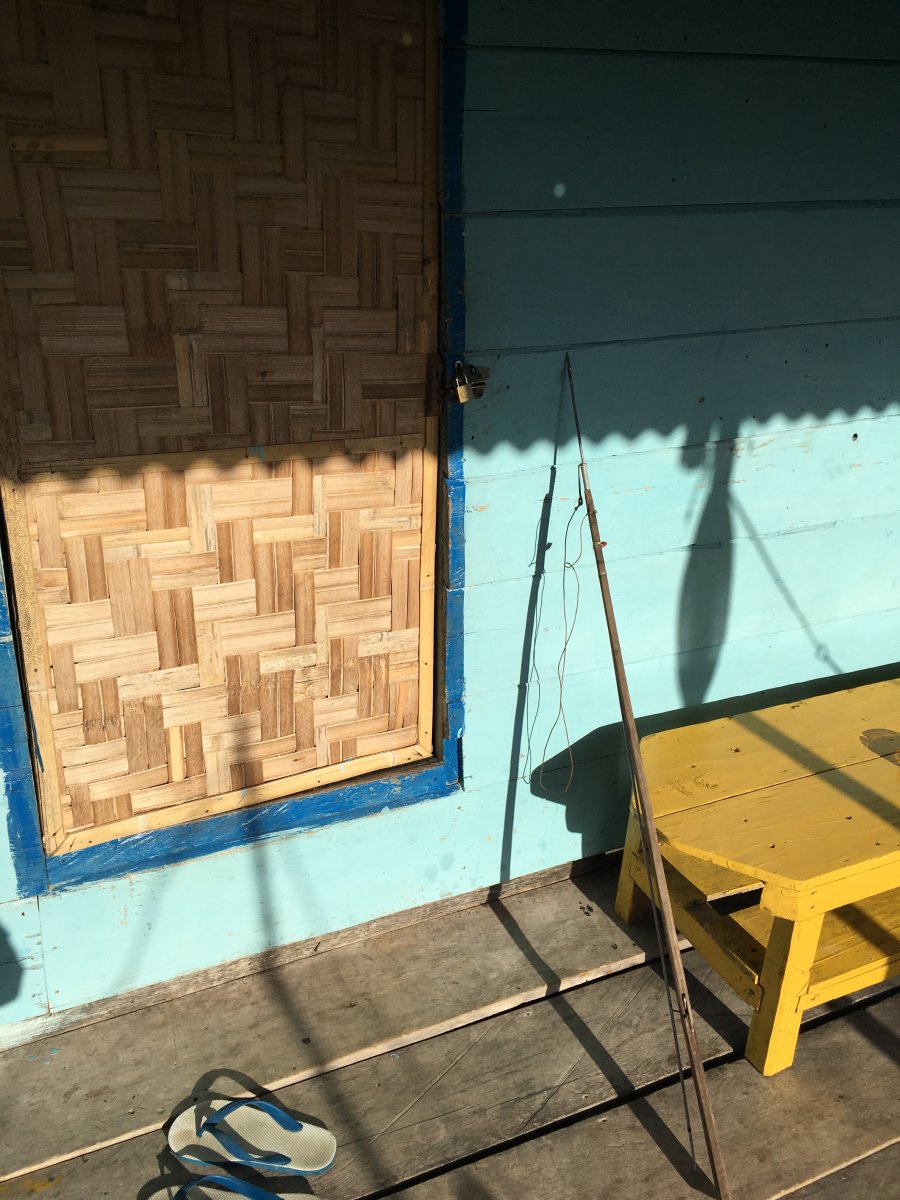
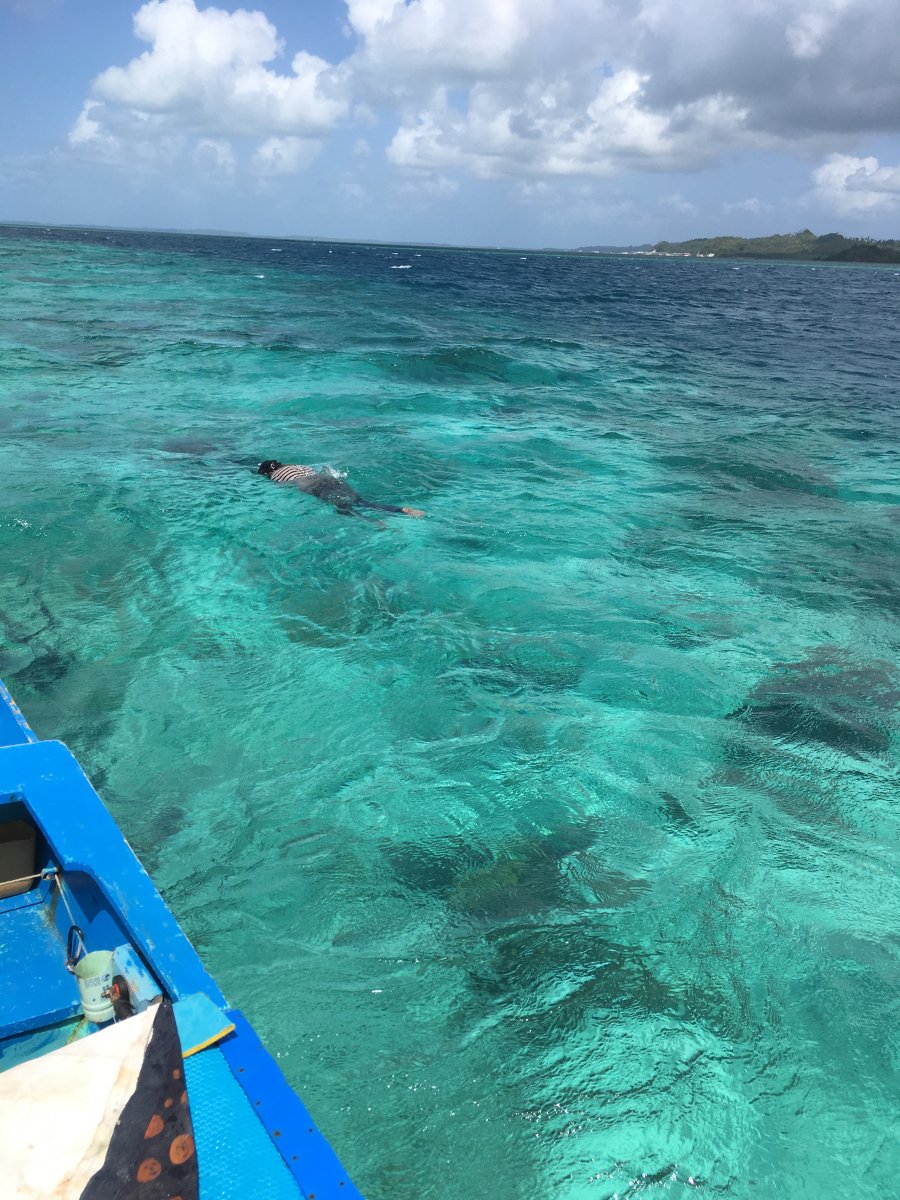
Next day there was a spear gun waiting outside my door. We were going to catch daya (Bajau word for fish), after a short visit to sign the village’s guestbook. Together with one of P.’s friends, we rode the boat to the coral between Sampela and Hoga. There, I became a witness to the Bajau underwater fishing technique. Majestic seen from above.

355477_2a7d44704d5b8f29ebfe7b4631b05f70

355478_1af04897a6cf2dc8c858420ecbaf9510

355480_61946318f551d3cb8f163f839cb1318c

The technique is learned by every male Bajau from the first moments of his life since the tradition is to throw babies into the sea until someone dives to save them. Here a Bajau filmed for a BBC documentary:

P.’s friend gives me the spear gun to try my luck. A few minutes later and some unsuccessful attempts, I hear noise from the surface and P.’s friend grabbing my spear gun and hiding it under the coral. We go out, to see a boat next to ours and P. talking to two guys. A chubby one with glasses, not very comfortable being on a boat, and another one with rough features. “You,” says the second, “What are you doing with the speargun here? Don’t you know it’s a national park? “. All eyes on me. “I was snorkeling,” I lied, to save myself, but also not to put P. into trouble. Bajau is a very marginalised society, completely dependent on fish, which have become scarce because of the large fishing boats. P. opened the holds and showed that we have neither spear guns nor fish. “We saw you with the binoculars” said the spectacled one. “And in order to snorkel here, you have to get a ticket for the National Park.” Again, I was surprised. “The ticket…..”. “Get off to the shore” he said angrily.

The closest land was Hoga. The tide had begun to rise, and so we had to leave the boat and walk with P. a 500 meter distance in the water. A shameful walk. We found the two guys chatting with the Dutch lady H. while the bungalow residents were observing with curiosity. After some discussions, H. proposed a compromise: we’ll pay for the ticket, the pricing of which had become a bit creative, so that everyone realises it was a misunderstanding.

355130_9873e4aa44d9c1394172dbb72a76f1af

Back to the boat, we searched underwater for the spearguns and found them. P., who was both apologetic and angry with the water police, began telling me a story from his student years in Kentari. Some people were bullying him, because he did not smoke (indeed, P. must be the only Indonesian I knew how doesn’t smoke) and two machetes had appeared. “These conflicts never end up well” he concludes, showing me a scar in his leg.

P. had caught a fish. “Do you eat sushi?”, with a knife he cuts the raw fish into bits. He ate one, put another in his hand and offered it to me. “Try it.” It was not bad, with all this walking in the water I was hungry. “You are on the right track to become a Bajau,” he tells me and we laugh.

My time with the Bajau was soon over.

ezgif-4-53354152d2e2

Underwater bliss and overland catastrophe

352542_c86e169de2a0cac176a5b437097cd8f1
The diving crew aboard the ship

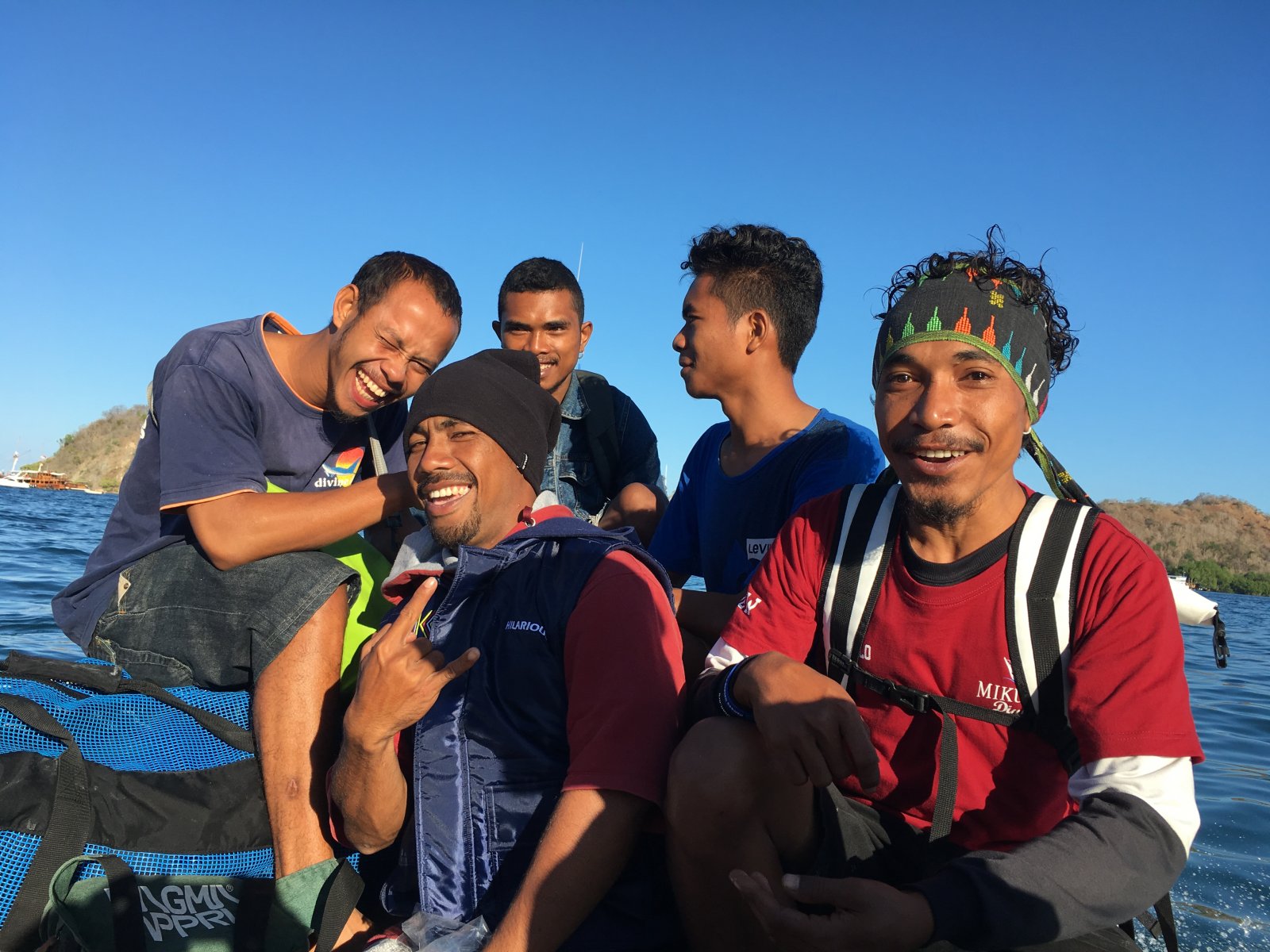
Let’s meet the gang.

– H., a vivid character, from the deep interior of Flores island, who has completed thousands of dives. He was our teacher.

– V., newly arrived from London, who, like me, has made 0 dives. He was my trustful diving partner.

– An Englishman who learned scuba in Colombia (cheap) and wanted to update his diving skills.

– Many Dutch people, mostly unrelated, but all from Nijmegen. The fact that the lady who owned the diving business was also from Nijmegen must have something to do with it. Among them, a family with three generations of divers: grandfather, dad, daughter. They had some pretty awesome audiovisual recording equipment, which we, inept newbies, put into risk with our careless use of soap in the communal washing bucket.

352764_db1622e1f2cbf1a6242d43c144c0df13
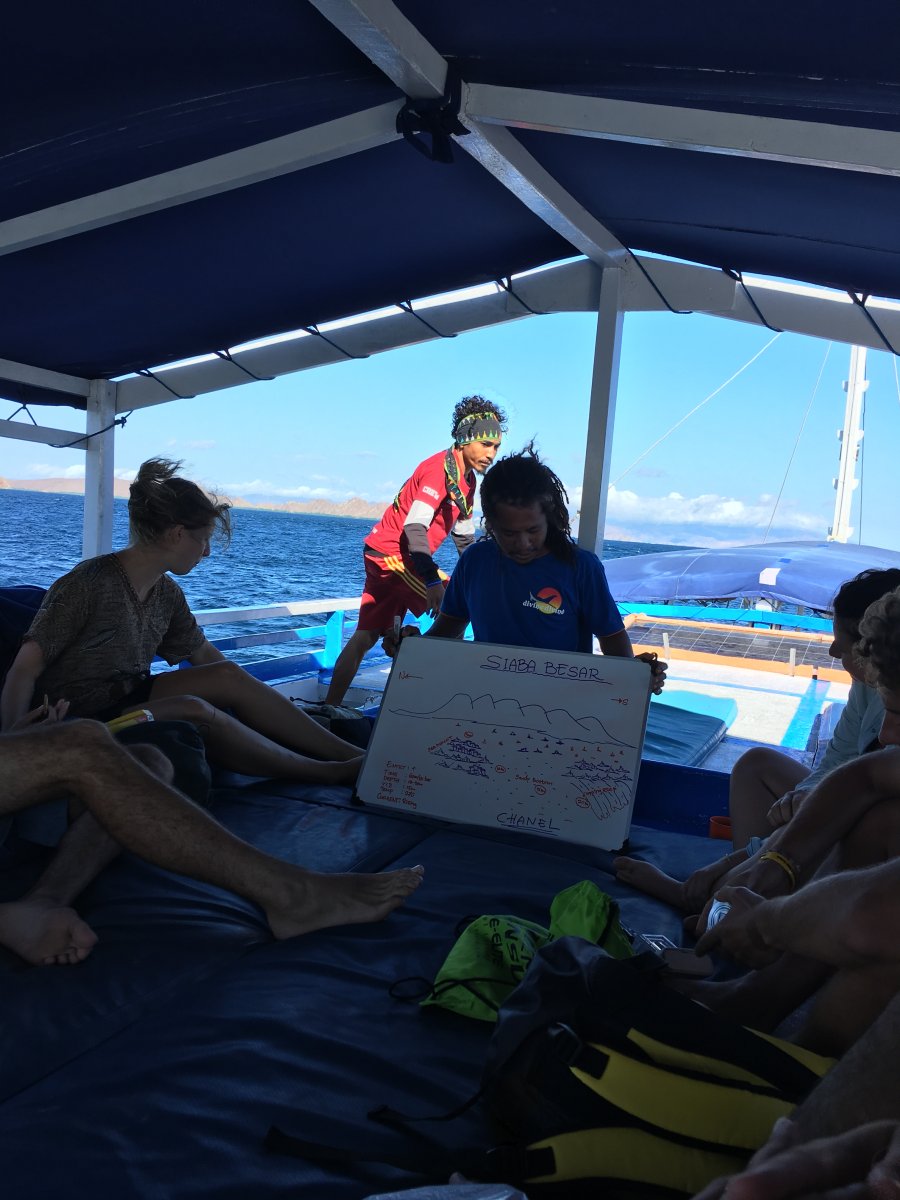
Pre-dive briefing

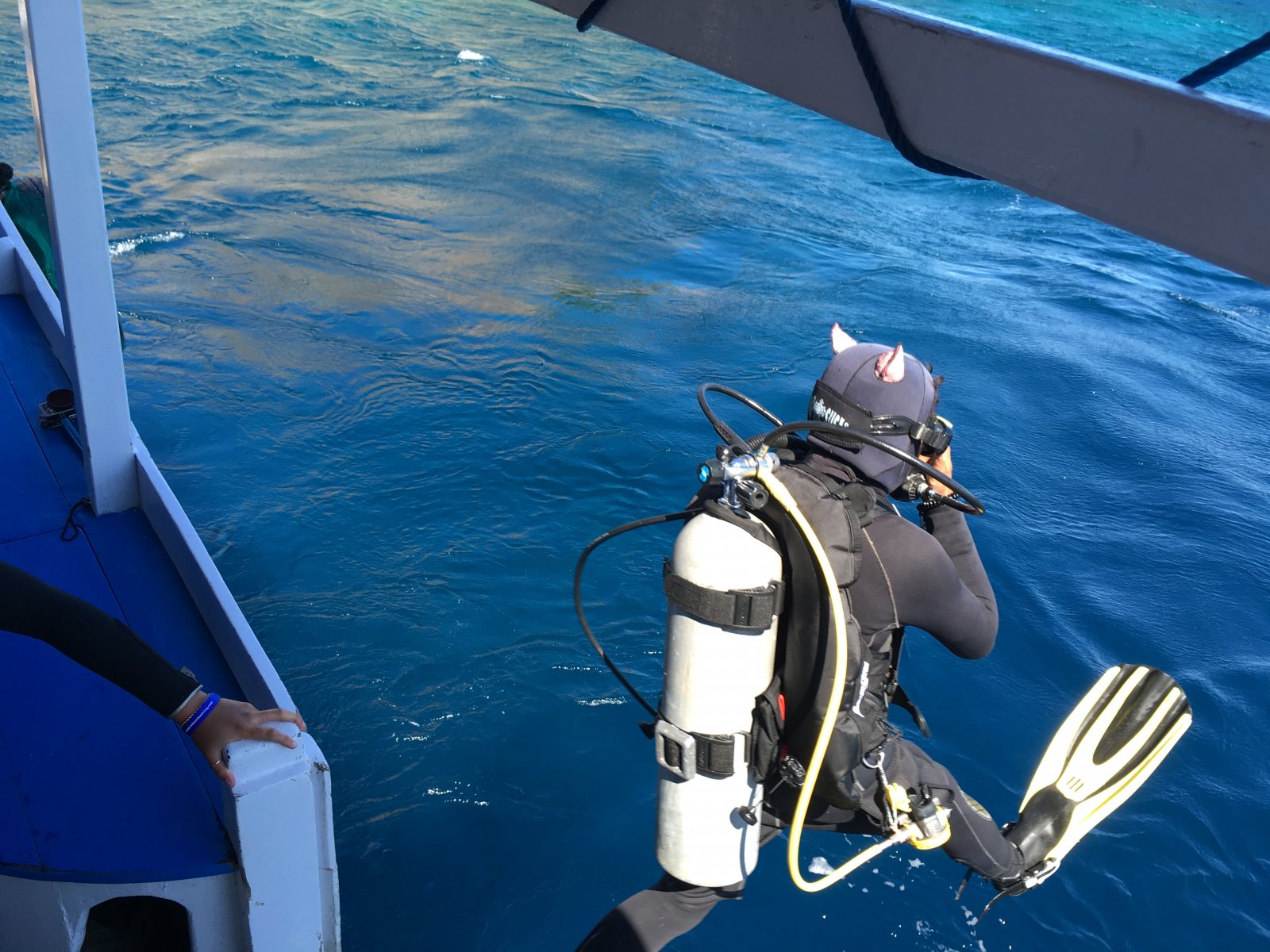
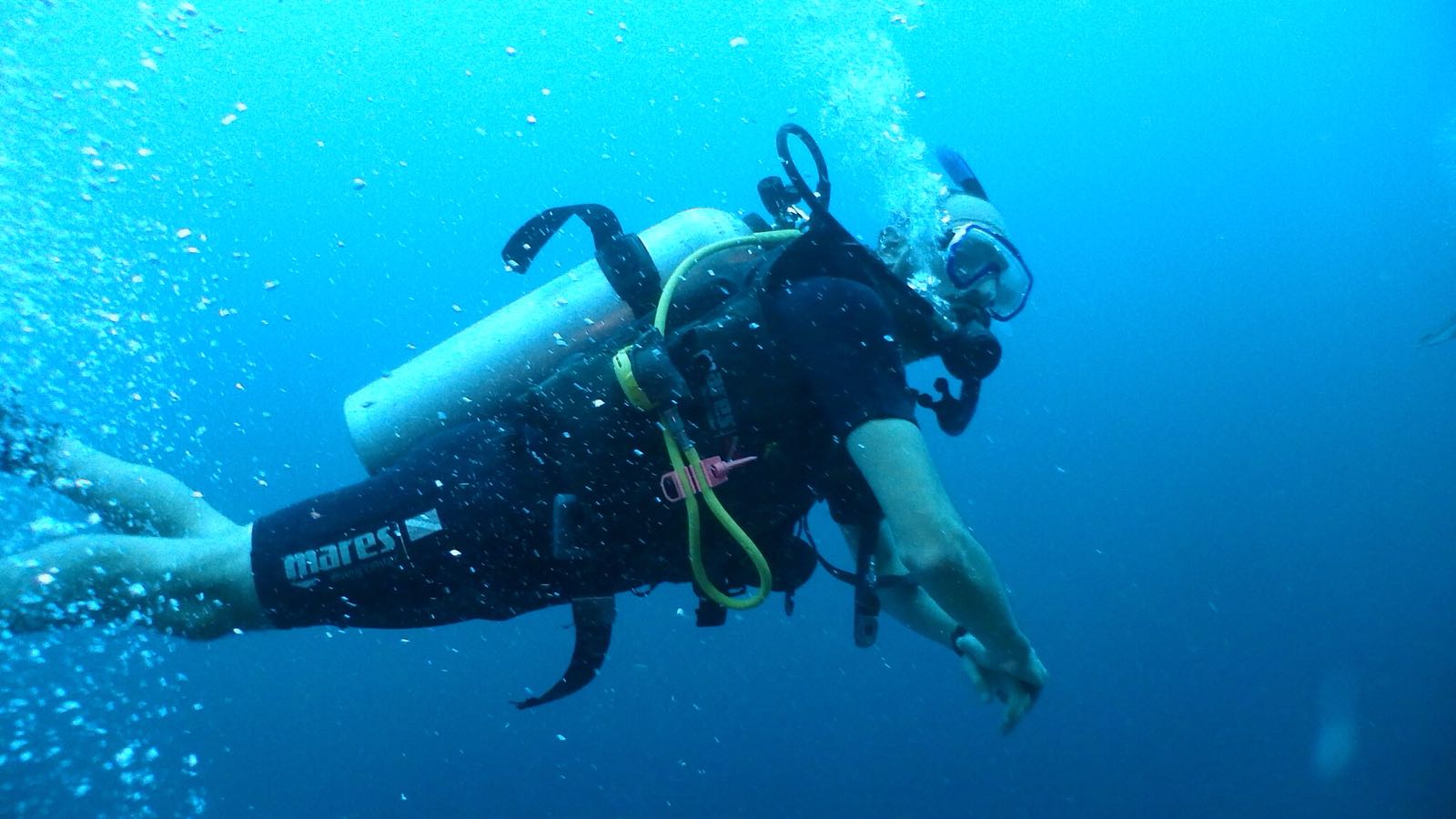
We were going to do our dive in the waters of Komodo island. I never dreamt of doing scuba diving. In fact, just a few weeks before this trip I was looking at photos of the so-called Coral Triangle, and in fear of missing out I enrolled in a scuba indoors course in Birmingham. However, the first breath underwater and the feeling of flying, when learning to be buoyant, is something I will never forget.

H., beyond the standard skills, demonstrated some special gestures when we see specific animals, e.g. to raise your hands as if praying when you get encircled by the giant Manta Ray. We took this seriously with V. and applied it obedientlyonly to become a laughing stock when we returned at the boat. We realised we have fallen for H.’s half prank. This is also when we realised that this activity is much more than diving. The spirits are always high and the jokes aplenty. V. and I were satisfied with our achievements. The Englishman was more focused on the spectacle of a lady changing clothes on the windy deck. The Nijmegen people were happy to explain us everything about their city. And H. was the happiest of all, meeting so many cool people from all over the world.

352545_9a736296c76d22179a4ab8ec8962aeeb

355129_866f52fe62c6b3a491486616bed7673e

After 4 dives in 2 days I wrote in my logbook:

First dive: Turtle, cuttlefish

– Second dive: Turtle, big manta ray

– Third dive: Huge turtle detaches from rock and surprises me from underneath

– Fourth dive: Many turtles, colourful coral and many fish

The girl next to me had written four pages.

One of the crew was an English marine biologist who was training as a diving instructor. I noticed that coming out of the boat at the port, he gave his equipment to another and started walking inconspicuously away from us. Then I learned that as a foreigner in Indonesia, it’s extremely hard to get a work visa, and those we choose to work are in constant fear of deportation. Unless you are married to a local, that is.

352770_6da69a1b8c90be1f76b303225ef46954
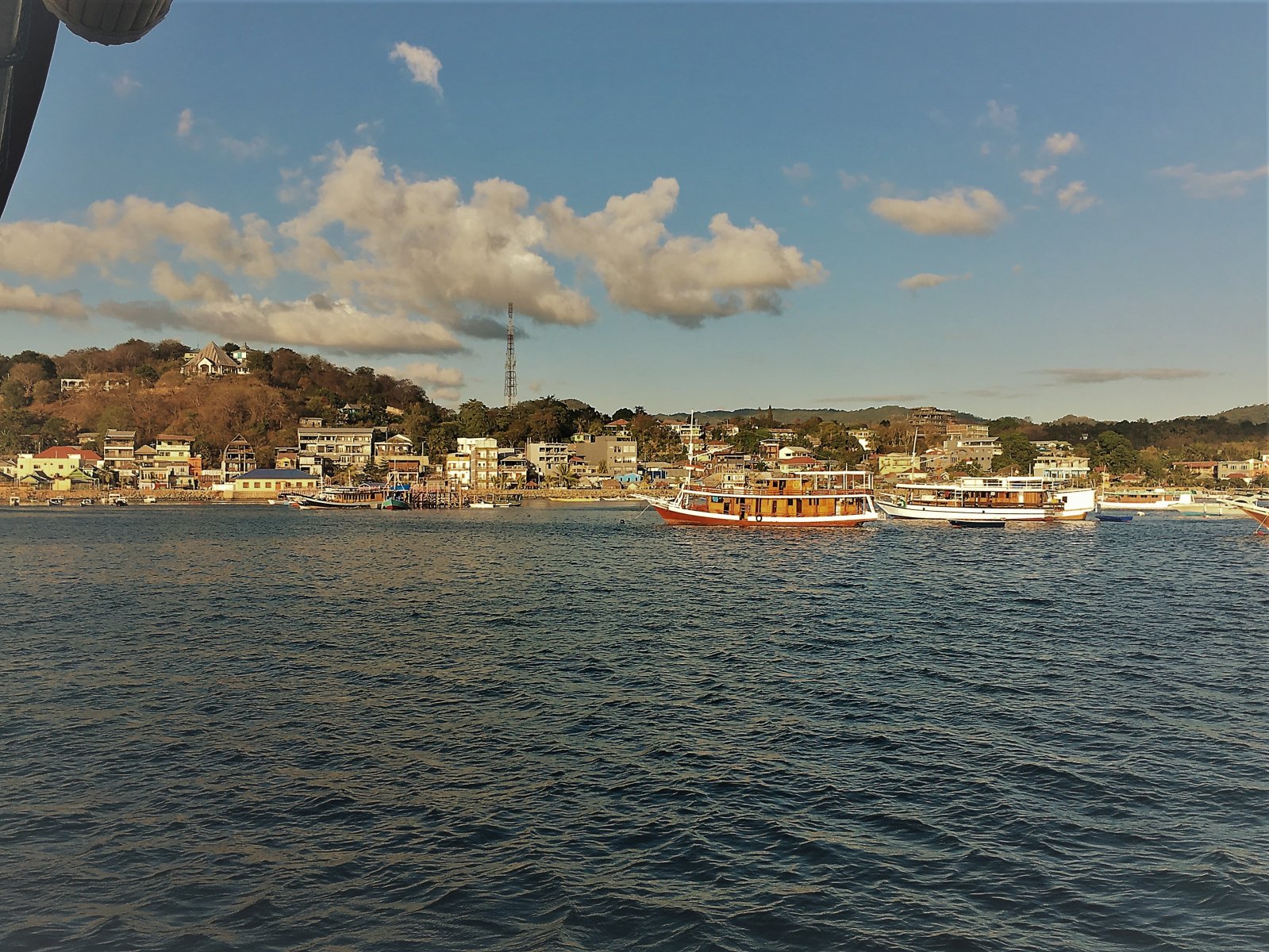
The port of Labuan Bajo, Flores

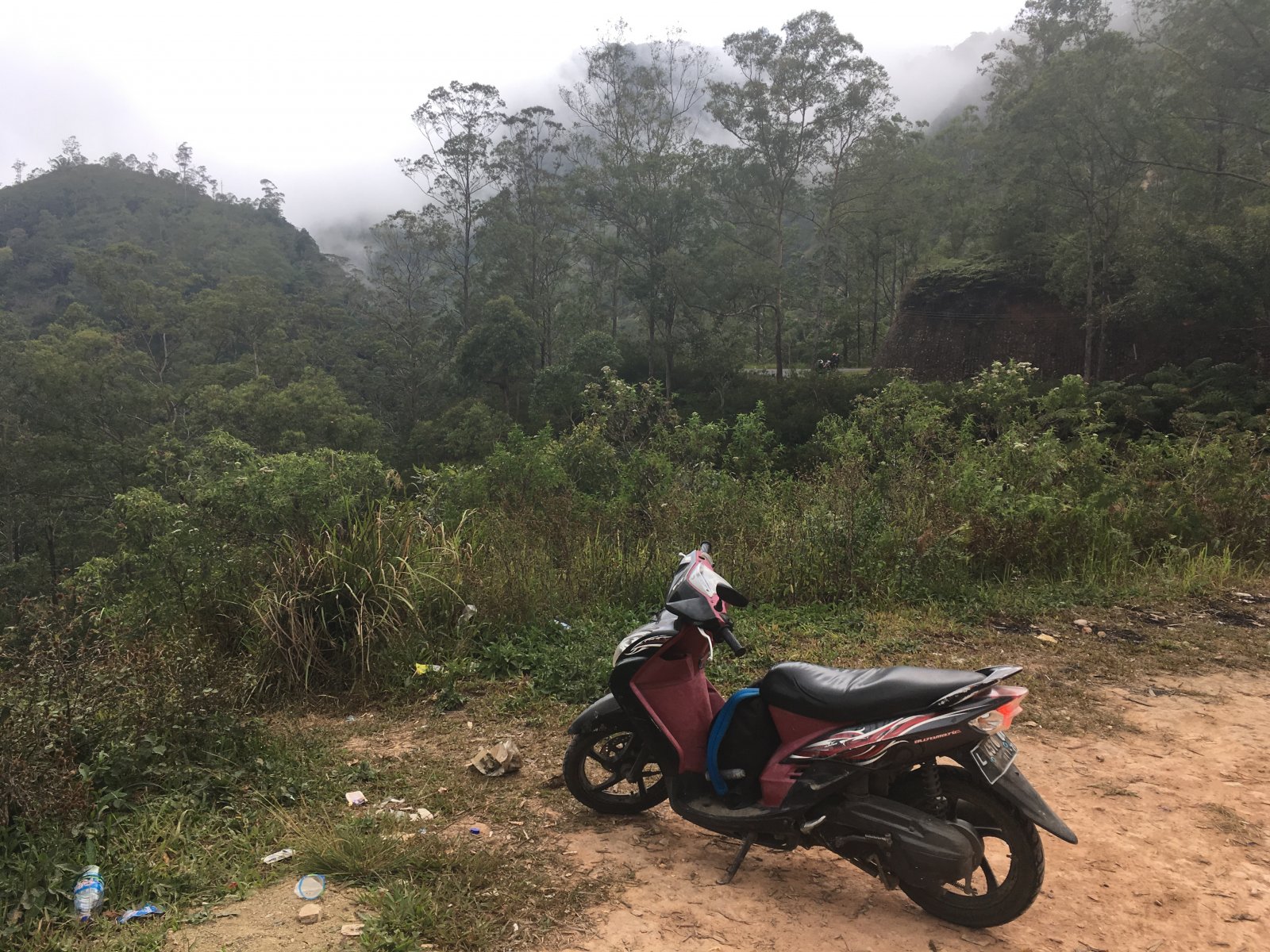
From Labuan Bajo, the port town of Flores that serves Komodo, I rented a motorbike and started driving to the interior of Flores. So much to see in this big island. The cave where they found the Homo Floresiensis, the Hobbit man. The coloured lakes of Ende at the Kelimutu volcano. The traditional Manggarai villages, a 1000-year-old civilization with mythical roots. But one needs to be aware of the distances.

After a cold 4 hour ride, a punctured wheel, and some wrong turns I was glad to reach at least the famous spider web rice fields. These ‘pieces of pie’ structured fields are distributed between community members, in an original form of collective agriculture. I saw many Christian churches – Flores is an anomaly in a predominately Islamic country. And the people of Flores… one offering me to come for a coffee and meet his mother, another riding with me along the way, kids jumping on the motorbike.

352504_11ae93544b4f6874c6d6724f2bcfedc8

352487_79431f3d8557671382f0a4f92019dabf

352497_3411e1e2a50d1272a1e3bf99664c68ea

352508_e7e03a0b070b59c47de87b5cd85ee734
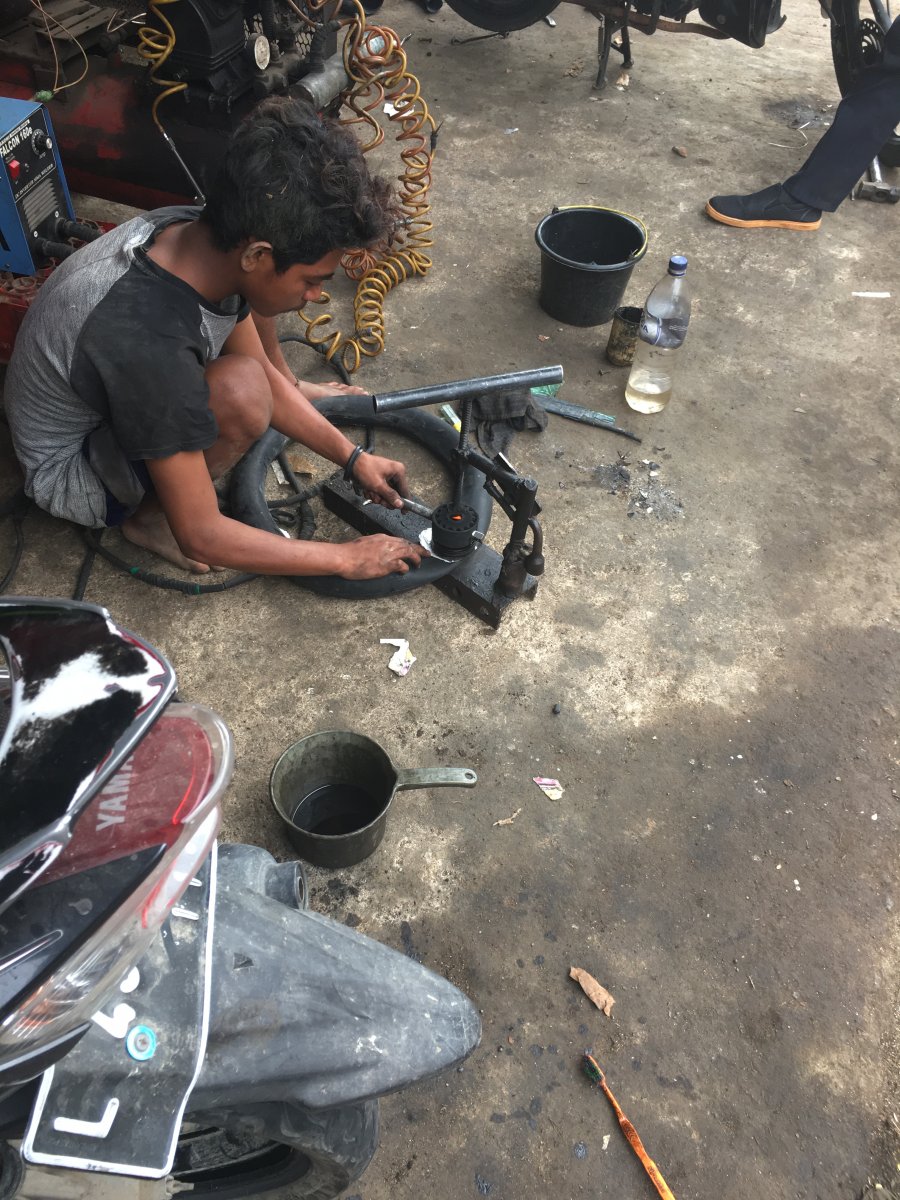
Paradoxically a tire repair shop was 200 meters down the road from the point of puncture.

352517_983c739435eefbf16800f8416d7c32f0

352522_ff3c859c9e44afa7a7445a38efc7e5d0
Spider-web rice field near Ruteg, Flores

When back to Labuan Bajo, I received a text message. A 7 Richter quake had taken place in Lombok. And this time it was complete destruction. 500+ dead, thousands of tourists gathering in the open fields waiting for rescue, many loosing their luggage when roofs had collapsed, landslides in mount Rinjani killing two climbers, tsunamis. Of course we were in a safe distance, but the news from the text message meant that my boat to Sulawesi was canceled, participating in the Lombok rescue operation. Now my plan to find the sea gypsies of Sampela was in danger.