From the ocean to the fire mountain

348393_87a70835caf7bdd6258227e020f85cef
Saying goodbye to the Happy Tree hostel cat

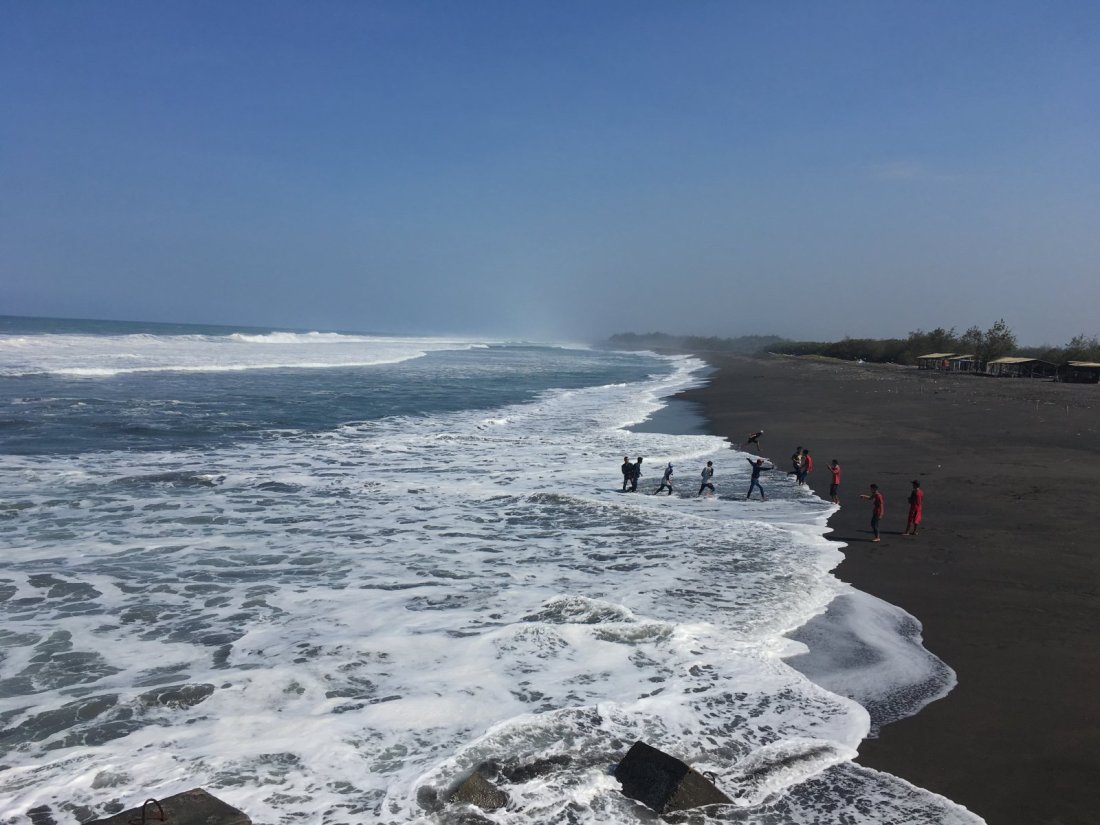
Afian was my courteous driver this morning. Not only he took me to see the ocean but also acted as:

– tour guide, showing me the new big international airport that is being built right next to the beach and showing me through the small village.

– teacher, using sand as a whiteboard to teach me the days of the week in Indonesian, which begins for Muslims on Friday. Jumat, Sabtu, Minggu, Senin…

– local gourmand, explaining the area’s culinary choices and eventually taking me for his beloved bebek (duck).
348394_a25e363b80a16c27549ab51a9abf98c8
The sea south of Java is a mighty beast

In the train to Surabaya I sat in the economy class next to a group of five, a girl and four boys. They were members of a local fan club of Persib Bandung FC, from the coastal town of Pangandaran. While sugarcane fields and volcanoes were coming and going outside the window, we played a tabletop game, cheekily hitting each other’s head with a plastic bottle when they lost a point. We were also hiding from the train inspector so that we can jump off the train at brief stops and smoke kretek (clove flavoured) cigarettes and other such shenanigans that you expect from people in their 20s – some of us delayed 20s.

Gradually I realised that most of the passengers were Persib FC supporters travelling to Surabaya for an away game. Meeting other trains in stations sparked small parties. In one of them everyone decided they wanted a photo with the Caucasian and so I got my 15 minutes of unexpected fame. Imagine people from their laptop scratching their head listening to their club’s chants being butchered by a man with such strange accent!

348411_6c43144fdb1a1c3d27b84676adf44558
Football fans on the train

That night there was a single goal. The approach and ascent of mount Bromo. Bromo is the volcano with the perfect conical shape that is appears in many guidebooks and postcards as the iconic image from Indonesia. Or rather it is not, as I will find out very soon.

2:00 am wake up. Haggling with a taxi driver for the two-hour route from Probolinggo to Cemoro Lawang, the closest village to the volcano. Listening to dangdut, a very popular Javanese music genre that combines tradition with synths and guitar, we chat with the driver J. and his flirty friend N. on how young people have fun in Indonesia. “We just watch TV, that’s all”. The conservative elements of the government have passed an alcohol selling prohibition law for small super-markets and kiosks. If you don’t frequent touristic places, your choices are restricted to the sometimes dangerous arrack and the black market. J. and N., who speak between them in the traditional Javanese language and not Indonesian, are very critical of the situation.

4:30 am, sitting on a very cold street looking at dark figures selling entrance tickets for the main path to Bromo and a street vendor selling woolen hats, I decide to take the advice of a Dutch couple I met before. There is a “back door” to Bromo, an unguarded path that starts from the other side of the village and appears in the Maps.me mobile app.
348989_8c15f22e73344cfa50ec3f0ff176eda7
Stepping on a lava rock in the Sea of Sand

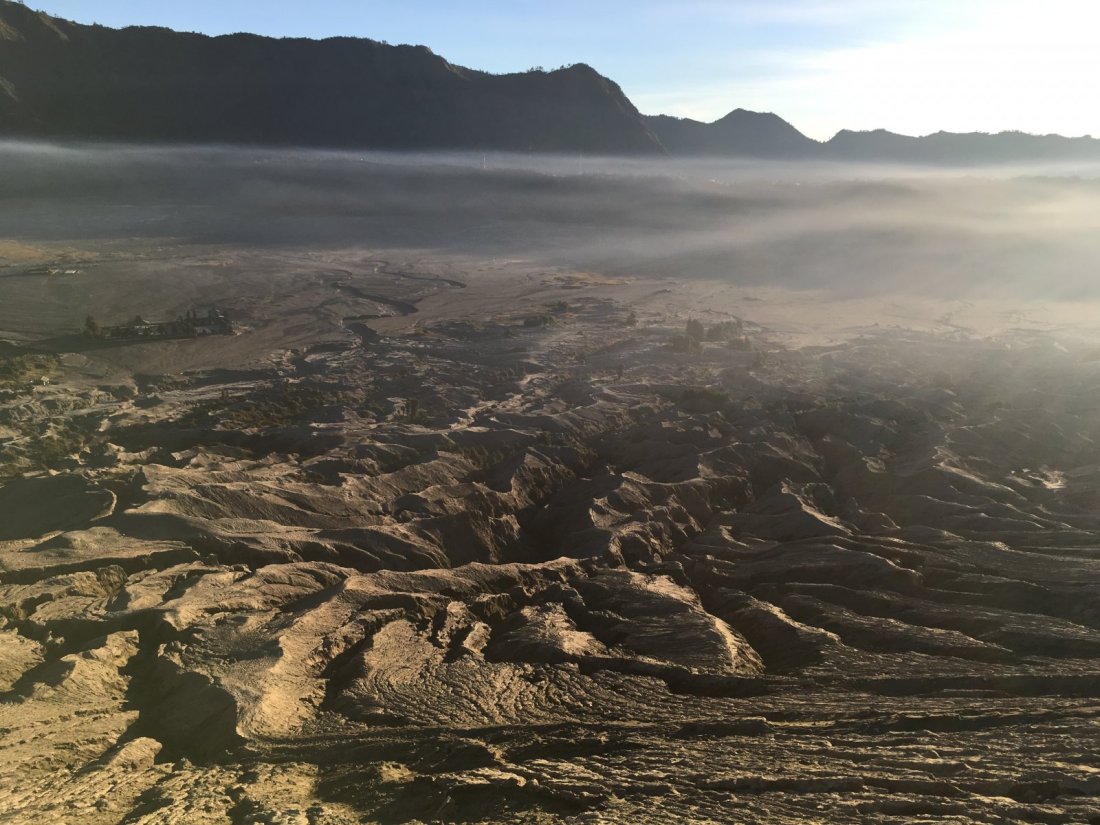
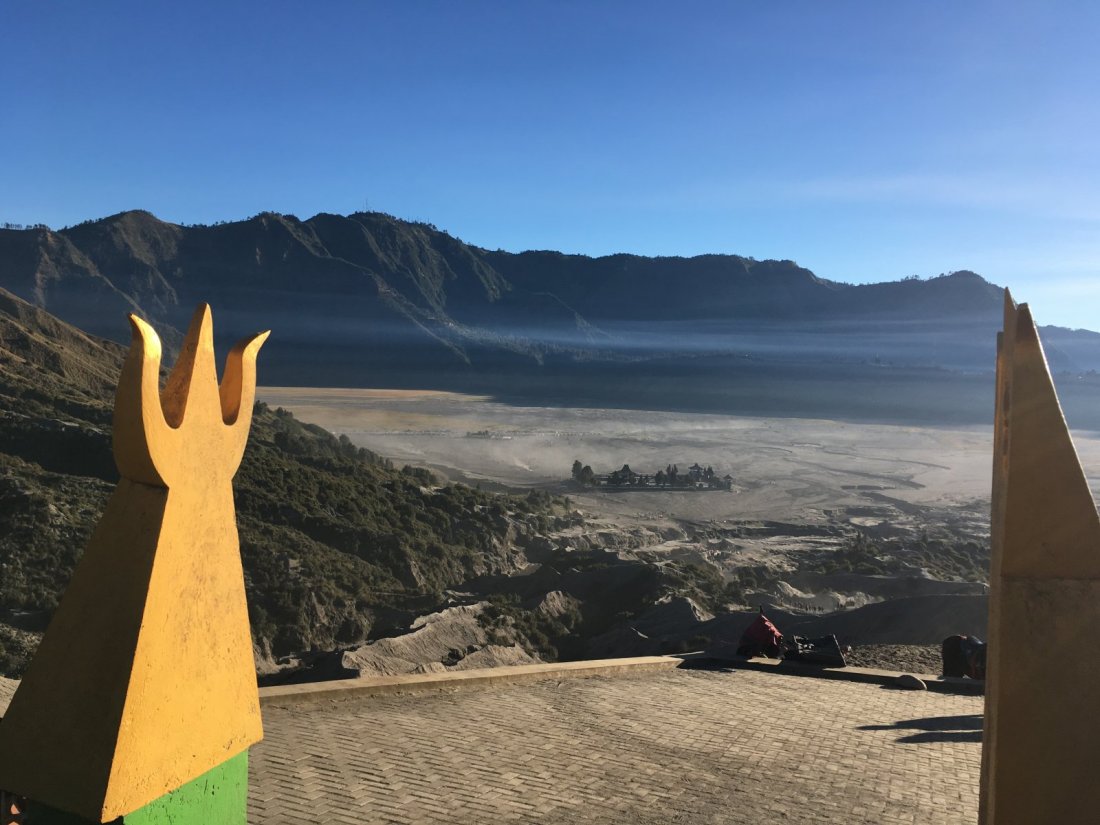
First I descended the dunes that surround the area and form the crater of an ancient much bigger volcano. Straight ahead, dimly visible in the background, was the volcanic cone. Ditches etched by ancient lava were the only features of the empty landscape in between, called the Sea of Sand. Some fires on the distant horizon were the only lights under a starry sky. After 45 minutes I was at the foot of the big cone and trying to figure out how to climb it. There, I saw the surreal picture of a group meditating in a small Hindu temple. And at last, other lost hikers – two couples from France and from Germany. To my surprise, I learned that the big cone in front of us is not Bromo, but its big brother Batok! Bromo is on the side, less photogenic but much more active.

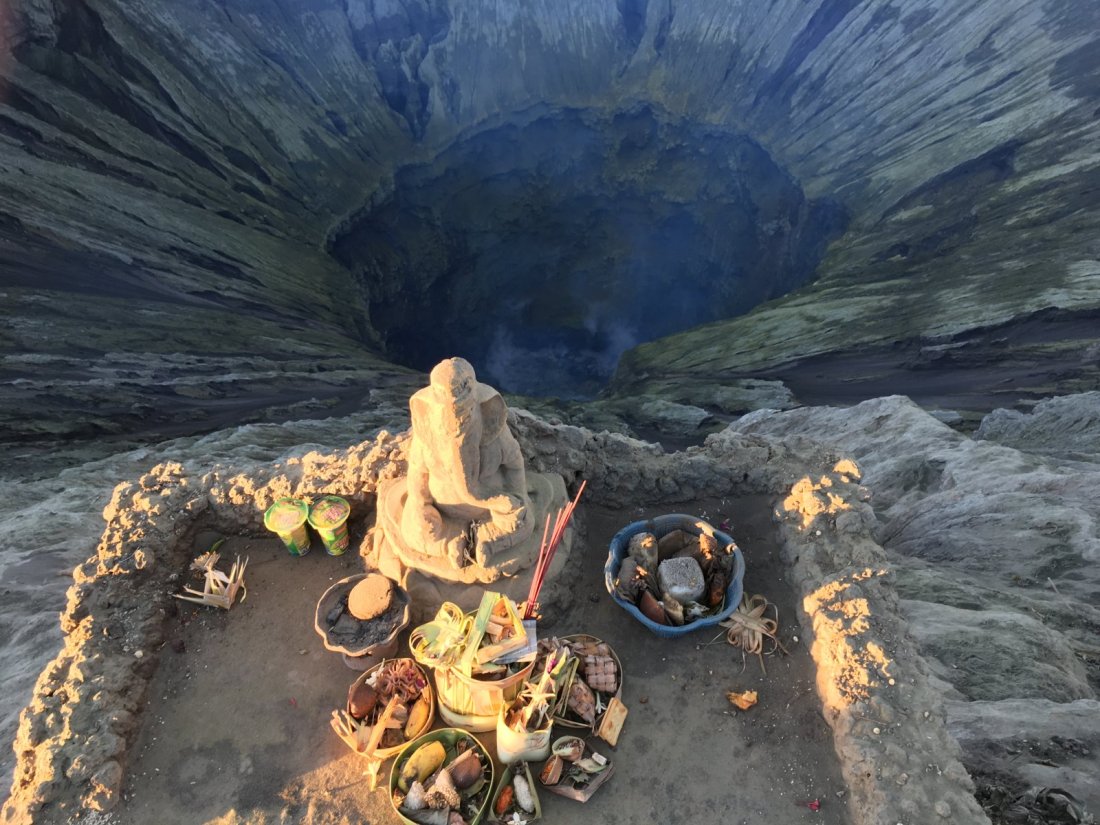
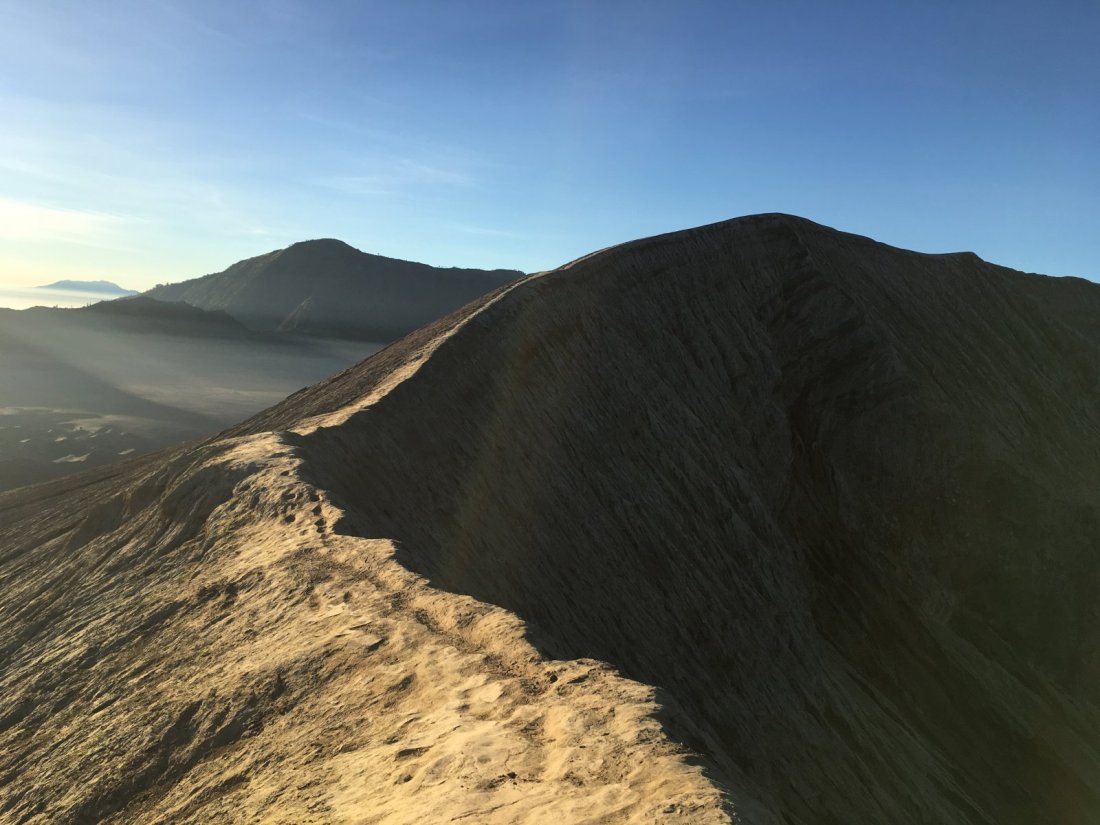
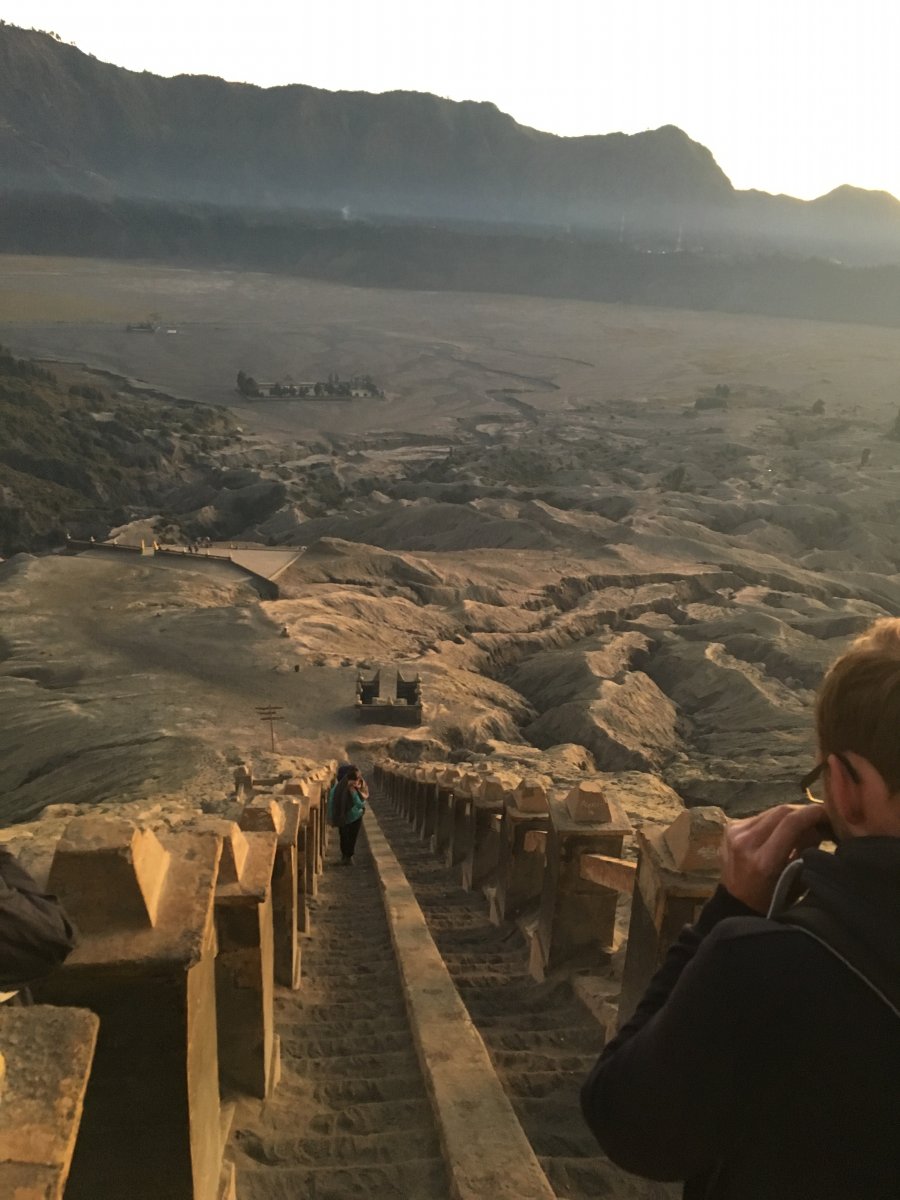
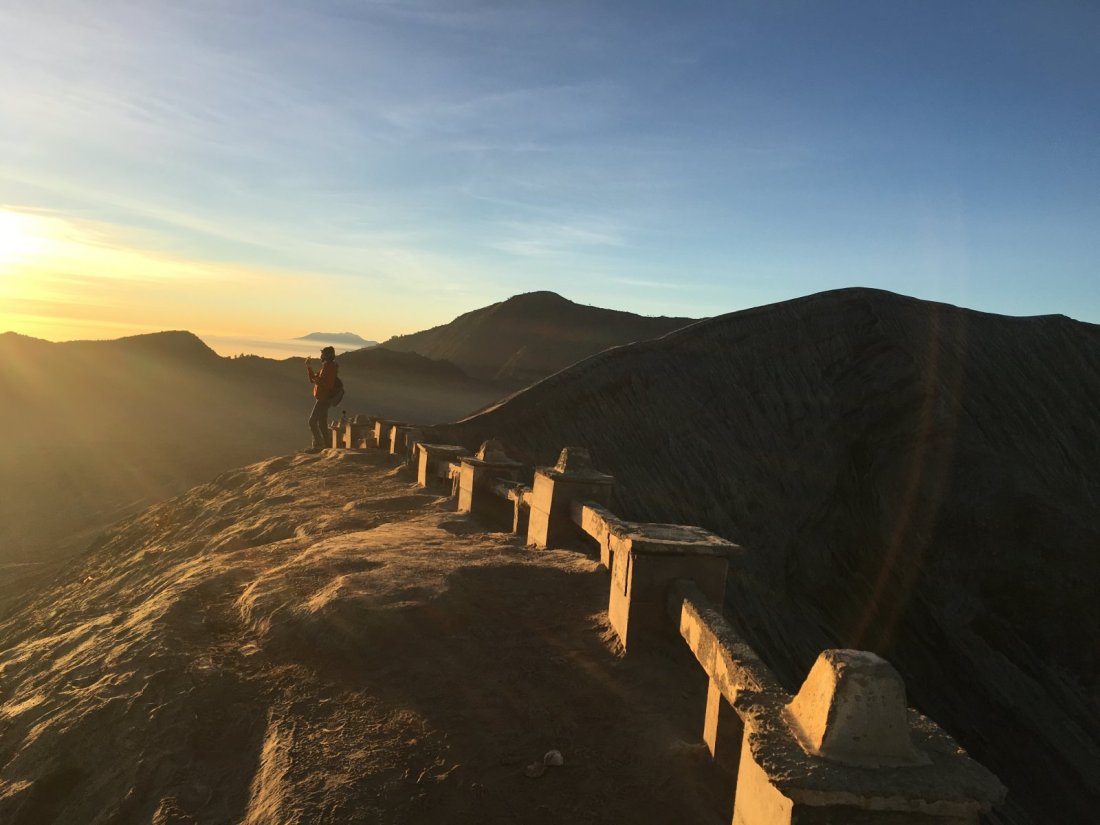
The climb to Bromo through the 250 stairs was not easy, sulfuric vapours brought by the wind making breathing difficult. Eventually we reached the crater at the moment the dawn broke. The only other person there was a friendly New Yorker, Jack, with a mask and a camera. What an impression to look over the boiling crater and listen to its roar! I did not want to leave and kept taking photos of the million years old landscape. On the way back we joined forces with Jack and laughed with the Indonesians, always asking the same questions: “Where are you from? Which hotel do you live in? Why do you travel alone? “. The crowds were on the other side of the Sea of Sand taking panoramic photos and now slowly making their way to the crater.
348992_9efc13372eabac602cf742cda43f3e02
Trying to breath through the vapours
348997_cb200fc80b1856c363d945bddb0b68d8
Dawn at Bromo’s rim
348998_f7e4d275085aa087c592bb1c8165d9b6
Offerings
348999_5f131e96ba5514d5887cc3a2602209fb
The Sea of Sand
349000_b4a39b90ec6350b3f5e552978c56c3a6
Not long ago the whole rim was unfenced and no stairs
349002_40e4ec9ae17860ab3915ecab8e0be6dd
The Hindu temple at the back

Prambanan and Borobudur

I move between the morning market stalls exchanging greetings (“Selamat Pagi” – good morning) and buying “air” – water – and biscuit supplies, essential for survival today. I sit outside “Si Woles” bike shop until 8:00 when a friendly girl appears on the window of the shop, also her home. I rent a shiny bicycle at a very reasonable price and begin.

I’m like a fish out of water. Rather, like a minnow kicked around by a group of frenzied cats and eventually dying from horror. The situation is complicated by the fact that the left-hand side of the road, the slow lane, is used by small vehicles such as motorbikes and taxi-bicyles that go against the flow of traffic. Nobody is bothered to cross to the other side for only a few hundreds of meters until the next exit. Lonely Planet suggest to go through the University and follow a canal for a few miles until we reach the first temples of the Prambanan plain.

348171_b9ee7b879a3d295636687842e41f90b6
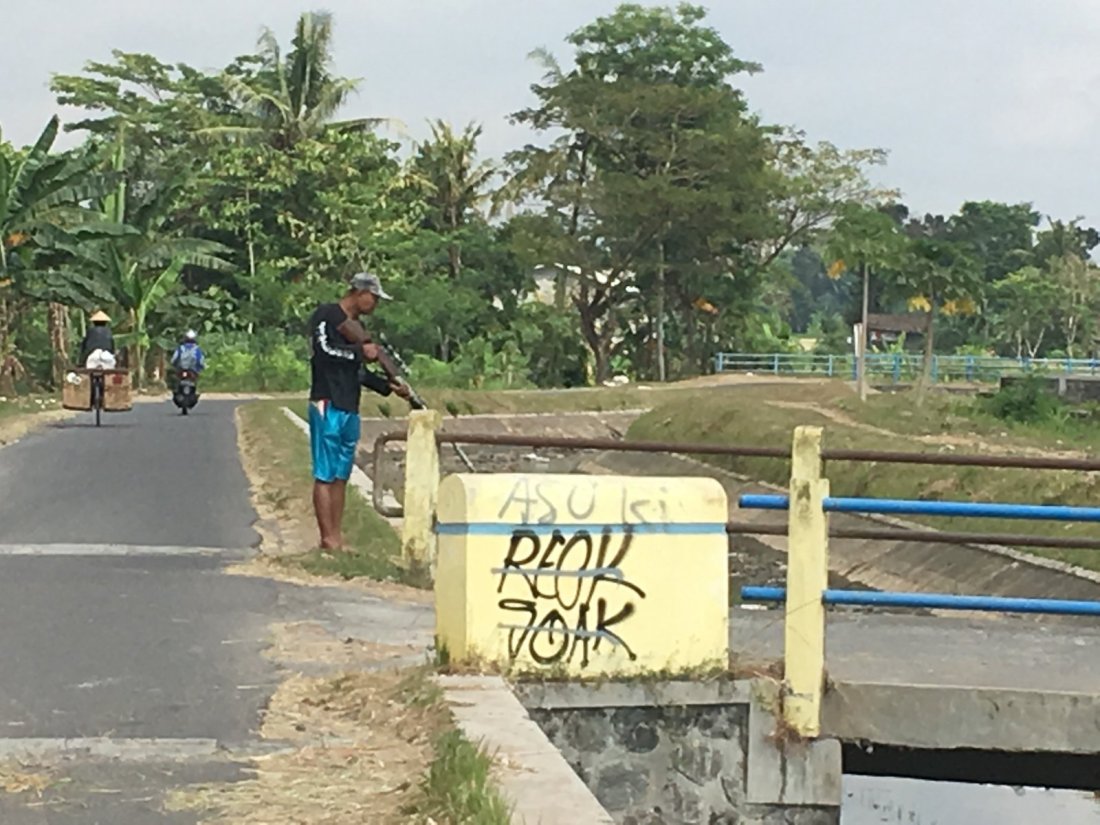
Is this an alternative fishing technique?

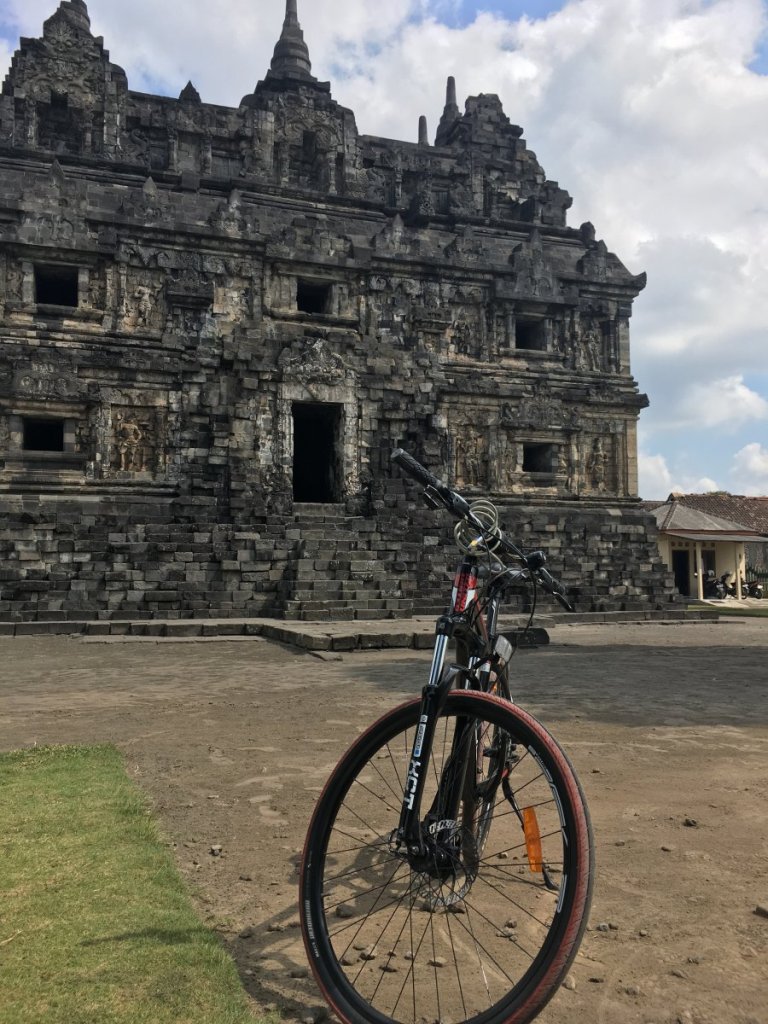
The landscape is becoming more scenic, as rice aquaculture and small rainforest zones alternate. The plain is filled with temples built between the 8th and 10th centuries CE and are, mostly, Hindu, but including Buddhist elements. After all, the two religions coexisted in the kingdom after the wedding of a Hindu prince from the North with a Buddhist Princess of the South. The idea of ​​using a bicycle proved to be good, as you can reach temples where you are completely alone – the gentleman will appear momentarily for the ticket until he returns to his siesta.

348173_b7abba611213ab6aa8b64469f134d335
A smaller Hindu temple

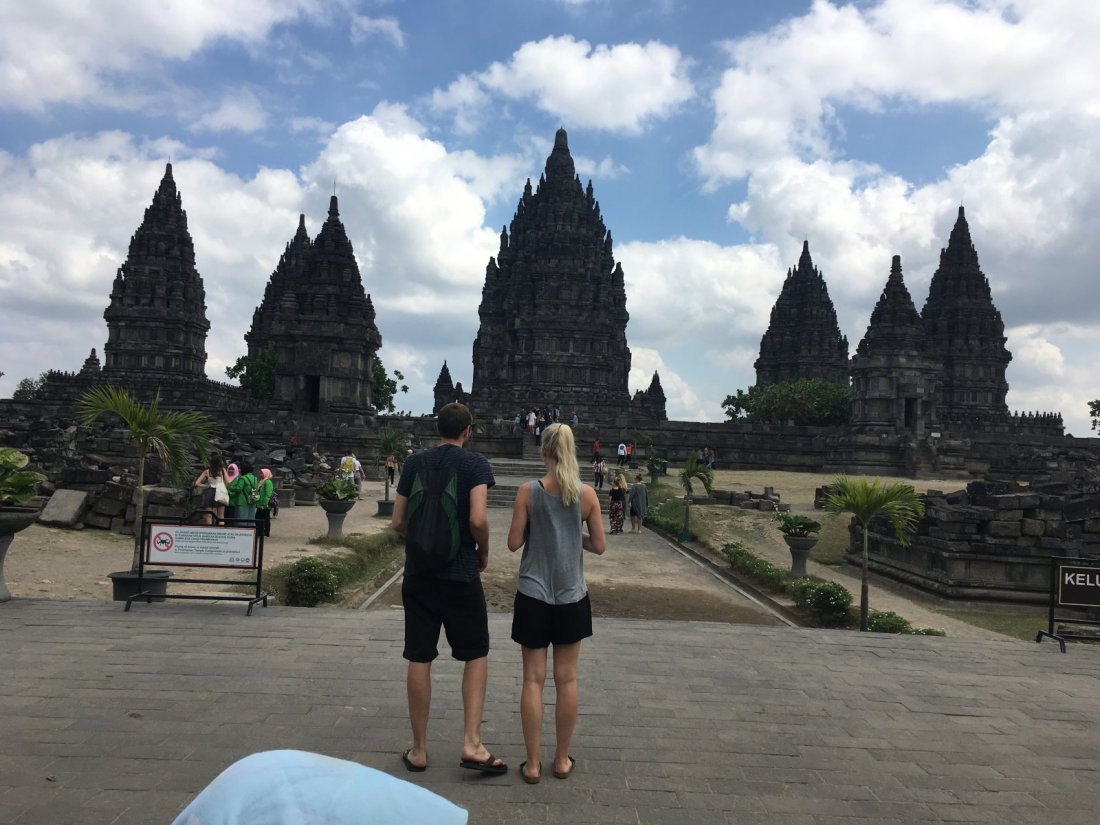
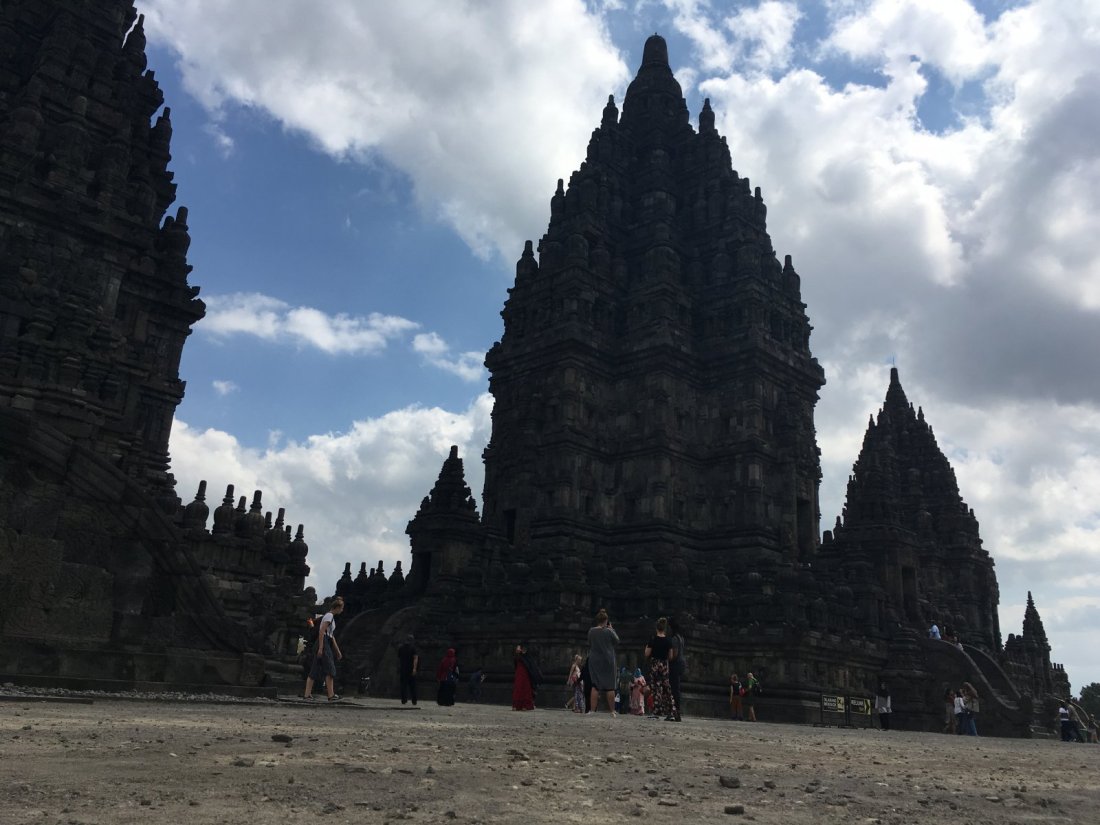
Prambanan itself is a mysterious temple complex, the largest of which is dedicated to the sacred triad: to Brahma the creator, to Vishnu the keeper and to Shiva the destroyer, the greatest of all. Approaching from a distance and seeing for the first time its dark towers that spread out in the landscape, was one of the most powerful images of the journey. The temples are decorated by numerous reliefs telling the story of Ramayana Hindu epic.

348175_0ccd2e45a86789261327dc1964374af9
Prambanan complex
348176_39bbfda602d7a364ef82584a5b8346db
Shiva Temple, Prambanan
348189_a54f5a8e5183a10e7189318c63db3ce3
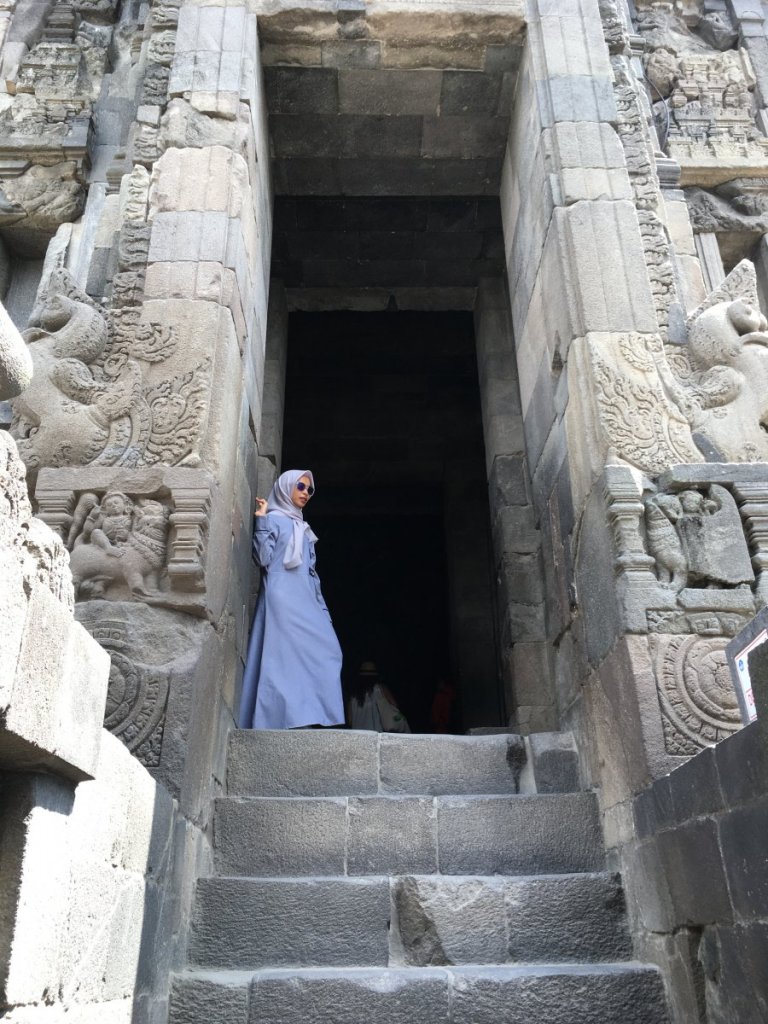
Entering Shiva temple
348193_91db6ad7a448188dec31561e577ee7b5
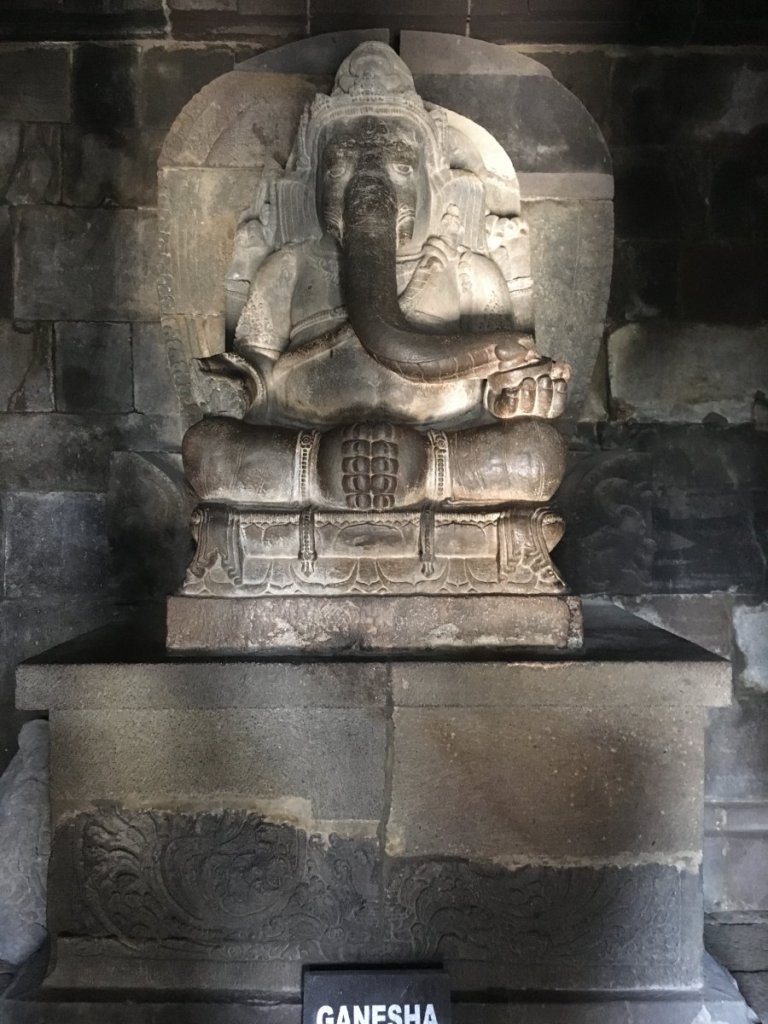
Ganesha statue, with its trunk polished by the many visitors

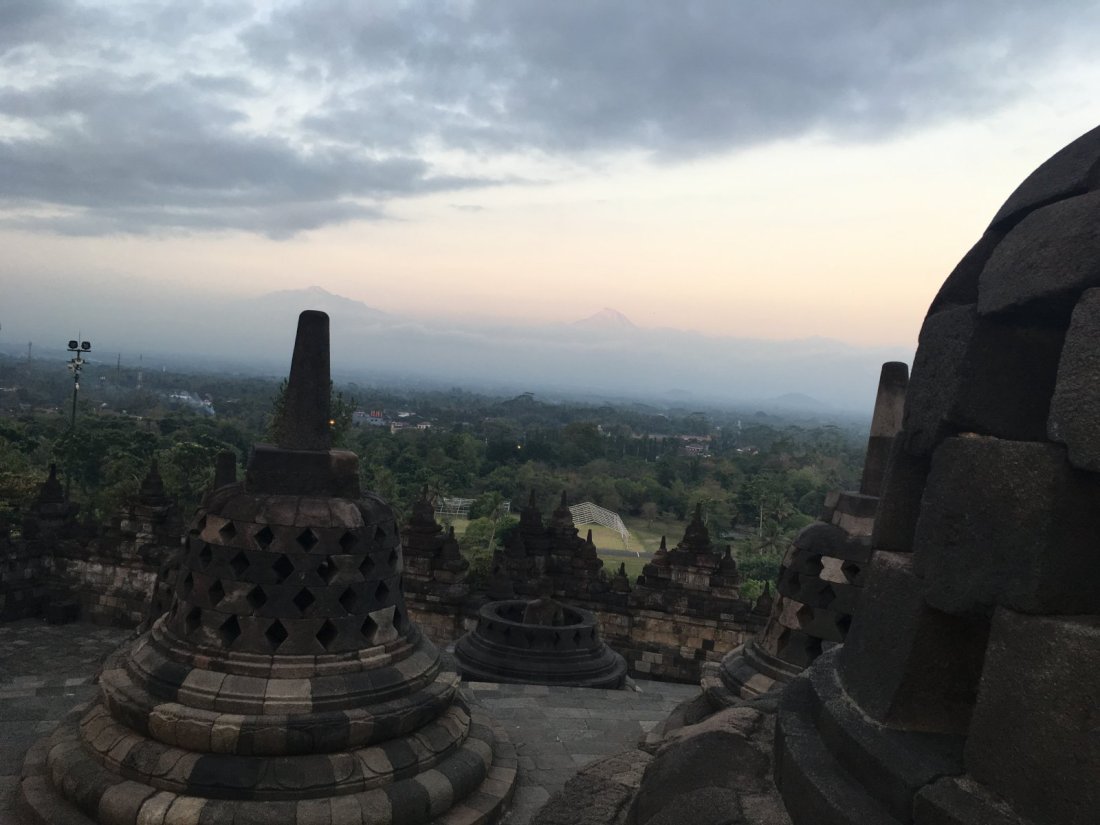
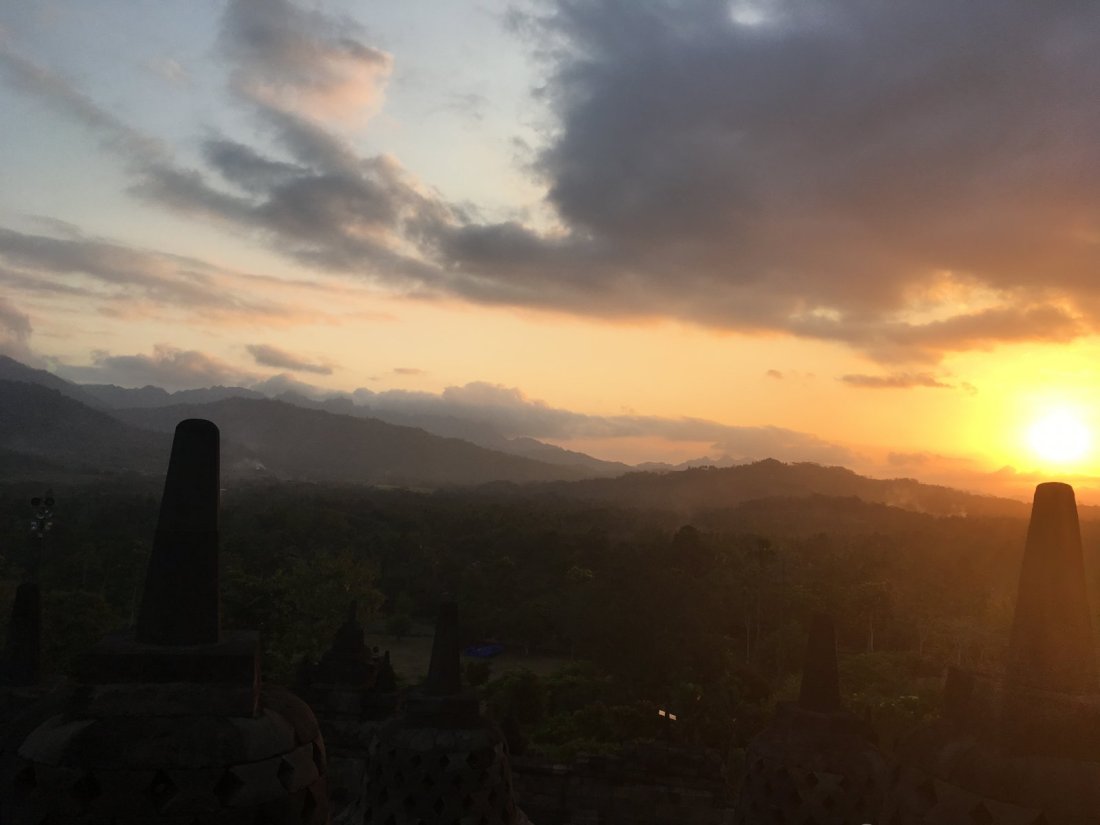
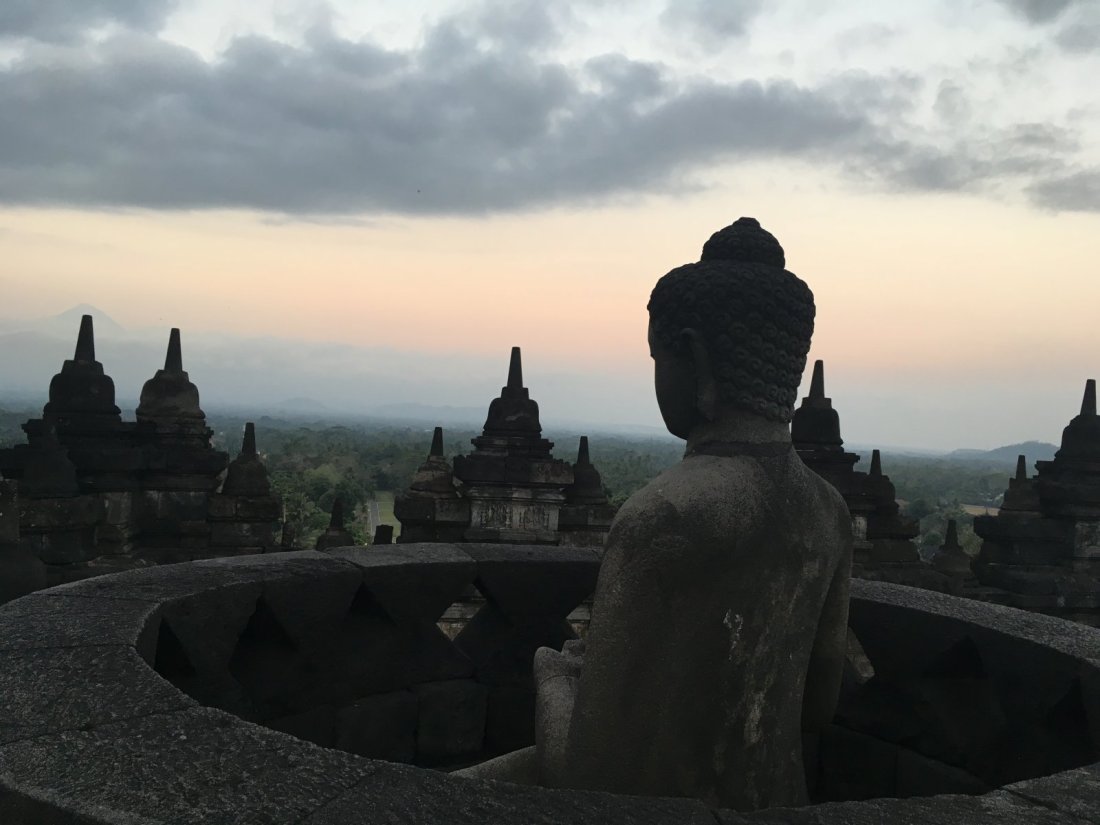
After paying 1000 Indonesian rupees (5p) for bicycle parking (!), there was no time for lunch, since I wanted to reach the second giant of the area, Borobudur. So I caught the bus from Jobor terminal and in just over an hour, sunset approaching fast, I am in the town with the same name. Panic! Overwhelmed by persistent becak drivers I reach one of the entrances at the same time as a couple of Czech tourists. With Vitek and his wife, from beer-famous Pilsen, we walked between the Borobudur bells with the hidden Buddhas, heard the evening prayers from the mosques of the valley that surrounded us and greated the legendary Merapi volcano, the true king in this place. The Czechs offered a free lift back to Jogja, and thanking them it was finally time for food in one of the apparently renowned in all Indonesia “Gudek” (jack fruit sweet stew) restaurants.

348199_d2986db32be36289d35e8d61a6afd35e
Borobudur, bell tip pointing to mount Merapi
348201_fdbeeb5fd894a62cf104f45ce5fd0637
Borobudur at sunset
348200_9bfa7c23f796e9ff6d960ba340b0014a
A Buddha

The exit

347564_d14ea3c73b8e64fc48260594b094a181
The Economist cover

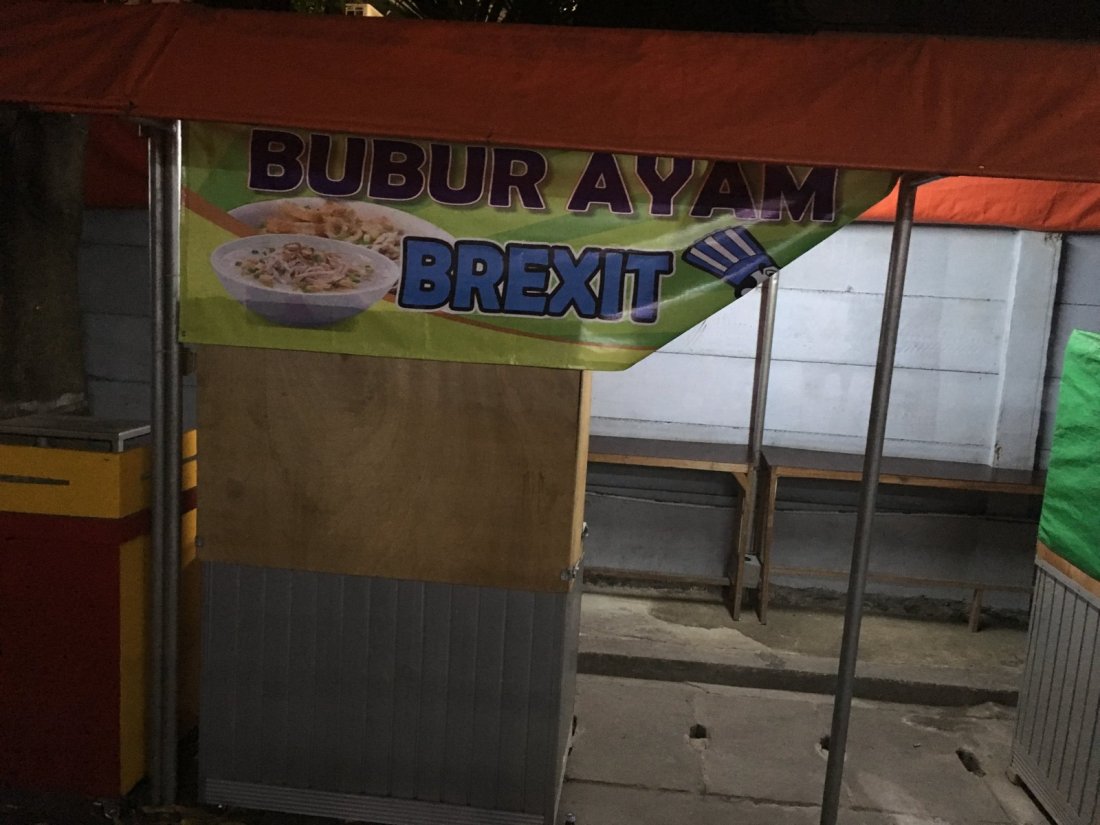
The lamb tagine at Comptoir Libanais in Terminal 4 of Heathrow was very tasty, and probably one of the most expensive meals of the whole trip. The light-hearted feeling of leaving Brexit Britain behind made me smile with the cover of the Economist, where Theresa May empties buckets from a boat that sinks and is titled “Just another week in British politics.” Definitely not another such week for me, though I’m not sure about the shipwreck part. The SAUDIA B777-300er was ready and take-off took place with 25 minutes delay, at 12:55 pm.

347671_238f53221e89bee9bfb8ca61465db33b
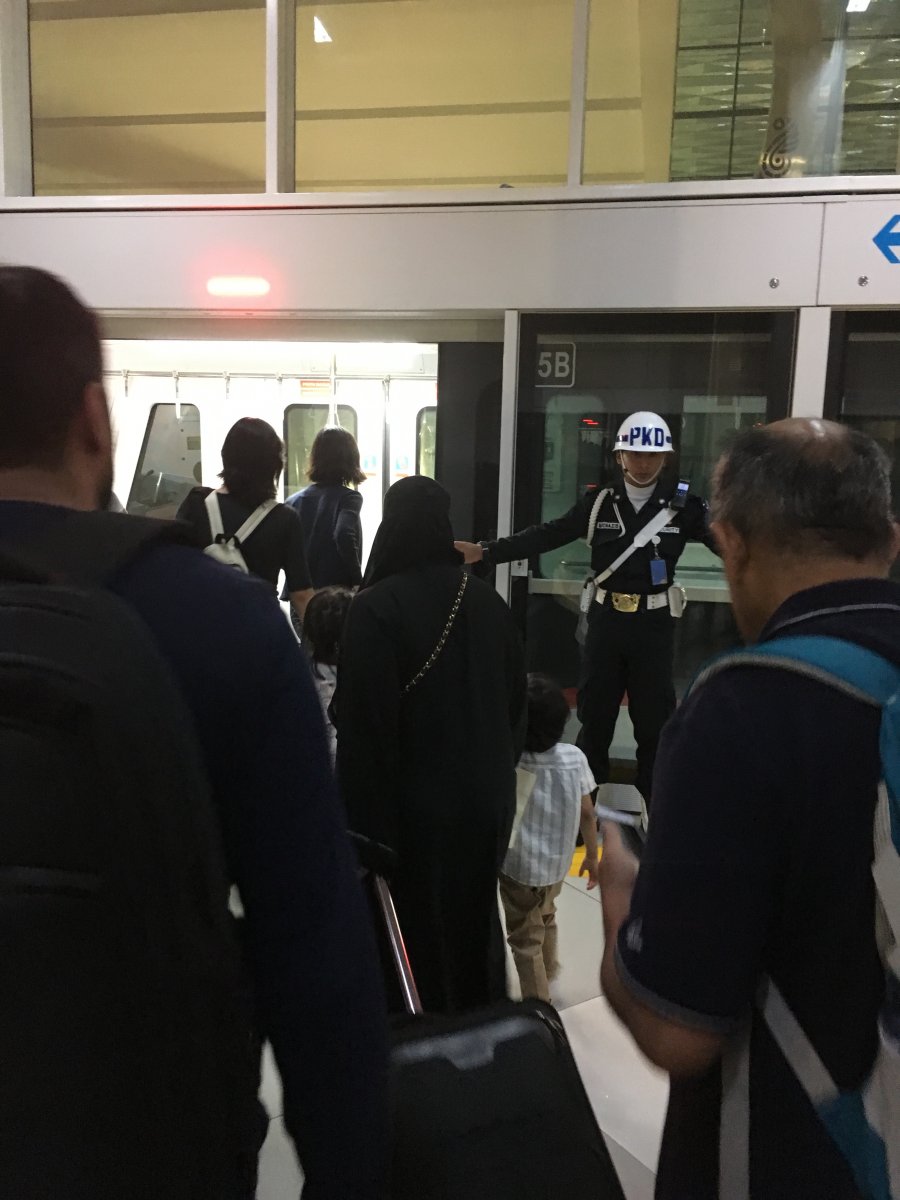
Jakarta’s brand new Air Link train

From BNI City station my capsule hotel was 3 km away, towards Jakarta’s main square and the Gabir train station, the latter being the reason I chose it. I decided to walk, even though the taxi fare would have been small, and so I had the full experience of:

– Uneven sidewalks with every kind of obstacle, which is exactly what someone with a backpack and an ankle sprain – from basketball – does not need.

– Dead ends and hidden junctions.

– Impossible to cross roads.

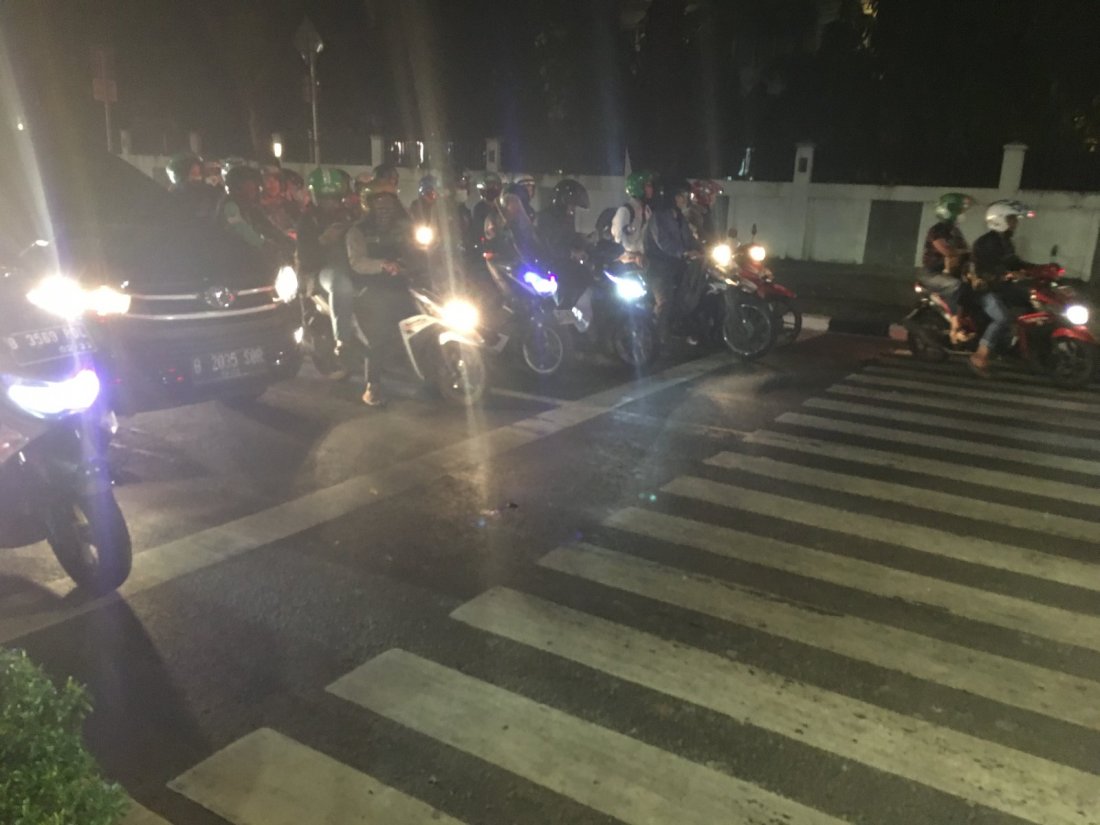
– Many, many small motorcycles.

Almost all two-wheeled users wore helmets, though. My first picture of Indonesia gave me the feeling of chaos, a coordinated chaos that somehow works. I will get more of this feeling in the following days.

347675_8b996f10b34b25997c11fc2e473c0f89
Central Jakarta
347677_3c0cc50224ffd5da510699085a2fe8e2
What?!

The train to Yogyakarta, the cultural capital of Java, took another day and on the third morning it was time I visited some sights. Passing through the battered yet scenic Yogyakarta’s narrow streets, I headed to Sultan’s palace or Kraton. The royal kiosks with trapezoidal tops, a trademark of the very elegant Javan architecture, were bathed in the sun. Local guides with broken English were trying to explain to tourists the story of the Sultanate. Since the 18th century, when it split from the neighbouring rival sultanate of Surakarta,  the Sultan of  Yogyakarta rules until present day. The region is now under special regime under the authority of the President of Indonesia. In the palace’s interior, personal objects of the Sultans are displayed, with a variety of specialized costumes for each member of the palace.

With Indonesians it’s not hard to start conversation, and so sitting under a tree with rich foliage, I learned from a old man with funny teeth and a Metallica t-shirt (quiz, which famous Indonesian is a Metallica fan?) that:

– We call our city Jogja City.

– We are not scared of volcanoes because we have the most active in all of Indonesia and lava runs constantly – but slowly, not falling on our heads.

– Current Sultan has only daughters and who knows what will happen when he dies? (“Time for a female Sultan?” I tried)

– My father was a cook of the Sultan, and his father’s father the same, etc. But myself I am humble driver of the taxi-bikes, called becak.

And finally:

– There is a “truly authentic” batik  – Indonesian wax-resist dyed cloth – shop. Do you want me to take you there?

Respect for all the conversation before coming to that, but I had already bought – an overpriced one unfortunately.

347975_7e0fa176030f3979658c01ef364a03cd
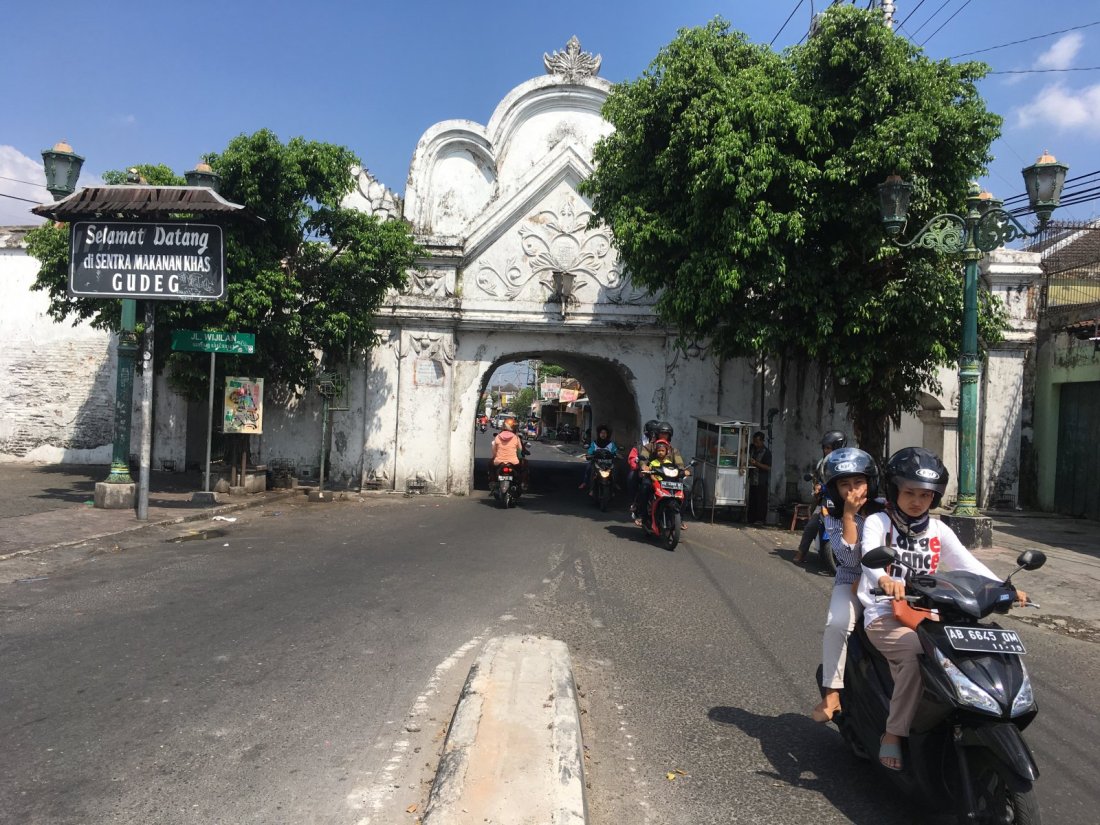
Entrance of Jogja’s old town
347979_f5c36221615538cc7daba4c0f3a36a99
Kraton – Sultan’s palace
347986_17101666c53dd8f659797a970bb033c3
Wayang kulit shop  – Indonesian shadow puppet theater

An afternoon in Komodo airport

351463_89719b5689e0e99f073a54413a0e04ed
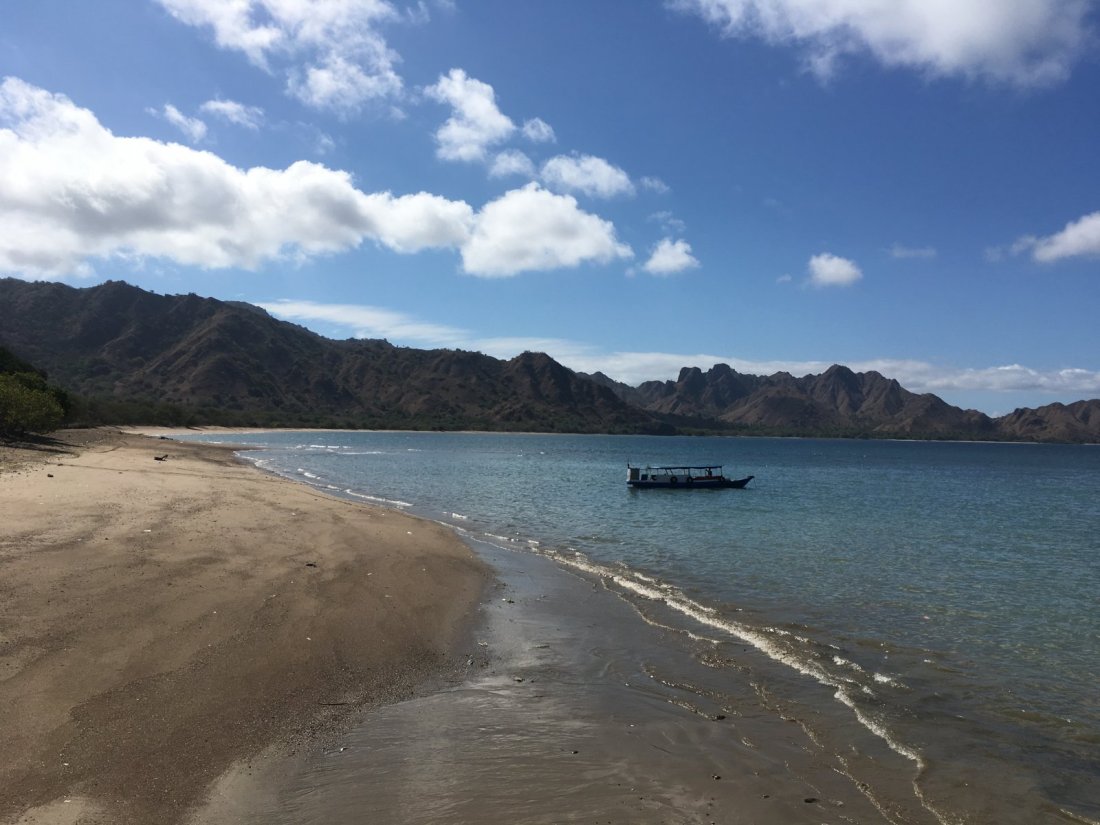
Komodo Island

He is 19 years old and responsible for the airport massage chairs, one of which I sit on.

– Where are you from?

– Greece, I answer.

– Are you Christian?

– Yeah.

– Me too. Have you traveled to the Euphrates River?

– No, I answer, a little surprised.

He writes something on his mobile in google translate and shows me the translation in English:

“Honest”

Although he seems to know some English, he still writes on the cell phone and also captures in audio and translates my answers (not to be misunderstood).

“Do you like the massage chairs? I hate them!”, blushing and giggling.

– They are good, I say, not very confidently. Previously I had a foot massage, where a hijab wearing girl had shown particular care and in the end I felt like wearing new shoes – so much better than the massage chair. The girl did not say a word, and at the end she just sat on the side and left me wondering if it was over and I had to pay.

“Do you have snow in your country?”, And after showing him some photos that I kept on the mobile phone, since it is very unlikely they have ever seen it, he asks “Can you eat snow?”. “If you want – it does not taste very good”

– What’s your name? I ask him.

– Efrat, Indonesian for Euphrates, he tells me and chuckles as his joke is now complete. Smartass Efrat.

“Why are you traveling?”, he shows me again on the cell phone.

– Hmm …. This is a difficult question. Especially when asked by a person whose most distant journey is probably from his village in the interior of the inland of Flores in Indonesia, to Labuan Bajo airport that serves the famous Komodo island. What is the most basic thing to say? “To see something different” I decide. “Yes, something like snow we discussed before.” He seems to agree. “And what else?” “To build memories. And to send pictures to my mom, “I say. “And that makes your mom happy?” He says and looks at me. “I hope” I say laughing.

“How old do you think I am?”. The truth is he does not seem over 20. “20” I say, “why do you ask?”. “Ah,” he says, “I think we Indonesians look older than we are, while you Europeans seem younger.” I do not agree with that, my impression was that the Indonesians look younger, mainly because of their small build. On the other hand, they behave very maturely for their age (makes sense since they get married and have kids very early). “Do all Indonesians look the same to you?”, he says shyly. “At first they did Efrat, after a few weeks I began to tell the differences”. “All Europeans look the same to me…”.

I thought of this ‘equalization’ of the Europeans for a moment. The truth is that whoever spots me on the street and asks for a photo with me, he or she will then brag for the photo with the ‘white’. Regardless of who is the white, whether handsome or ugly, gentle or rough, poor or rich, Mother Teresa or Donald Trump. Absolute anonymity …

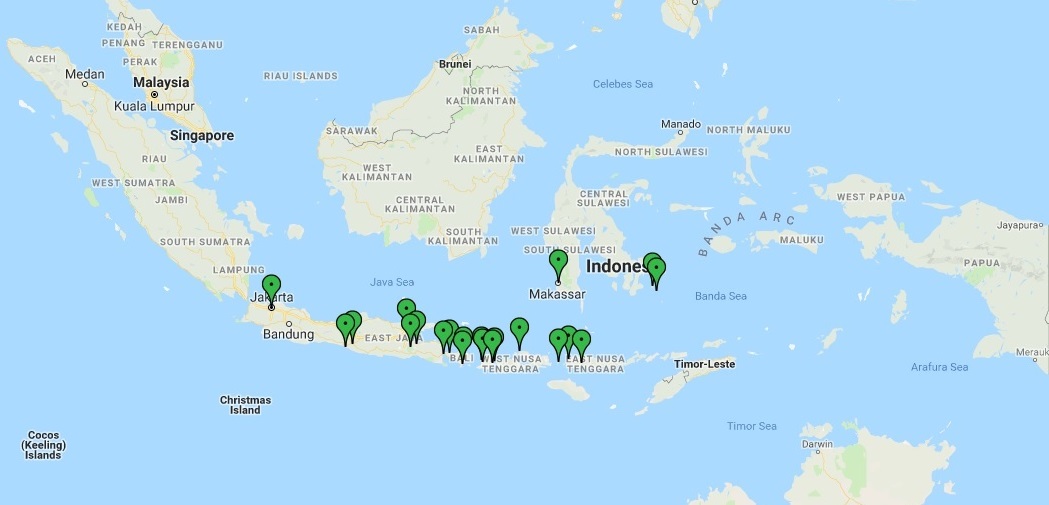
My trip has begun 20 days ago, from Jakarta, the capital of Indonesia. After wandering in Java, I spent a few days in Bali, a few in Lombok, etc. and then arrived in Flores Island, which I was now preparing to leave. That’s because for the last days of the trip I had a specific goal: To stay with the so-called nomads of the sea, the Bajau. People who for centuries have replaced the earth with the water element and their descendants do not want to break this tradition and so they live in stilt villages over the sea.

One of the villages is called Sabela and is located in some tiny islands on the southeastern edge of the island of Sulawesi. The island of Sulawesi is not only one of Indonesia’s largest islands, but also of the world (it’s not that difficult for an Indonesian island), and besides the strange shape and the difficult name, it will also prove difficult to get to it. Because of an earthquake … In the country with more than a hundred active volcanoes … and tsunamis too….

– Hati-hati, Efrat tells me. In Indonesian, meaning ‘take care’.

(Greek version of this text has appeared in http://www.travelstories.gr)

indonesia trip
31 days, 2400 km distance