

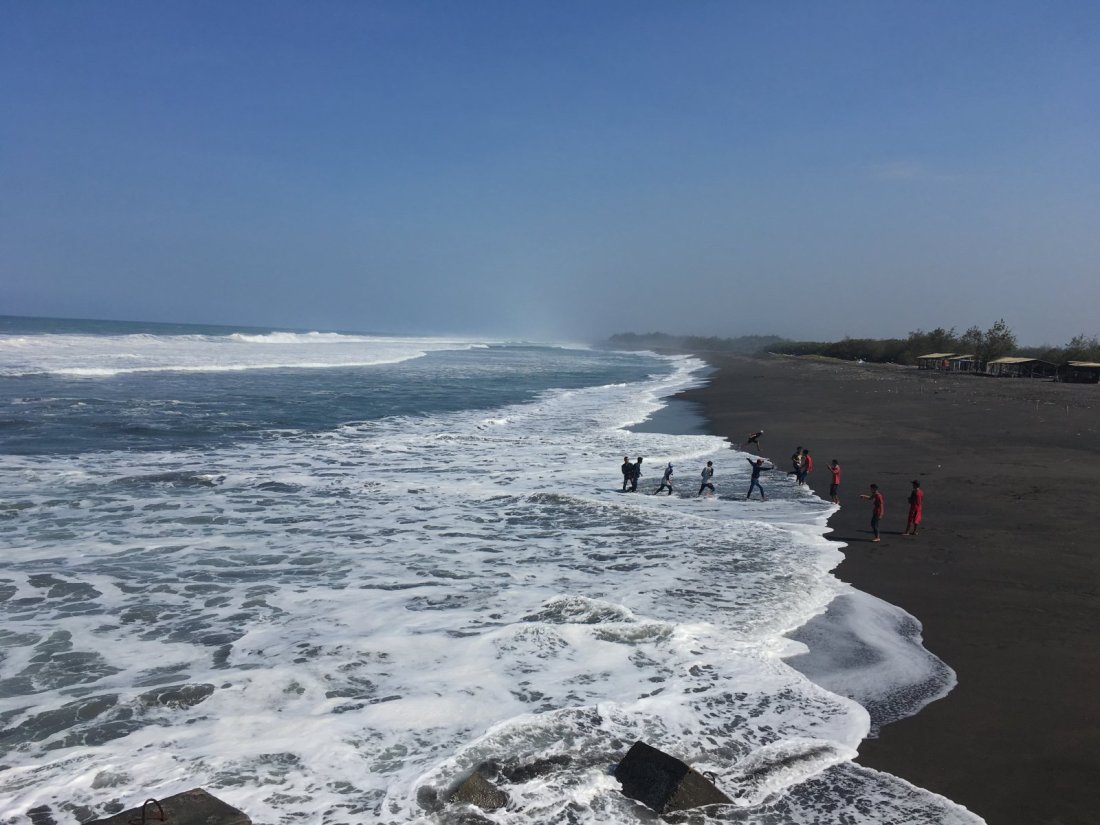
Afian was my courteous driver this morning. Not only he took me to see the ocean but also acted as:
– tour guide, showing me the new big international airport that is being built right next to the beach and showing me through the small village.
– teacher, using sand as a whiteboard to teach me the days of the week in Indonesian, which begins for Muslims on Friday. Jumat, Sabtu, Minggu, Senin…
– local gourmand, explaining the area’s culinary choices and eventually taking me for his beloved bebek (duck).
In the train to Surabaya I sat in the economy class next to a group of five, a girl and four boys. They were members of a local fan club of Persib Bandung FC, from the coastal town of Pangandaran. While sugarcane fields and volcanoes were coming and going outside the window, we played a tabletop game, cheekily hitting each other’s head with a plastic bottle when they lost a point. We were also hiding from the train inspector so that we can jump off the train at brief stops and smoke kretek (clove flavoured) cigarettes and other such shenanigans that you expect from people in their 20s – some of us delayed 20s.
Gradually I realised that most of the passengers were Persib FC supporters travelling to Surabaya for an away game. Meeting other trains in stations sparked small parties. In one of them everyone decided they wanted a photo with the Caucasian and so I got my 15 minutes of unexpected fame. Imagine people from their laptop scratching their head listening to their club’s chants being butchered by a man with such strange accent!

That night there was a single goal. The approach and ascent of mount Bromo. Bromo is the volcano with the perfect conical shape that is appears in many guidebooks and postcards as the iconic image from Indonesia. Or rather it is not, as I will find out very soon.
2:00 am wake up. Haggling with a taxi driver for the two-hour route from Probolinggo to Cemoro Lawang, the closest village to the volcano. Listening to dangdut, a very popular Javanese music genre that combines tradition with synths and guitar, we chat with the driver J. and his flirty friend N. on how young people have fun in Indonesia. “We just watch TV, that’s all”. The conservative elements of the government have passed an alcohol selling prohibition law for small super-markets and kiosks. If you don’t frequent touristic places, your choices are restricted to the sometimes dangerous arrack and the black market. J. and N., who speak between them in the traditional Javanese language and not Indonesian, are very critical of the situation.
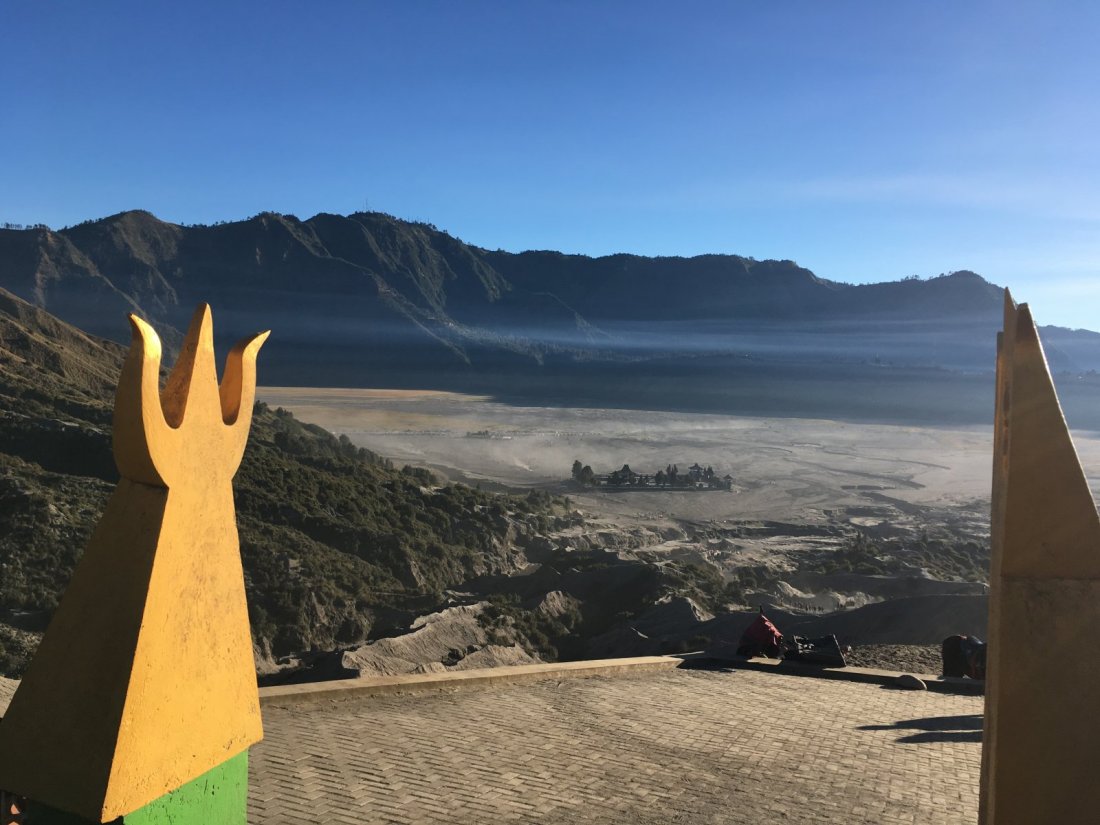
4:30 am, sitting on a very cold street looking at dark figures selling entrance tickets for the main path to Bromo and a street vendor selling woolen hats, I decide to take the advice of a Dutch couple I met before. There is a “back door” to Bromo, an unguarded path that starts from the other side of the village and appears in the Maps.me mobile app.
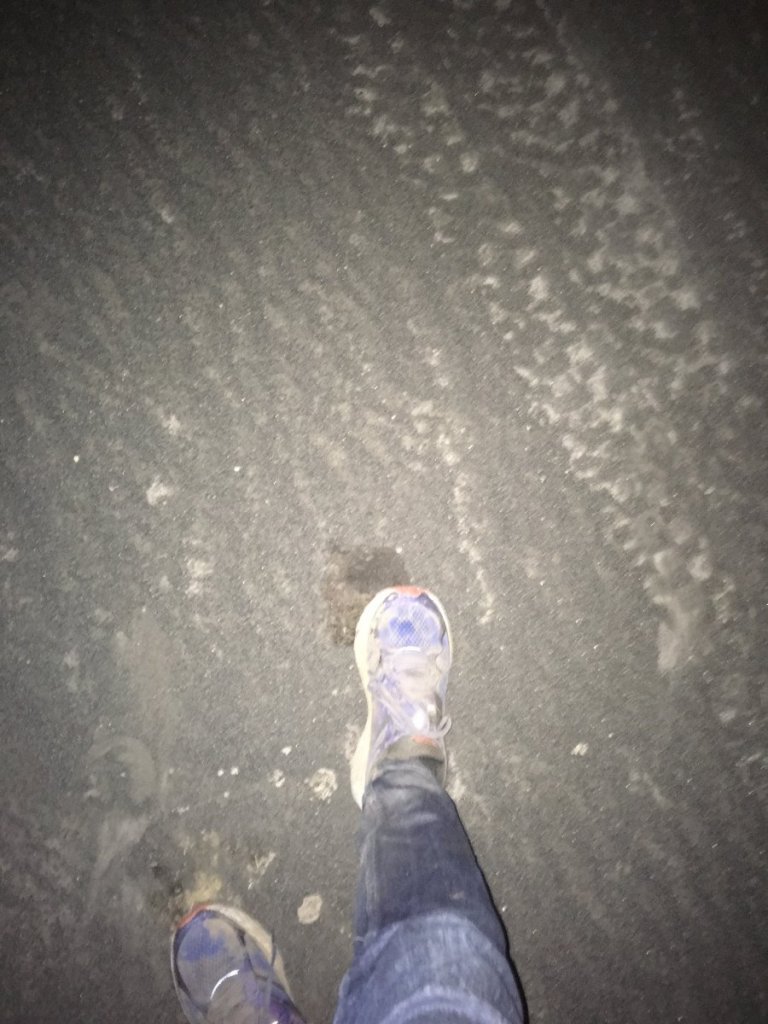
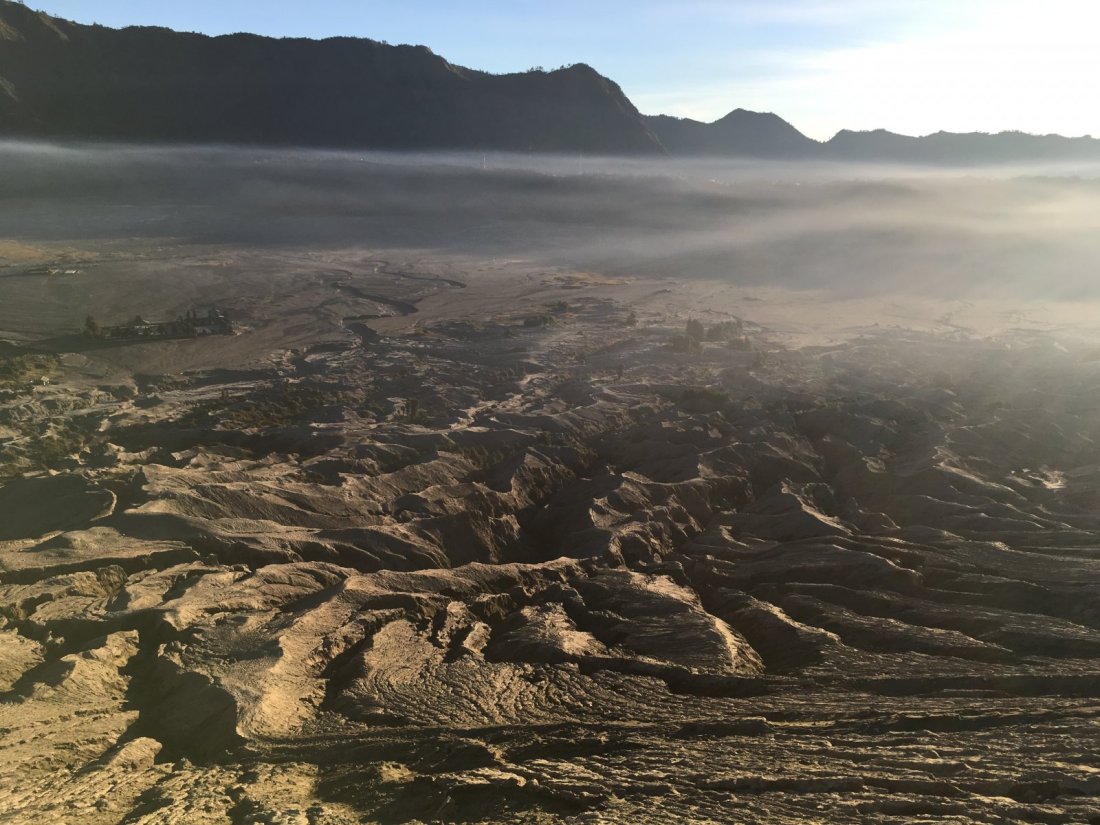
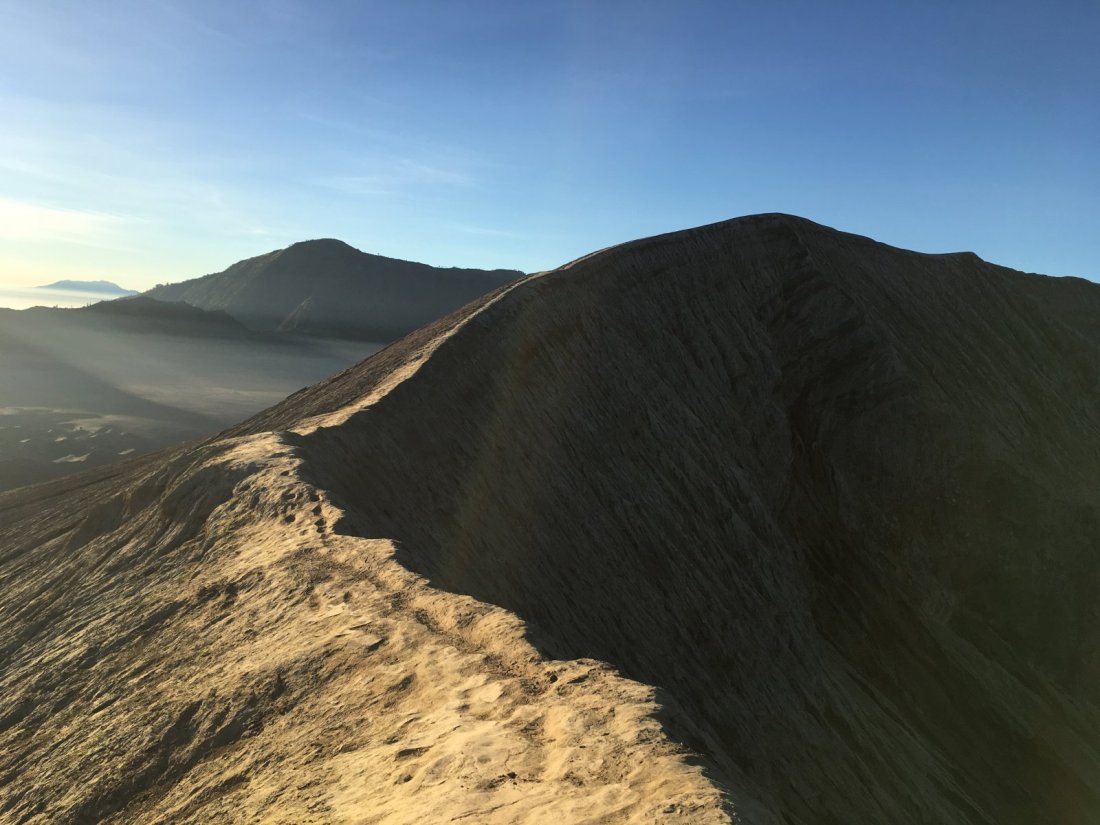
First I descended the dunes that surround the area and form the crater of an ancient much bigger volcano. Straight ahead, dimly visible in the background, was the volcanic cone. Ditches etched by ancient lava were the only features of the empty landscape in between, called the Sea of Sand. Some fires on the distant horizon were the only lights under a starry sky. After 45 minutes I was at the foot of the big cone and trying to figure out how to climb it. There, I saw the surreal picture of a group meditating in a small Hindu temple. And at last, other lost hikers – two couples from France and from Germany. To my surprise, I learned that the big cone in front of us is not Bromo, but its big brother Batok! Bromo is on the side, less photogenic but much more active.
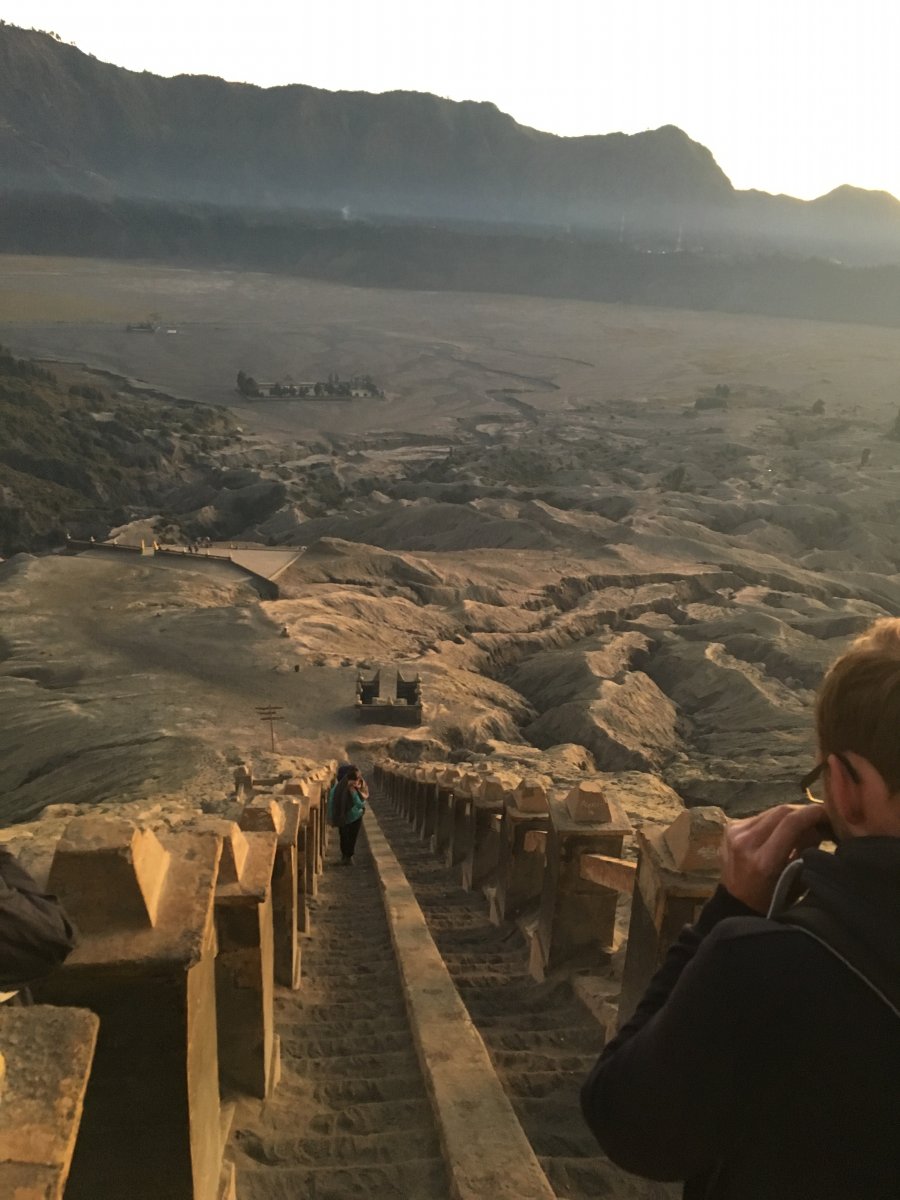
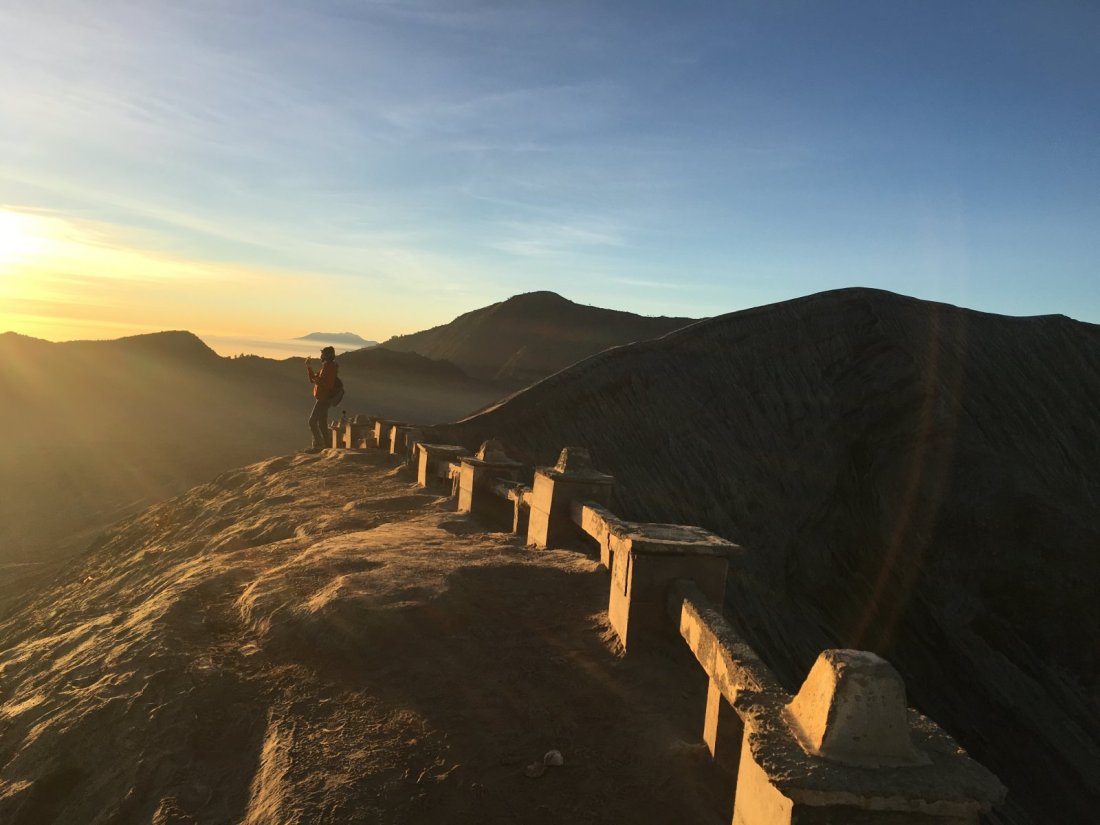
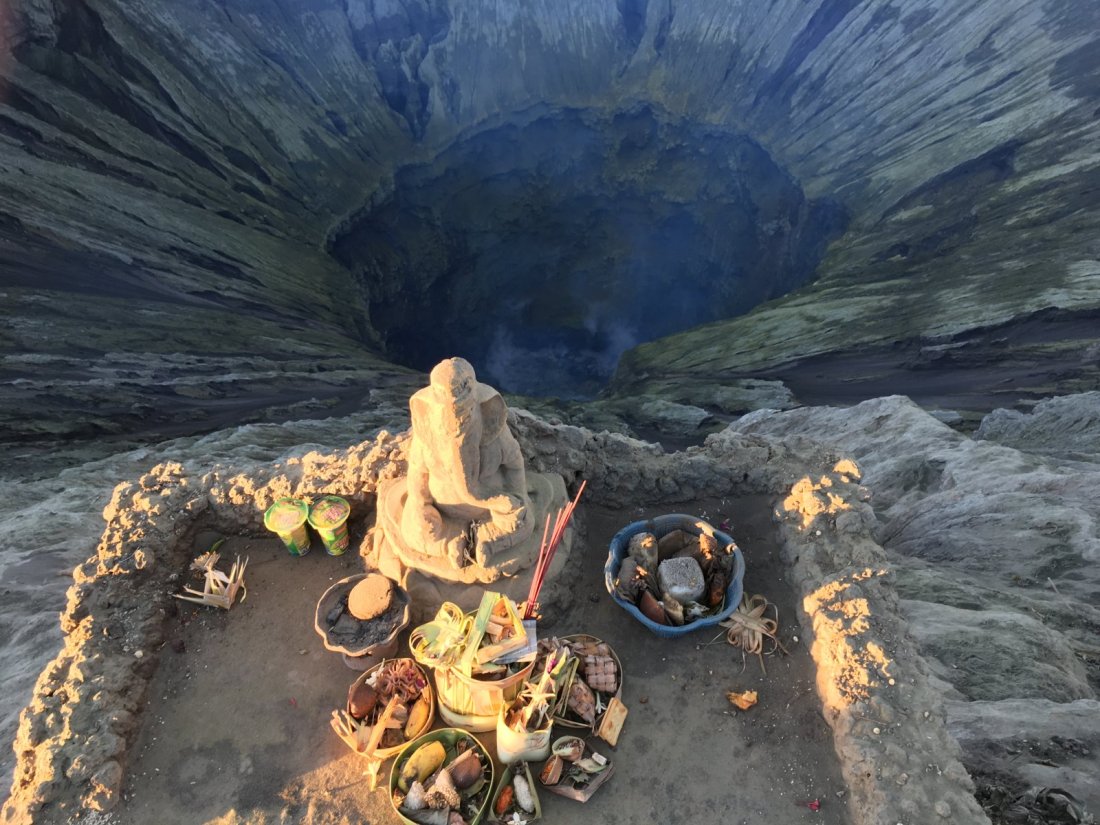
The climb to Bromo through the 250 stairs was not easy, sulfuric vapours brought by the wind making breathing difficult. Eventually we reached the crater at the moment the dawn broke. The only other person there was a friendly New Yorker, Jack, with a mask and a camera. What an impression to look over the boiling crater and listen to its roar! I did not want to leave and kept taking photos of the million years old landscape. On the way back we joined forces with Jack and laughed with the Indonesians, always asking the same questions: “Where are you from? Which hotel do you live in? Why do you travel alone? “. The crowds were on the other side of the Sea of Sand taking panoramic photos and now slowly making their way to the crater.


 TK Travels